
Shopping on Black Friday offers big opportunities—but families must be aware of the risks that can come with the rush for deep discounts. In 2023, Americans spent a record $9 billion, making safe and smart shopping more important than ever. To help families avoid scams, injuries, and stress, this guide covers essential safety tips for Black Friday shopping, ensuring the holiday tradition is both rewarding and secure for everyone.
Whether you’re planning to shop online from your couch or brave the early morning store crowds, these safety tips for Black Friday shopping will ensure your family’s experience is both successful and secure.

Key Takeaways: Essential Safety Tips for Black Friday Shopping
🔒 Shop Securely Online Use credit cards (not debit) on secure connections only, and verify “https” plus the exact domain spelling to avoid phishing sites.
🚗 Protect Yourself in Parking Lots Park in well-lit, populated areas, hide all purchases in your trunk, never leave the kids alone in the car, and have your keys ready before approaching your vehicle.
👛 Guard Your Belongings in Stores Carry only one credit card in a crossbody bag, never set your purse down, and shop with a friend when possible.
💰 Stick to Your Budget Set spending limits before seeing any deals, track prices 4-6 weeks early to spot fake discounts, and prepare backup gift options.
📦 Secure Your Deliveries Use tracking alerts, require signatures for expensive items, and consider pickup options or security cameras to prevent package theft from your porch.
🆘 Know What to Do If Victimized: Contact your credit card company immediately, and file a police report.
Table of Contents:
Section 1: Pre-Black Friday – Essential Safety Tips for Black Friday Shopping Preparation
Create a Realistic Budget and Stick to It
Start with the number-one safety tip for Black Friday shopping: stick to a spending plan. Before you even look at a single advertisement, sit down as a family and determine exactly how much you can afford to spend without compromising your regular expenses or emergency fund.
Start by reviewing your monthly budget and identifying how much disposable income you have for holiday shopping. If you haven’t created a family budget yet, this is the perfect time to learn the basics of budgeting as a family. Include your children in this process—it’s an excellent opportunity to teach them about financial planning and the importance of living within your means.
Create specific spending limits for each category (you can use this Christmas planner):
- Gifts for immediate family members
- Extended family and friends
- Stocking stuffers and small items
- Household items or electronics for the family
- A small buffer (10-15% of your total budget) for unexpected amazing deals
Remember, the point of Black Friday is to save money, not to spend money you don’t have. If you’re tempted to use credit cards for purchases that exceed your budget, take a step back and reconsider. Teaching your children that debt isn’t worth any discount is one of the most valuable lessons you can provide.
Research and Make Strategic Shopping Lists

Creating a detailed Christmas shopping list is crucial for Black Friday success. Start by making a list of everyone you need to buy gifts for, then research what they might want or need. Involve your children in this process—it teaches them to think about others and plan ahead.
For each person on your list, identify:
- Their main interests or hobbies
- Items they’ve mentioned wanting
- Practical items they need
- Your spending limit for this person
Next, create a priority ranking system. Mark items as “must-have” (essential gifts you absolutely want to get), “nice-to-have” (good deals you’d take advantage of if available), and “maybe” (items you’d consider only if the price is exceptional).
Most importantly, prepare backup gift options for each recipient. If the toy your child wants is out of stock, what’s your Plan B? Having alternatives prevents impulse buying and keeps you within budget when disappointment strikes.
Price Tracking and Research Tools

One of the biggest mistakes parents make is assuming every Black Friday “deal” is actually a good deal. Many retailers inflate their regular prices weeks before Black Friday, then offer “discounts” that bring items back to their normal price—or sometimes even higher than their usual sale prices.
Here are the essential tools every smart Black Friday shopper should use:
Best Price Monitoring Tools for Families:
| Tool | Best For | Cost | Key Features |
| Honey Browser Extension | General online shopping | Free | Automatic coupon codes, price tracking, Amazon price history |
| CamelCamelCamel | Amazon products | Free | Price history graphs, price drop alerts, wishlist monitoring |
| Rakuten | Cashback earnings | Free | Cashback at major retailers, browser extension alerts |
| InvisibleHand | Price comparisons | Free | Compares prices across retailers while browsing |
| Keepa | Amazon price tracking | Free/Premium | Detailed price history, inventory tracking |
Start tracking prices for items on your wishlist at least 4-6 weeks before Black Friday. This gives you a clear picture of what constitutes a genuine discount. Screenshot or write down the regular prices of items you’re interested in—you’ll be surprised how many “Black Friday deals” are actually just regular sales.
Anti-Scam Safety Tips for Black Friday Shopping – Identify Legitimate vs. Fake Deals
Not all Black Friday deals are created equal. Here’s how to spot genuine discounts versus marketing tricks:
Red flags of fake deals:
- Prices that seem too good to be true (70-90% off brand-name electronics)
- “Compare at” prices that seem inflated
- Limited-time offers with constantly refreshing countdown timers
- Unfamiliar brand names with suspiciously low prices
- Deals that require you to share personal information or sign up for paid subscriptions or services
Signs of genuine deals:
- Discounts of 20-40% off regular price for most items
- Previous customer reviews and ratings
- Clear return and warranty policies
- Established retailers with physical stores
- Price history showing the item was genuinely more expensive before
Teaching your children to evaluate deals critically is an invaluable life skill. Show them how to research products, read reviews, and compare prices across multiple retailers.
Section 2: Online Safety Tips for Black Friday Shopping

Secure Shopping Practices
Online shopping offers convenience and safety from crowds, but it comes with its own set of risks. Protecting your family’s personal and financial information should be your top priority.
Network Security: Always shop from a secure, private internet connection. Avoid using public Wi-Fi networks at coffee shops, libraries, or hotels for any financial transactions. If you must shop while away from home, consider using your phone’s mobile hotspot instead of public Wi-Fi.
Before making any purchase, verify that the website uses secure encryption. Look for “https” at the beginning of the URL (with an “s”, not just “http”) and a lock icon in your browser’s address bar. Legitimate shopping sites will always use secure connections for checkout pages.
Account Security: Create unique, strong passwords for each shopping site you plan to use. If you’re not already using a password manager, consider setting one up before Black Friday—it’s a great tool to model good digital habits for your children.
Enable two-factor authentication on your accounts whenever possible. This adds an extra layer of security that can protect you even if your password is compromised.
Smart Browsing Techniques

Incognito Mode and Cookie Management: There’s some debate about whether browsing in incognito mode or clearing cookies can help you find better deals. Here’s the truth: while some travel sites and services might show different prices based on your browsing history, most major retailers don’t engage in this practice for Black Friday deals.
However, browsing in incognito mode can be useful for:
- Avoiding targeted ads that might tempt you to overspend
- Starting with a “clean slate” when comparing prices across different sites
- Preventing sites from remembering items you viewed but didn’t buy
Cart Abandonment Strategies: Some parents try the old “add items to cart and leave” trick, hoping retailers will email them discount codes to complete the purchase. While this sometimes works for regular shopping, it’s generally ineffective during Black Friday when demand is high and deals are already heavily promoted.
Price Comparison Best Practices: Don’t just compare prices between online retailers—also check if the same items are available in physical stores. Sometimes in-store promotions differ from online deals, and you might find better prices by combining online research with in-store shopping.
Use multiple devices or browser windows to compare prices side-by-side. This prevents you from losing track of deals while browsing different sites.
Avoiding Online Scams
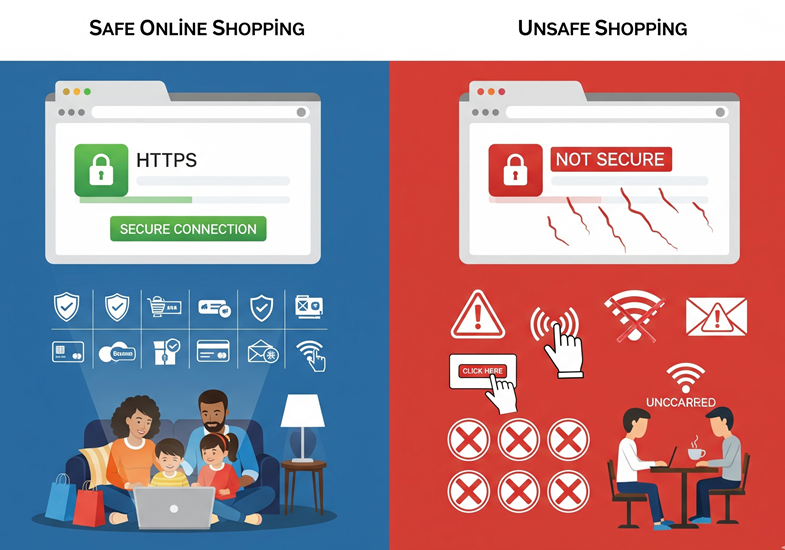
Black Friday brings out cybercriminals who prey on deal-seeking shoppers. Here’s how to protect your family:
Common Black Friday Online Scams:
| Scam Type | How It Works | Warning Signs | How to Avoid |
| Fake Retailer Websites | Criminals create lookalike sites of popular stores | Unusual URLs, poor grammar, no contact information | Always type store URLs directly or use official apps |
| Phishing Emails | Fake emails claiming to be from retailers with “exclusive deals” | Urgent language, requests for personal info, suspicious sender | Never click links in promotional emails |
| Social Media Scams | Fake “giveaways” or deals shared on social platforms | Requires sharing personal info, too-good-to-be-true prizes | Verify deals on official retailer websites |
| Fake Apps | Malicious apps mimicking real shopping apps | Poor reviews, requests excessive permissions | Only download apps from official app stores |
Verification Steps: Before shopping with any retailer you’re unfamiliar with, take these verification steps:
- Check for customer reviews on independent sites like Trustpilot or Better Business Bureau
- Verify the company’s physical address and phone number
- Look for clear return and refund policies
- Check how long the domain has been registered (new domains are often red flags)
Advanced URL Safety Checks
Beyond just looking for “https”, protect yourself from sophisticated phishing sites:
- Check the exact domain spelling – scammers use lookalike URLs like “amaz0n.com” or “tarqet.com”
- Look for the padlock icon AND click it – verify the security certificate is issued to the correct company
- Beware of subdomains – “target.deals-online.com” is NOT Target.com (the actual domain comes after the last period before the slash)
- Watch for extra characters – “target-secure-checkout.com” is not the same as “target.com”
- Verify contact information – legitimate sites have clear phone numbers and physical addresses
- Check the “About Us” page – fake sites often have vague or missing company information
- Look for trust seals – but click them to verify they’re real (fake sites copy trust seal images)
- Review the privacy policy – legitimate retailers have detailed, professional privacy policies
Red Flags for Phishing Sites:
- URLs with misspellings or extra words (walmart-deals-today.com)
- Offers that arrive via email links (always type the retailer’s URL directly)
- Requests for unusual information during checkout (Social Security number, mother’s maiden name)
- Poor grammar or spelling throughout the site
- Prices that are dramatically lower than any competitor
- Payment methods limited to wire transfer, gift cards, or cryptocurrency
If something feels off about a website, trust your instincts and shop elsewhere.
Payment Safety
Credit Cards vs. Debit Cards: For Black Friday shopping, credit cards offer better protection than debit cards. They don’t give criminals direct access to your bank account if your information is compromised. Most credit card companies will quickly reverse fraudulent charges while they investigate. Use virtual card numbers when available.
If you do use a debit card, make sure it’s from a major bank with strong fraud protection policies, and monitor your account daily during the Black Friday shopping season.
Digital Wallets: Services like PayPal, Apple Pay, Google Pay, and Samsung Pay add an extra layer of security by not sharing your actual credit card number with retailers. They’re particularly useful for shopping with unfamiliar online stores.
Avoiding “Buy Now, Pay Later” Traps: Services like Klarna, Afterpay, and Affirm might seem appealing when you’re looking at expensive items, but they can lead to overspending and debt problems. These services often encourage impulse purchases and can hurt your credit score if you miss payments.
If you’re considering these services, ask yourself: “Would I buy this item if I had to pay the full amount today?” If the answer is no, then it’s probably not a wise purchase.
After Checkout Safety Tips
Before Your Package Arrives:
- Track all shipments using retailer apps or delivery service notifications
- Require signatures for expensive items when possible
- Use delivery alerts to know exactly when packages arrive
- Communicate with neighbors and ask them to grab packages if they see them delivered
- Consider alternative delivery locations like Amazon Lockers, store pickup, or your workplace
- Save packaging for returns or insurance claims
What to Do If a Package Is Stolen:
- Check with neighbors and household members first – sometimes packages are moved for safety
- Verify the tracking shows delivery to your address
- Contact the retailer immediately – many have theft protection policies
- File a police report with your local department
- Check home security camera footage if available
- Contact your credit card company if the retailer won’t help
- Consider filing a claim with the shipping carrier (if you were the shipper)
Section 3: In-Store Safety Tips for Black Friday Shopping
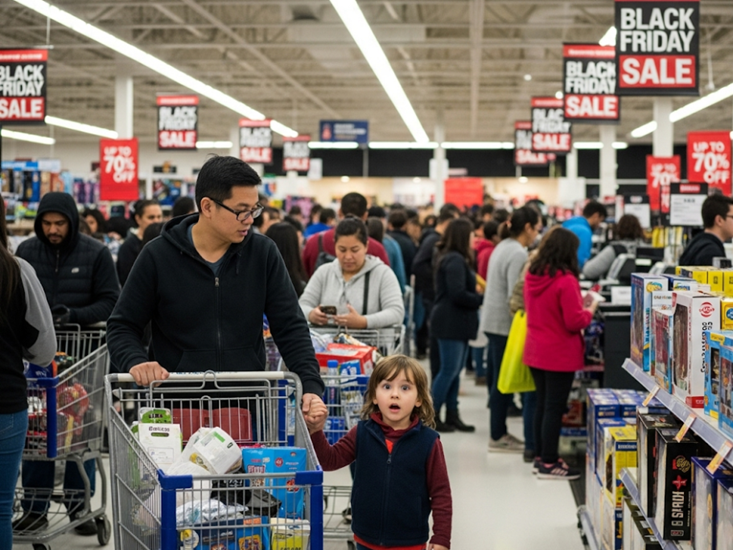
Physical Safety Tips for Black Friday Shopping in Crowds
If you decide to brave the crowds for in-store Black Friday shopping, safety should be your primary concern—especially when shopping with children.
Timing Strategies: The traditional early-morning rush (3-6 AM) tends to be the most chaotic and potentially dangerous time to shop. Consider these alternative timing strategies:
- Late morning or early afternoon, when initial crowds have dispersed
- Evening hours, when families with young children have gone home
- The weekend after Black Friday, when some deals may still be available
If you do choose to shop during peak hours, prepare accordingly and have a solid plan.
What to Bring and Leave at Home: Bring only essential items:
- One credit card or a small amount of cash
- Your driver’s license
- Your phone with emergency contacts programmed
- A small water bottle
- Comfortable shoes with good traction
Leave at home:
- Expensive jewelry or accessories
- Large amounts of cash
- Unnecessary credit cards
- Large purses or bags that could be targets for theft
Family Safety Protocols: If shopping with children, establish clear safety rules:
- Designate meeting spots in each store in case you get separated
- Ensure older children have your phone number memorized
- Consider having children wear bright, easily identifiable clothing
- Establish a “buddy system” where family members stay together
- Teach children to find store employees if they become lost
Smart In-Store Shopping Tactics

Store Layout Research: Most major retailers release store maps for Black Friday, showing where specific deals will be located. Study these maps in advance and plan your route through the store. This saves time and reduces your exposure to crowded areas.
Download store apps before you go. Many retailers offer mobile-exclusive deals, digital coupons, and tools to check inventory levels and locate items within the store.
Safe Purse and Wallet Management:
- Use an anti-theft crossbody bag and never set your purse down
- Shop with a friend when possible
- Keep cash minimal and in a front pocket
- Consider using an RFID-blocking wallet
Price Matching Policies: Many stores offer price matching on Black Friday, but policies vary significantly. Research each store’s policy in advance:
- Some stores will match online prices from competitors
- Others only match printed advertisements
- Some require you to show proof of the competitor’s price
- Certain items may be excluded from price matching
Understanding these policies can save you from having to visit multiple stores for the best deals.
Return Policy Awareness: Black Friday items sometimes have different return policies than regular merchandise. Some deals are final sale, others have shortened return periods, and some may require you to keep the original packaging. Read the fine print before purchasing, especially for expensive electronics or clothing.
Teaching Kids About Crowd Safety and Smart Shopping
Black Friday shopping can be an excellent teaching opportunity for children, but it requires age-appropriate preparation.
For Younger Children (Ages 5-9):
- Practice staying close to parents in crowded areas
- Teach them to identify store employees by their uniforms or name tags
- Role-play what to do if they become separated
- Explain why we have shopping lists and budgets
For Older Children (Ages 10-15):
- Involve them in price comparison and deal evaluation
- Teach them to spot marketing tricks and impulse-buy temptations
- Let them manage a small portion of the family shopping budget
- Discuss the difference between wants and needs in a shopping context
Managing Expectations: Prepare children for the reality that their most-wanted items might be sold out or not on sale. Use this as an opportunity to teach resilience and the value of having backup plans. Explain that disappointment is part of life and that there will be other opportunities to get items they want.
Car and Parking Lot Safety for Black Friday Shopping
Choosing Your Parking Spot:
- Avoid isolated areas even if they’re closer
- Plan cart use with toddlers and strollers, pick wide aisles, and set meeting points near customer service.
- Remember your location – take a photo of your parking spot sign or row number
- Drive slowly and expect the unexpected – pedestrians and other drivers may not be paying attention
- Be patient with other drivers – aggressive behavior can escalate into dangerous confrontations
Before You Leave Your Car:
- Lock all doors and close windows completely
- Hide valuables or take them with you
- Never leave the kids (or pets) alone in the car, not even for a quick run inside.
- Don’t leave your car running even “just for a minute”
- Park in reverse – it makes for a quicker, safer exit when you’re loaded with purchases
When Returning to Your Car:
- Have your keys ready before you reach your vehicle
- Look around and under your car before approaching
- Put packages in the trunk immediately and never leave shopping bags visible
- Lock doors immediately upon entering your vehicle
- Stay alert – don’t sit in your car checking your phone
What to Do If Your Car Is Broken Into:
- Don’t touch anything
- Call police immediately to file a report (needed for insurance claims)
- Document everything with photos
- Contact your insurance company
- Review nearby security camera footage if available (ask store security)
Section 4: Stores and Retailers with Genuinely Good Black Friday Deals
Not all retailers treat Black Friday the same way. Some consistently offer genuine discounts, while others mainly use the event for marketing purposes with minimal actual savings.
What Makes Deals Genuine: You can recognize retailers that offer real Black Friday savings because they:
- Use the event to clear out inventory for new products
- Accept lower profit margins to increase customer acquisition
- Leverage their purchasing power with manufacturers for special pricing
- View Black Friday as a long-term investment in customer relationships
Categories That Rarely Have Real Black Friday Deals:
- Luxury items (jewelry, high-end electronics)
- Items that are already heavily discounted year-round
- New product releases (latest iPhone, newest gaming console)
- Services (gym memberships, subscriptions)
How to Verify Real Deals

Price History Checking: Use the tools mentioned earlier to verify that current “sale” prices are genuinely lower than recent regular prices. A good Black Friday deal on electronics should be at least 20-30% off the regular price, not just 10% off an inflated “compare at” price.
Comparing to Regular Sales: Many items go on sale regularly throughout the year. A true Black Friday deal should be significantly better than these regular promotional prices. For example, if a toy typically goes on sale for 25% off several times per year, a Black Friday deal should offer at least 40% off to be considered exceptional.
Reading the Fine Print: Always check:
- Whether the sale price requires a rebate or special qualification
- If the deal includes free shipping or if that costs extra
- What the return policy is for sale items
- Whether warranties are included or cost extra
Section 5: Managing Expectations and Having Backup Plans
Preparing for Disappointment
Even with careful planning, Black Friday rarely goes exactly as expected. Items sell out, websites crash, and deals that looked amazing in advertisements turn out to have significant limitations.
Common Black Friday Disappointments:
- Doorbusters that sell out within minutes
- Websites that crash during peak shopping times
- Deals that require purchasing multiple items or meeting minimum spending requirements
- “Limited quantity” items that were genuinely limited to just a few units per store
- Shipping delays that mean gifts won’t arrive in time for the holidays
Preparing Your Family: Have honest conversations with your children about the possibility that not everything will go according to plan. Explain that Black Friday is competitive and that many other families are trying to buy the same items. This helps prevent meltdowns and teaches realistic expectations about shopping and money.
Help children understand that expensive gifts aren’t the only way to show someone you care. Quality time together through meaningful Thanksgiving activities, homemade gifts, acts of service, or thoughtful cards can be more meaningful than anything purchased in a store.
Plan B Strategies

Alternative Gift Options: For every item on your wish list, identify at least one alternative that would make an equally good gift. If the latest gaming console is sold out, perhaps some new games for their current console would work. If the popular toy isn’t available, what similar toys might bring the same joy?
Different Retailers: Don’t put all your hopes on one store. If Target sells out of an item, check Walmart, Amazon, Best Buy, or other competitors. Make a list of which stores typically carry the items you’re looking for.
Cyber Monday and Extended Sales: Many retailers now extend their Black Friday deals through Cyber Monday or even the entire week. Some offers are actually better on Cyber Monday, especially for electronics and online-only deals.
Post-Holiday Shopping: Sometimes the best deals come after the holidays. If you’re flexible about when gifts are given, you can find incredible savings in January clearance sales. This can be especially useful for items like winter clothing, holiday decorations for next year, or toys that children would enjoy regardless of when they receive them.
Teaching Kids Resilience and Smart Financial Decisions
Turning Disappointment into Learning: Black Friday deals can vanish quickly. Smart families always have a Plan B. Manage your kids’ expectations by discussing alternate gift choices, checking competitor store inventories, and remembering that some of the best deals pop up after the holidays. This sets realistic expectations and helps teach flexibility and resilience.
When things don’t go as planned, use the experience to teach valuable life lessons:
- Sometimes we don’t get everything we want, and that’s okay. This is a crucial lesson in developing an abundance mindset, which focuses on opportunities rather than limitations.
- Being flexible and adaptable is more valuable than being stubborn about specific items
- There’s always another opportunity—Black Friday isn’t the only time to find deals
- The joy of giving comes from the thought behind the gift, not its price tag
Alternative Ways to Show Love: Help children understand that expensive gifts aren’t the only way to show someone you care. Homemade Christmas gifts, quality time together, acts of service, or even just a thoughtful card can be more meaningful than anything purchased in a store.
Money Management Lessons: Use Black Friday experiences to teach children about:
- The difference between needs and wants
- How advertising and marketing influence our desires
- The importance of comparison shopping and research
- Why impulse buying usually leads to regret
- How to save money for things that are truly important
Section 6: Year-Round Deal Hunting – Building Smart Shopping Habits

Deals Happen All Year Long
One of the most important lessons to teach your family is that Black Friday isn’t the only time to find great deals. In fact, for many categories, you can find better savings at other times of the year.
Seasonal Sales Calendar:
- January: Post-holiday clearance, fitness equipment, winter clothing
- February-March: Winter sports equipment, Valentine’s Day items
- April: Spring cleaning supplies, tax software
- May: Memorial Day appliance sales, outdoor furniture
- June-August: Summer clearance, back-to-school budget supplies
- September: End-of-summer clearance, older model electronics
- October: Halloween costumes and decorations on a budget, warm clothing
- November: Black Friday and pre-holiday sales
- December: Last-minute deals and post-holiday preparation
End-of-Season Clearances: Often provide better discounts than Black Friday:
- Winter coats in February/March (often 60-80% off)
- Summer items in August/September
- Back-to-school supplies in late September
- Halloween costumes and decorations on November 1st
Starting Christmas Shopping Early
January Clearance Strategy: The day after Christmas, many holiday items go on clearance at 50-90% off. This is an excellent time to:
- Buy gift wrap, bags, and decorations for next year
- Purchase generic toys and gifts that can be saved for birthdays or next Christmas
- Stock up on holiday books, movies, and music
- Buy winter clothing in larger sizes for children to grow into
Tax-Free Holiday Weekends: Most states offer tax-free holiday weekends, typically in August, focused on back-to-school shopping. These events can provide savings of 6-10% on:
- Clothing and shoes under certain dollar limits
- School and office supplies
- Computers and electronics (in some states)
- Sports equipment
Plan ahead to purchase gifts during these tax-free periods. A $200 item saves you $12-20 in tax, which might be better than waiting for a Black Friday deal that saves you $15 but adds tax back on.
Birthday Gift Stockpiling: Keep a gift closet or storage area where you can store items purchased on sale throughout the year. When you see a great deal on toys, books, or other gift-appropriate items, buy them even if you don’t have an immediate need. This strategy works especially well for:
- Generic gifts that would appeal to multiple children
- Items with long shelf lives
- Educational toys and books
- Art and craft supplies
Long-Term Planning Benefits: Shopping throughout the year instead of just during Black Friday offers several advantages:
- Less financial stress during the holiday season
- More thoughtful gift selection with time to consider recipients’ interests
- Better deals overall when you can wait for the right sale
- Teaching children the value of planning and patience
For more comprehensive budgeting strategies, see our guide to a Christmas on a budget.
Building Family Financial Literacy Through Smart Shopping

Involving Kids in Price Comparisons: Make price comparison a family activity. Give children age-appropriate financial literacy tasks:
- Younger children can help identify the highest and lowest prices
- Older children can calculate percentage discounts
- Teens can research product reviews and compare features across similar items
Teaching Opportunity Cost: Help children understand that every purchase means giving up something else. If they spend their allowance on a toy now, they won’t have money for something they might want more later. This concept is fundamental to smart financial decision-making.
Understanding Wants vs. Needs: Use shopping experiences to reinforce the difference between things we need (food, clothing, shelter) and things we want (toys, games, treats). This doesn’t mean wants are bad, but understanding the distinction helps with prioritization and budgeting.
Creating Family Shopping Traditions: Develop positive family traditions around smart shopping:
- Monthly budget review meetings where everyone participates
- Comparison shopping games where you see who can find the best deal
- Setting family savings goals for large purchases
- Creating “No Buy” challenges or participating to “Buy Nothing Day” (check our article on the pros and cons of Buy Nothing Day).
- Celebrating when smart shopping decisions pay off
Remember, teaching children about money is one of the most valuable gifts you can give them, and shopping experiences provide practical, hands-on learning opportunities.
Final Thoughts: Your Black Friday Shopping Safety Checklist
Black Friday shopping doesn’t have to be a stressful experience for your family. By following these safety tips for Black Friday shopping and maintaining proper preparation, realistic expectations, and a focus on safety over savings, you can take advantage of genuine deals while avoiding common pitfalls and scams.
The most important takeaway is that Black Friday is just one day in the year. The habits you build around smart shopping, budgeting, and consumer awareness will benefit your family far beyond any single sales event. By involving your children in the planning process, teaching them to evaluate deals critically, and showing them how to shop safely both online and in stores, you’re providing them with life skills that will serve them well into adulthood.
Remember that the best Black Friday deal is one that fits within your budget and meets a genuine need or desire. Don’t let the excitement of sales events pressure you into purchases that don’t align with your family’s financial goals.
Ready to make this Black Friday your family’s safest and most successful yet? Start planning now, involve your children in the process, and remember that the most valuable lessons often come not from the deals you get, but from the smart decisions you make along the way. Find more practical saving money tips in this article to help your family stay financially strong year-round.
Remember: The goal isn’t to get every deal, but to shop safely, stay within budget, and create positive financial habits for your family. These safety tips for Black Friday shopping will help ensure your holiday shopping season starts off on the right foot!
For more tips on financial literacy, follow Money Parents on Pinterest.
DISCLOSURE: We often review or link to products and services we believe you might find helpful. This article contains affiliate links, which means if you click a link and make a purchase, we may receive a small commission at no extra cost to you. This helps us keep MoneyParents.com running and continue providing free financial education content for families.
Discover more from Money Parents
Subscribe to get the latest posts sent to your email.