
Picture this: You’re at the store with your kids, and they’re asking for everything they see. The latest toy from a commercial, snacks they spotted on a display, the gadget their friend just got. Sound familiar? If you’ve ever wondered how to help your children develop healthier relationships with money and spending, understanding Buy Nothing Day pros and cons might be exactly what you need.
Buy Nothing Day is a 24-hour spending pause observed globally, typically in late November. Beyond the activism and anti-consumerism messaging, there’s something valuable here for parents: a practical opportunity to teach kids about mindful spending, delayed gratification, and the difference between wants and needs.
This article explores the Buy Nothing Day pros and cons specifically for families looking to strengthen their children’s financial literacy. Whether you choose to participate on the official date or adapt the concept for your own family schedule, you’ll find practical guidance to make it a positive learning experience.

🔑 Quick Summary:
- Buy Nothing Day is an optional 24-hour spending pause observed globally, typically in late November
- Buy Nothing Day pros and cons for families: Pros include teaching kids delayed gratification, sparking money conversations, and building resistance to advertising. Cons include potential confusion for young children and timing challenges during the holiday season.
- Best for: Families with older kids/teens who regularly spend money and can understand the concept
- Flexibility: Can be practiced any day of the year, monthly, or adapted to fit your family’s needs
- Goal: Use as a teaching tool for financial literacy, not as deprivation
Table of contents:
What Is National Buy Nothing Day?
Buy Nothing Day began in 1992 when Vancouver artist Ted Dave created the concept as a 24-hour moratorium on consumer spending. Originally designed as a response to consumer culture, it has evolved into various interpretations worldwide, with families, educators, and communities adapting it to their own values and goals.
National Buy Nothing Day in the United States and Canada is observed the day after Thanksgiving—November 28, 2025—which coincides with Black Friday shopping. In Europe, dates vary by country but generally fall on the last weekend of November.
Similar Initiatives Worldwide
Buy Nothing Day isn’t the only movement focused on mindful consumption. The Buy Nothing Project has grown into a grassroots movement with local gift economy groups in over 44 countries, encouraging people to give, receive, and share rather than buy. Social media has popularized “No Buy” challenges, where individuals commit to month-long or year-long spending freezes on certain categories. Minimalism movements worldwide emphasize reducing consumption year-round as a lifestyle choice.
All of these initiatives can be adapted as family financial education tools, but National Buy Nothing Day offers something unique: it’s short, specific, and provides a clear starting point for conversations with your children.
A Modern Interpretation for Families
For parents, Buy Nothing Day isn’t about political activism or extreme lifestyle changes. Instead, it can be adapted as a practical tool for family financial education. When weighing the Buy Nothing Day pros and cons, many families find the focus shifts from deprivation to mindful spending, from restriction to awareness. It’s a flexible concept that families can customize to their own circumstances, values, and schedules.
Most importantly, you don’t need to wait for the official date. Many families choose any convenient day—or practice monthly “no-spend days“—to make this a regular part of their financial literacy routine.
Buy Nothing Day Pros and Cons: The Benefits for Families

1. Teaches Kids About Delayed Gratification
One of the most valuable financial skills children can learn is the ability to wait. Delayed gratification—the capacity to resist an immediate reward in favor of a later, often greater reward—is a cornerstone of financial success.
Buy Nothing Day provides a concrete, real-world lesson in this skill. When your child wants something and you say, “Let’s wait and decide next week if we still want it,” you’re teaching impulse control in action. Research shows that children who develop this skill early tend to make better financial decisions as adults.
The beauty of this lesson is its simplicity. You’re not lecturing about compound interest or retirement savings. You’re simply demonstrating that wanting something doesn’t mean you need to buy it immediately—and that the want itself often fades with time.
2. Sparks Meaningful Money Conversations
How often do you have intentional money conversations with your kids? For many families, money discussions happen reactively: “No, we can’t afford that” or “That’s too expensive.” Buy Nothing Day creates a natural opening for proactive, values-based conversations about spending.
You can discuss where money comes from, why families make different spending choices, and how advertising influences our desires. These conversations help children develop critical thinking about money that extends far beyond a single day.
Try these age-appropriate conversation starters:
- Ages 5-8: “What’s something you really wanted last month that you don’t think about anymore?”
- Ages 9-12: “How many ads do you think we saw today? What were they trying to make us want?”
- Ages 13-18: “If you had $50 right now, would you spend it today or save it for something specific? Why?”
3. Creates Family Bonding Opportunities

When shopping and spending are off the table, families naturally redirect to other activities. This shift often leads to quality time that strengthens relationships and creates lasting memories.
Free activities become the focus: nature walks, board game marathons, cooking together with ingredients already in the pantry, building forts, having backyard picnics, visiting the library, or working on creative projects with supplies you already own. Many families report that these spontaneous, cost-free activities become their children’s favorite memories.
This isn’t just about saving money. It’s about demonstrating to your children that fun, connection, and joy don’t require a shopping trip or a credit card. That’s a powerful lesson in a consumer-driven culture.
4. Builds Awareness of Advertising and Peer Pressure
Children are bombarded with marketing messages daily—from YouTube ads to influencer promotions to product placements in their favorite shows. Buy Nothing Day helps them recognize these tactics and develop resistance to impulse buying.
When you’re intentionally not shopping, advertising becomes visible in a new way. You can point out persuasive techniques: “Notice how they made that toy look so exciting? That’s what advertisers do.” This awareness is particularly valuable for tweens and teens navigating peer pressure around brands, fashion, and technology.
Teaching kids to recognize manipulation doesn’t make them cynical; it makes them savvy consumers who can evaluate purchases based on genuine need and value rather than marketing hype. This is one of the most practical Buy Nothing Day pros and cons to consider—the awareness kids develop lasts far beyond a single day.
5. Encourages Gratitude and Contentment
In a culture that constantly promotes “more, newer, better,” Buy Nothing Day shifts the focus to what your family already has. This practice naturally cultivates gratitude and contentment—qualities strongly linked to overall financial well-being. It’s no coincidence that Buy Nothing Day falls right after Thanksgiving, when families have just gathered to express gratitude for what they have.
You might spend the day organizing toys and rediscovering forgotten favorites, cooking meals with pantry staples and appreciating your well-stocked kitchen, or simply enjoying your home and yard without thinking about what you wish you had instead.
This gratitude practice extends beyond money. Children who learn to appreciate what they have tend to be more content, less anxious about material possessions, and better at making values-based rather than impulse-based decisions. Interestingly, wealthy families teach their kids similar principles—focusing on values, delayed gratification, and mindful spending.
6. No Financial Cost
Unlike many parenting activities and educational programs, Buy Nothing Day is completely free. In fact, it can actually help your family save money, both on the day itself and potentially in the long term as your children internalize lessons about mindful spending.
There’s no barrier to participation: no membership fees, no materials to purchase, no special equipment needed. Every family, regardless of income level, can use this as a teaching tool. This accessibility makes it an excellent entry point for parents who want to start building their children’s financial literacy but aren’t sure where to begin.
Buy Nothing Day Pros and Cons: Challenges to Consider

1. Can Feel Restrictive During Holiday Season
The timing of National Buy Nothing Day—the day after Thanksgiving in North America—places it right in the heart of the holiday season. For many families, this weekend involves legitimate shopping needs: groceries for guests, travel expenses, or planned purchases they’ve been saving for.
Kids might feel “left out” if their friends are excitedly shopping Black Friday sales or participating in family shopping traditions. The day can feel punitive rather than educational if it conflicts with activities your family genuinely enjoys together.
This timing challenge doesn’t mean the concept isn’t valuable. It simply means you might choose a different date that works better for your family’s circumstances and rhythms.
2. May Be Confusing for Young Children
Young children, typically under ages 8-10, usually don’t spend money regularly themselves. They don’t carry cash, make independent purchases, or experience the daily decisions about spending that older kids and teens navigate. Since spending isn’t part of their daily life yet, the concept of money and “not spending” may not resonate meaningfully.
Without concrete spending experience, explaining the “why” behind Buy Nothing Day becomes abstract and potentially confusing. The day can seem arbitrary or punitive if children don’t understand the context. There’s even a risk of creating negative associations with money if the concept is introduced before kids have enough experience to grasp its relevance.
Buy Nothing Day is better suited for older kids and teens who have allowances, earn money from chores or jobs, or make regular purchases with their own money or with parental permission. When evaluating Buy Nothing Day pros and cons for your family, consider your children’s ages and spending experience. For younger children, consider focusing on simpler, more relatable concepts like “being thankful for what we have” or “finding fun without buying new toys.”
3. Not Practical for All Families

Real life doesn’t pause for a 24-hour spending experiment. Essential purchases don’t stop: you might need gas to get to work, prescription medication, emergency repairs, or groceries if you’re running low.
Single parents, families with unusual work schedules, or those dealing with unexpected challenges may find the concept impractical or stressful rather than educational. The last thing any parent needs is guilt about not being able to participate in an optional financial literacy activity.
This limitation doesn’t diminish the value of the concept. It simply emphasizes the importance of flexibility and adaptation. The goal is education, not perfection.
4. Could Backfire if Presented as Deprivation
How you frame Buy Nothing Day matters enormously. If children perceive it as punishment, restriction, or criticism of their desires, the lesson backfires. They might rebel, want to spend more afterward, or develop negative associations with saving and financial mindfulness.
The key is positive framing: this is an experiment, an adventure, a challenge to see what fun you can have without spending. It’s not about what you can’t do; it’s about what you discover you can do. Language and attitude make all the difference between a resentful experience and an enlightening one.
Pay attention to your own attitude, too. If you’re frustrated or treating the day as a burden, your children will pick up on that energy.
5. Limited Impact as One-Day Event
Let’s be honest: a single day without spending won’t fundamentally change your family’s financial habits or your children’s relationship with money. One day alone isn’t enough to teach budgeting, savings, investing, or any of the complex skills that constitute financial literacy.
Buy Nothing Day works best as an introduction to ongoing conversations and practices, not as a standalone solution. Think of it as a starting point or catalyst for deeper financial education for kids, not the education itself.
The real value comes from what you do with the experience: the conversations you have, the follow-up activities you introduce, and the habits you build over time.
How to Do “Buy Nothing Day” Successfully with Your Family

Buy Nothing Day is completely optional and can be adapted to fit your family’s values, schedule, and financial education goals. You don’t need to wait for the official date—any day can become a “Buy Nothing Day” for your family. Here’s how to make it a positive, educational experience.
Step 1: Set Clear Expectations (Prepare Kids in Advance)
Discuss your plan one to two weeks ahead of time. This preparation prevents the day from feeling like a surprise restriction and allows children to mentally prepare and even contribute ideas.
Explain the “why” in age-appropriate terms. The goal isn’t to lecture but to spark curiosity and frame the experience positively. Consider these approaches for different ages:
- Ages 5-8: “We’re having a special day where we enjoy what we already have and find fun things to do together without going to stores.”
- Ages 9-12: “We’re taking a break from shopping to see what creative fun we can have without spending money.”
- Ages 13+: “Let’s try a day without spending and talk about what we notice. It’s an experiment to see how advertising and buying affect us.”
Get your kids’ input on activities for the day. When children help plan, they feel ownership rather than restriction. Ask what they’d like to do, what projects they’ve been wanting to try, or what family activities they enjoy that don’t involve spending.
Step 2: Define Your Family’s “Rules”
Make the guidelines flexible and reasonable. Rigidity defeats the purpose, which is education, not perfection.
Decide together what “counts” as spending. Pre-planned bills and automatic payments (mortgage, utilities, subscriptions) typically don’t count—you’re focusing on discretionary spending. Essential purchases like medicine, emergency repairs, or safety items are always allowed. Remember that digital purchases count too: apps, games, online shopping, and streaming rentals all involve spending.
Create exceptions that make sense for your family. If you’re traveling and need gas, that’s fine. The goal isn’t to create stress or impossible situations.
Step 3: Plan Free Alternative Activities

The key to success is having engaging alternatives ready. An empty day leads to boredom and complaints; a full day of chosen activities leads to fun and learning.
Activity ideas by age:
All ages: Nature walks or hikes, board game tournaments, baking with ingredients on hand, movie marathons with streaming you already have, backyard camping or picnics
Young kids (5-8): Building blanket forts, scavenger hunts around the house or neighborhood, craft projects with supplies at home, cooking a simple recipe together, putting on a family talent show
Tweens (9-12): Cooking challenges (like a home version of a cooking show), DIY projects, sports or outdoor games, starting a book or having family reading time, organizing or redecorating their room with what they have
Teens (13-18): Photography walks, planning future goals or vision boards, learning something new online (free tutorials), working out or trying a new sport, deep-cleaning and organizing spaces
The activities don’t need to be elaborate. Often, the simplest activities—a long walk, a card game, making dinner together—become the most memorable.
Step 4: Use It as a Teaching Moment
Throughout the day, use natural opportunities for conversation without being heavy-handed. The goal is awareness, not lecturing.
Try these conversation starters:
- “What do you notice when we’re not in stores today?”
- “Did you see any ads today? What did they want you to buy? How did they make it seem important?”
- “What did you think you’d miss today that you didn’t actually miss?”
- “What was more fun than shopping?”
- “How does it feel to do something fun that was free?”
Listen more than you talk. Your children’s observations are often more powerful than your explanations. Their genuine thoughts reveal what they’re learning and help you understand their relationship with spending.
Step 5: Reflect Together Afterward
Within a day or two, have a family debrief. This reflection solidifies the learning and helps you decide if and how to continue the practice.
Ask open-ended questions: What was hard or easy? What did we learn about our spending habits? What free activities did we enjoy most? Should we do this again? When?
Celebrate what worked and acknowledge what didn’t. If the day was difficult, that’s valuable information. If it was fun, explore why. There are no wrong answers here—it’s all learning.
Making It an Ongoing Practice
Buy Nothing Day works best as an introduction to ongoing financial mindfulness rather than an isolated event. Consider these extensions:
Monthly No-Spend Days: Choose one day per month as a family no-spend day. This regular practice reinforces lessons without the intensity of a full month-long challenge.
Category-Specific Days: Try “No Online Shopping Sundays,” “No Coffee Shop Wednesdays,” or “No Fast Food Fridays.” These targeted approaches help identify specific spending patterns.
Family Savings Challenge: Calculate what you would typically spend on your no-spend day and add that amount to savings. Show children the accumulation over time.
Budget Introduction: Use the concept as a springboard to introduce weekly or monthly spending limits. The awareness from no-spend days makes budgeting more concrete and meaningful.
As the holiday season approaches, you can apply these same mindful spending principles to create a meaningful Christmas on a budget that focuses on connection over consumption.
Connection to Financial Literacy
Every aspect of Buy Nothing Day connects to broader financial skills:
- Delayed gratification leads to better future financial decisions, stronger savings habits, reduced impulse purchases, and better life outcomes.
- Mindful spending develops into budgeting skills, values-based purchasing, and long-term planning
- Resisting impulse buys builds discipline for saving toward goals, avoiding debt, and making thoughtful choices
- Gratitude for what you have creates contentment, reduced desire to “keep up with the Joneses,” and overall financial well-being
Age-Appropriate Lessons
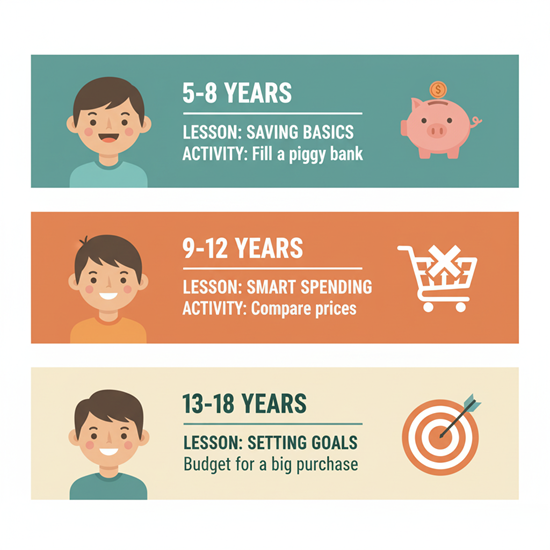
| Age Group | Key Lesson | Follow-Up Activity |
| 5-8 years | Needs vs. Wants | Draw pictures of things they need vs. want; discuss the differences |
| 9-12 years | Impulse Control & Advertising Awareness | Track how many ads they see in one day; discuss what the ads wanted them to buy |
| 13-18 years | Consumer Culture & Spending Habits | Calculate monthly spending on “impulse” purchases; set a savings goal |
Alternatives and Variations
If the official Buy Nothing Day date doesn’t work for your family, or if you want to adapt the concept, consider these alternatives:
Choose Your Own Date:
- Select any Saturday or Sunday that fits your schedule
- Align it with your family’s payday cycle to make it more relevant
- Create a monthly tradition on a specific day (like the first Sunday of each month)
Modified Versions:
“Buy Nothing New” Day: You can purchase only secondhand or used items. This variation teaches value, sustainability, and creative shopping.
“Buy Local Only” Day: Spending is allowed, but only at small, locally-owned businesses. This teaches community support and mindful consumption.
“Essential Only” Day: You can buy necessities but no discretionary items. This helps children distinguish between needs and wants.
“Experience, Not Things” Day: You can spend on activities or experiences (like a hike with a parking fee) but not on physical products. This emphasizes memories over possessions.
For Families with Older Kids:
Get teens more involved by letting them choose the date, making it a friendly competition (who can go longest without requesting a purchase?), or donating the “would-have-spent” money to a charity of their choice.
Each variation offers slightly different lessons while maintaining the core concept of mindful spending and financial awareness.
Common Questions About Buy Nothing Day

Does Buy Nothing Day include online shopping?
Yes, the concept includes all forms of purchasing: online shopping, app purchases, digital downloads, and streaming rentals. If money leaves your account, it counts as spending. This is actually an important teaching point, as many children don’t realize that clicking “buy” on a screen is the same as handing over cash.
Do we have to participate on the official date?
Not at all! Many families choose dates that work better for their schedule, their children’s developmental stage, or their financial education timeline. Some families practice monthly “no-spend days” instead of participating in the single official event. The date is far less important than the conversations and lessons that come from the experience.
Can we still pay bills or use subscriptions we already have?
Yes. Pre-existing commitments like mortgages, utilities, car payments, and subscription services aren’t considered “new spending.” The focus is on discretionary purchases—the spending choices you actively make on that day. Automatic payments that process on Buy Nothing Day don’t defeat the purpose.
Your Questions About Buy Nothing Day Pros and Cons
What age is appropriate for Buy Nothing Day?
Children as young as 5 can participate with simplified explanations and appropriate activities. However, the concept is most meaningful for children ages 10 and up who have some experience with spending money themselves—through allowances, birthday money, or purchases with parental permission. For younger children, focus on gratitude and enjoying what you have rather than the “not spending” aspect.
Will one day really make a difference?
Honestly, one day alone won’t fundamentally change your family’s financial habits. However, it’s an excellent conversation starter and can launch ongoing discussions about money, values, and spending choices. Think of it as opening a door rather than completing a journey. The real value comes from what you do with the experience afterward.
What if we have an emergency or genuine need?
Essential purchases are always acceptable. Buy Nothing Day is about mindful spending and education, not creating hardship or ignoring genuine needs. Medicine, urgent repairs, safety items, and true necessities should never be delayed for an optional financial literacy activity. Use judgment, and don’t feel guilty about addressing real needs.
What if my child really needs something that day?
Define “need” together. A genuine need (like replacing broken shoes before school on Monday) takes priority. A want (like a new video game) can wait. Use it as a teaching moment: “This is a good example of the difference between needing and wanting. Let’s talk about why the shoes are urgent but the game can wait.”
Conclusion

Buy Nothing Day pros and cons offer families a simple, free tool for teaching children financial literacy in a world saturated with consumer messages. The pros—teaching delayed gratification, sparking money conversations, building advertising awareness, creating family bonding, and encouraging gratitude—significantly outweigh the cons when the experience is approached positively and flexibly.
The challenges are real: it can feel restrictive during the holiday season, may confuse very young children, won’t work for every family’s circumstances, and requires careful framing to avoid negative associations. One day alone won’t transform your children’s financial future. But these limitations don’t diminish the value of the concept; they simply highlight the importance of adaptation.
The most important takeaway is this: Buy Nothing Day is completely optional and endlessly flexible. You can participate on the official date or choose any day that works for your family. You can practice it monthly, adapt the rules, or create your own variation. Focus on older children who are ready for the concept and use simpler gratitude practices with younger ones.
Whether you decide to try Buy Nothing Day or create your own family version, the real value lies in the conversations and lessons it sparks. Use it as one of many opportunities to help your children develop healthy money habits, critical thinking about spending, and appreciation for what truly matters. Financial literacy isn’t built in a day—it’s built in moments like these, repeated over time, adapted to your family’s unique needs and values.
Discover more from Money Parents
Subscribe to get the latest posts sent to your email.