
Thanksgiving is more than just turkey and football—it’s the perfect opportunity to teach your children two of life’s most important lessons: gratitude and financial literacy. The best Thanksgiving activities for kids combine holiday excitement with practical money education that children actually enjoy. Research shows that children who practice gratitude are 25% happier and more optimistic, while kids who learn money management early are significantly more likely to become financially responsible adults.
But here’s what most parents miss: gratitude and smart money habits go hand in hand. When children truly appreciate what they have, they’re less likely to make impulsive purchases and more inclined to save and give generously. This Thanksgiving, you can blend meaningful family traditions with practical financial education through engaging activities that make learning fun.

These 15 Thanksgiving activities for kids aren’t just busy work—they’re designed to build lifelong money skills while deepening your family’s appreciation for life’s blessings. From toddlers learning to count pennies to teenagers creating investment portfolios, every age can participate in ways that feel natural and enjoyable.
Why Combine Thanksgiving Gratitude with Money Lessons?
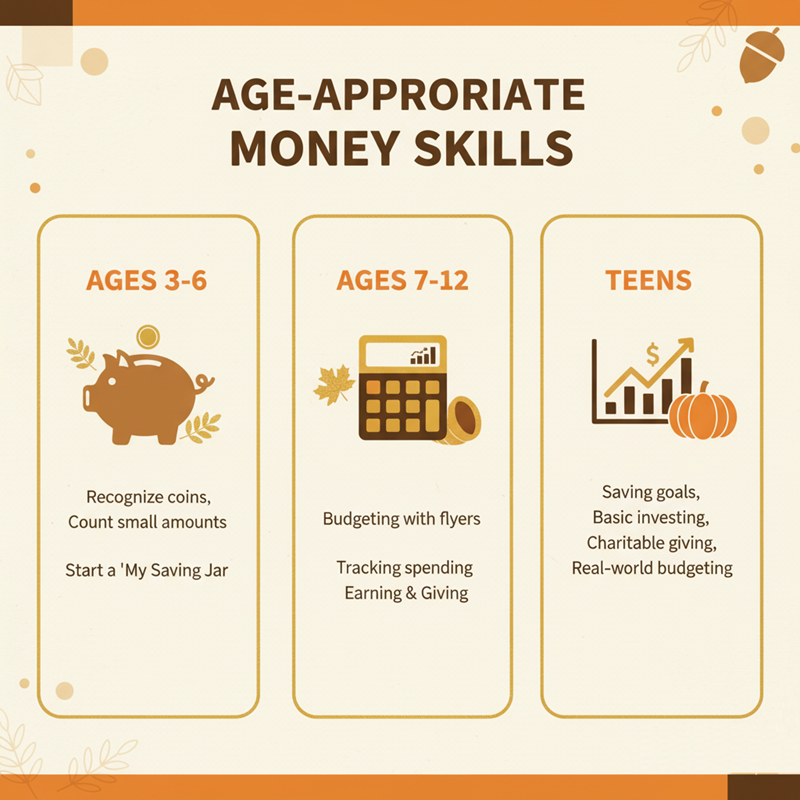
The connection between Thanksgiving gratitude and financial wellness runs deeper than you might think. When children develop a genuine appreciation for what they already have, they naturally become more thoughtful consumers. Instead of constantly wanting the latest toy or gadget, grateful kids learn to find joy in experiences, relationships, and simple pleasures.
Thanksgiving provides the perfect backdrop for these lessons because the holiday is already centered on reflection and appreciation. Your children are already in the mindset of thinking about blessings, making it easier to introduce concepts like budgeting for family meals, understanding the cost of traditions, and finding ways to give back to others.
The key is making these lessons age-appropriate and hands-on. A preschooler might not understand compound interest, but they can absolutely grasp that money is needed to buy groceries for their favorite Thanksgiving dish. A teenager might roll their eyes at a lecture about saving, but they’ll engage when calculating the real cost of Black Friday deals or planning a budget for visiting relatives.
Starting these conversations during holidays also creates positive associations with money management. Instead of viewing budgeting as restrictive or boring, children learn that smart money choices enable the experiences and traditions they value most. This mindset shift is invaluable and often determines whether children grow up to be financially stressed or financially confident adults.
The best Thanksgiving activities for kids combine holiday excitement with practical learning. When children are already engaged and excited about the season, they’re more receptive to new concepts and willing to participate in educational activities that might feel like “homework” at other times of the year.
Simple Thanksgiving Activities for Kids Ages 3-6: Little Learners

Activity 1: Thankful Penny Jar
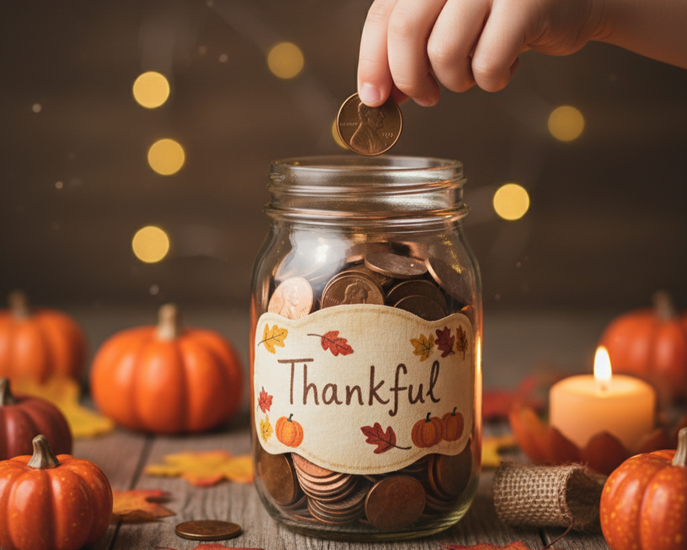
Transform spare change into a powerful lesson about gratitude and saving. Give your little one a clear jar and a pile of pennies (supervised, of course). Each day leading up to Thanksgiving, have them add one penny while sharing something they’re thankful for.
Materials needed: Clear jar, pennies, stickers for decoration
Step-by-step: Start with 10-15 pennies three weeks before Thanksgiving. Each morning, let your child choose one penny, say what they’re grateful for, and drop it in the jar. Count the pennies together, practicing numbers and basic addition. By Thanksgiving, they’ll have a jar full of gratitude and the beginning of their first savings account.
Money lesson: This activity introduces counting, the concept of accumulation over time, and the physical weight of saved money. Children this age learn through sensory experiences, and the satisfying clink of pennies creates positive associations with saving.
Gratitude lesson: Daily gratitude practice builds emotional intelligence and helps children notice good things they might otherwise take for granted. The physical act of adding a penny reinforces each thankful thought.
Activity 2: Thanksgiving Shopping Helper
Turn grocery shopping into an adventure in needs versus wants. Create a picture-based shopping list featuring Thanksgiving dinner ingredients alongside a few “want” items like cookies or decorations.
Money lesson: At the store, let your child help you choose between name-brand and store-brand items. Explain how buying store-brand green beans leaves more money for the special cranberry sauce grandma loves. This introduces budgeting concepts without overwhelming young minds.
Gratitude lesson: As you shop, talk about how lucky you are to have so many food choices. Point out that you’re buying ingredients to make special memories with family. This helps children connect money spent with experiences gained.
Use real money when possible—let them hand the cashier a $5 bill and receive change. The tactile experience of handling money makes the lesson stick better than abstract discussions about spending. These hands-on Thanksgiving activities for kids create lasting memories while building essential math and money skills.
Activity 3: DIY Thanksgiving Cards vs. Store-Bought Comparison

Create a simple economics lesson by comparing homemade cards to store-bought ones. Visit a store and look at Thanksgiving card prices together, then gather supplies at home to make your own.
Materials needed: Construction paper, crayons, stickers, glue—items you likely already have
Money lesson: Show your child that the store charges $3-4 per card, while making cards at home costs pennies in supplies. Help them understand that choosing to make cards means you have more money left for other family priorities, like ingredients for pumpkin pie.
Gratitude lesson: Handmade cards require time and thought, making them more meaningful than purchased ones. Discuss how the time spent creating shows love for the recipient. This teaches children that homemade gifts made with love are more valuable than expensive ones.
Let them decide which family members get homemade cards and which get store-bought cards, then tally up the savings together.
Activity 4: Thanksgiving Feast Pretend Play Store
Set up a dramatic play area where your child can “sell” Thanksgiving dinner items. Use play money or create simple paper bills and coins.
Setup: Arrange toy food or empty containers labeled with Thanksgiving items. Create price tags using round numbers ($1, $2, $5) that are easy for young children to work with.
Money lesson: Practice making change by having your child “sell” you items. If turkey costs $3 and you pay with a $5 bill, count out $2 in change together. This hands-on practice builds number sense and prepares them for real money transactions.
Gratitude lesson: As you “shop,” talk about how each food item contributes to your family’s special meal. Discuss who grows the vegetables, who raises the turkey, and how many people work to bring food to your table.
Activity 5: Turkey Feather Gratitude & Savings Chart
Create a visual tracking system that combines gratitude practice with savings goals. Draw or print a large turkey outline and cut out feather shapes from construction paper.
How it works: Each week, your child can earn feathers two ways—by expressing genuine gratitude for something specific, or by saving money instead of spending it on impulse purchases. For this age group, keep savings goals small: choosing not to buy candy at the store earns a feather.
Money lesson: Visual progress tracking helps children understand that small choices add up over time. Seeing their turkey gain feathers creates excitement about saving that can last well beyond Thanksgiving.
Gratitude lesson: Writing or drawing what they’re grateful for on each feather creates a beautiful keepsake while reinforcing positive thinking patterns.
By Thanksgiving, your child will have a colorful turkey covered in feathers representing both grateful moments and smart money choices—a perfect conversation starter for family dinner. This visual reminder shows how Thanksgiving activities for kids can create lasting family keepsakes while teaching valuable life lessons.
Educational Thanksgiving Activities for Kids Ages 7-12: Growing Savers

Activity 6: Thanksgiving Budget Challenge
Put your child in charge of planning a Thanksgiving meal within a set budget. This real-world problem-based learning example teaches budgeting while highlighting the cost of family traditions.
Setup: Give them a budget of $50-75 (adjust based on your family size) and a list of required items: turkey, vegetables, dessert, and drinks. Provide grocery store flyers or access to online pricing.
Money lesson: Children this age can handle addition, subtraction, and comparison shopping. Challenge them to find the best deals while staying within budget. Introduce concepts like unit pricing—is it cheaper to buy individual sweet potatoes or a 3-pound bag?
Gratitude lesson: As they see the real cost of holiday meals, children develop appreciation for the financial investment families make in traditions. Many kids have no idea that Thanksgiving dinner might cost $100+ for a large family.
Extension: If they come in under budget, let them choose how to spend the savings—extra dessert ingredients, decorations, or donations to a food bank.
Activity 7: Gratitude vs. Spending Journal
Create a two-column journal tracking daily gratitude alongside spending temptations. This powerful exercise builds both mindfulness and financial self-control.
How it works: Each day in November, your child records something they’re grateful for in the left column. In the right column, they note something they wanted to buy but chose not to purchase, along with the amount they would have spent.
Money lesson: By the end of the month, they’ll add up their “almost purchases” and see how much money they saved through mindful decision-making. This concrete number often surprises children and motivates continued careful spending.
Gratitude lesson: The daily gratitude practice shifts focus from wanting more things to appreciating current blessings. Many children discover they want fewer material items when they’re actively practicing gratitude.
Real example: “I’m grateful for my cozy bedroom” paired with “Didn’t buy a new poster at the store – saved $8.” By month’s end, saved amounts often total $50-100, enough for significant goals like a special family outing.
These meaningful Thanksgiving activities for kids help them understand that contentment and smart spending go hand in hand. Children who practice this type of mindful consumption often carry these habits into adulthood.
Activity 8: Thanksgiving Charity Drive Organizer
Transform the spirit of giving into a lesson about charitable budgeting and community service. Have your child research local food banks or family service organizations and plan a donation drive.
Research phase: Visit charity websites together to understand what items are most needed. Compare different organizations’ missions and impact. This teaches children to be thoughtful givers, not just generous ones.
Money lesson: If your child receives an allowance, challenge them to donate a specific percentage—perhaps 10%—to their chosen charity. Help them calculate this amount and understand how regular giving adds up. If they earn $20 monthly, that’s $2 for charity, or $24 per year.
Gratitude lesson: Learning about families who struggle to afford Thanksgiving dinner deepens appreciation for your own family’s abundance. Children often become more grateful for basic needs like food security and warm homes.
Action step: Organize a neighborhood collection or coordinate with your child’s school to multiply the impact. Children feel proud when they see their organizational efforts help multiple families.
Activity 9: Thanksgiving Dinner Cost Calculator
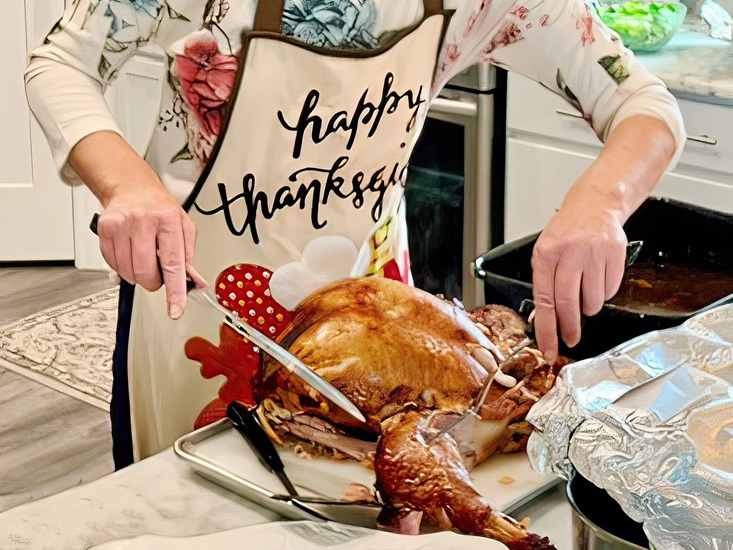
Turn your child into a family CFO by having them calculate the true cost of your Thanksgiving meal. This eye-opening exercise combines math skills with financial awareness.
Research phase: Give them grocery receipts or have them research current prices online. Include everything: turkey, vegetables, spices, drinks, dessert ingredients, even aluminum foil and storage bags.
Money lesson: Children are often shocked to learn that their favorite holiday meal costs $80-150 for a medium-sized family. Break down costs per serving to make numbers more relatable: “Each person’s plate costs about $12.”
Gratitude lesson: Understanding the financial investment helps children appreciate the thought and planning that goes into family celebrations. They begin to see holiday meals as gifts from parents, not automatic entitlements.
Family discussion: Share the final number at dinner and talk about how the cost compares to eating at restaurants or ordering takeout. Many children realize that home-cooked holiday meals are both more economical and more meaningful than restaurant alternatives.
Activity 10: Black Friday Needs vs. Wants Sort
Use Black Friday advertisements as real-world examples for practicing needs versus wants analysis. This timing is perfect since ads start appearing right after Thanksgiving.
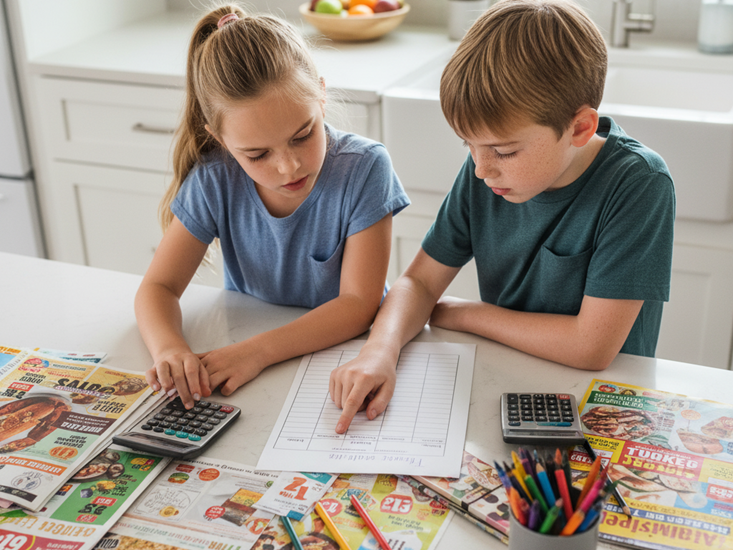
Materials: Collect Black Friday flyers from different stores, scissors, and two poster boards labeled “Needs” and “Wants.”
Money lesson: Have your child cut out advertised items and sort them into appropriate categories. This gets tricky with items like video games (entertainment need?) or new clothes (need if outgrown, want if simply desired). These gray areas create excellent discussion opportunities about prioritizing purchases.
Gratitude lesson: As children realize how many advertised items fall into the “wants” category, they often gain perspective on how much they already have. Seeing hundreds of sale items helps them understand that there will always be more things to buy—the key is choosing wisely.
Among all Thanksgiving activities for kids, cost analysis exercises often have the most lasting impact because they reveal concrete numbers that children can understand and remember.
Advanced Thanksgiving Activities for Kids Ages 13+: Money-Smart Teens

Activity 11: Thanksgiving Travel Budget Planner
Challenge your teenager to research and budget for a hypothetical (or real!) family trip to visit relatives for Thanksgiving. This complex project builds research skills while introducing advanced budgeting concepts.
Research components: Gas prices and mileage calculations, hotel rates, restaurant costs, and entertainment expenses. If flying, compare airline prices across different dates and times.
Money lesson: Teenagers can handle multi-variable budgeting and understand concepts like trade-offs. Should you stay in a cheaper hotel further from family, or spend more to be closer? Is it worth leaving a day early to save $200 on flights?
Gratitude lesson: As teens see the real cost of family visits—sometimes $1,000+ for a family of four—they develop deeper appreciation for parents who prioritize maintaining family relationships despite the expense.
Real-world application: If your family actually travels for Thanksgiving, involve your teen in real planning decisions. Their research might uncover money-saving opportunities you hadn’t considered.
Activity 12: Gratitude Investment Portfolio
Combine investment education with gratitude practice by having your teen create a hypothetical portfolio of companies they genuinely appreciate.
How it works: Your teen lists 10-15 companies whose products or services they’re grateful for—perhaps Netflix for entertainment, their favorite clothing brand, or a food company whose snacks they enjoy. Then they research stock prices and “invest” $10,000 in hypothetical purchases.
Money lesson: This introduces stock market basics, research skills, and the concept of becoming partial owners in companies they support. Track the portfolio’s performance over several months to understand market volatility.
Gratitude lesson: Teens begin connecting their daily purchases and consumption to actual businesses and economic systems. They develop appreciation for entrepreneurship and innovation that creates products they enjoy.
Advanced concept: Introduce the idea of values-based investing. Some companies align better with personal values than others. This leads to discussions about corporate responsibility and ethical consumption.
Activity 13: Thanksgiving Tradition Cost Analysis
Have your teen calculate the lifetime cost of family Thanksgiving traditions. This long-term thinking exercise builds financial planning skills while highlighting family investment in memories.
Calculation project: Research the annual cost of your family’s Thanksgiving traditions over the past decade: food, travel, decorations, and hosting supplies. Project these costs over the next 20 years, accounting for inflation.
Money lesson: Understanding that family traditions might cost $30,000-50,000 over a lifetime introduces concepts like opportunity cost and long-term financial planning. What else could families do with that money? Are traditions worth the investment?
Gratitude lesson: Most teens conclude that family memories and connections are indeed worth significant financial investment. This realization helps them appreciate parents’ long-term commitment to family bonding and tradition-building.
Discussion starter: Talk about which traditions provide the most value per dollar spent. Sometimes, the most expensive elements (elaborate decorations) matter less than simple activities like cooking together.
Activity 14: Holiday Job & Giving Challenge
Encourage your teen to earn extra money through seasonal work, then donate a percentage to charity. This combines work ethic development with charitable giving.
Earning opportunities: Leaf raking, holiday decoration setup/removal, pet-sitting during family travels, or helping neighbors with Thanksgiving meal prep.
Money lesson: Teens experience the satisfaction of earning money through effort while learning that work availability often increases during holidays when people need extra help.
Gratitude lesson: Donating earnings (suggest 10-20%) to food banks or family service organizations deepens appreciation for their own opportunities and resources. Many teens are surprised by how good giving feels.
Character building: Working during holidays while peers are relaxing builds work ethic and time management skills. Teens often discover they enjoy earning money and helping others.
Activity 15: Thanksgiving STEM Activities for Kids (Budget Edition)
Combine science experiments with cost-consciousness by exploring the chemistry and biology of Thanksgiving foods while tracking experiment costs.
Project ideas: Test different methods for keeping cut apples fresh (lemon juice vs. saltwater vs. vacuum sealing), compare cooking methods for energy efficiency, or explore food preservation techniques used historically.
Money lesson: Calculate the cost per experiment and compare results to determine which methods provide the best value. Some expensive solutions don’t work better than cheap alternatives.
Gratitude lesson: Understanding food science helps teens appreciate the knowledge and techniques that make modern food safety and preservation possible. They gain respect for agricultural innovation and food production systems.
STEM connection: These experiments reinforce chemistry and biology concepts while demonstrating that learning doesn’t require expensive equipment—kitchen ingredients and curiosity suffice.
The most innovative Thanksgiving activities for kids combine multiple learning objectives, allowing families to address science, math, and financial literacy simultaneously while maintaining the holiday spirit.
Free Thanksgiving Activities for Kids That Build Money Skills

Not every valuable money lesson requires spending. Some of the most powerful Thanksgiving activities for kids cost absolutely nothing while teaching crucial financial concepts.
Household item treasure hunts can teach children about resourcefulness and creativity. Challenge kids to create Thanksgiving decorations using only items already in your home. This reinforces that entertainment and beauty don’t require new purchases—they require imagination.
Community-based learning opportunities abound during Thanksgiving season. Visit local food banks as volunteers, attend free community Thanksgiving events, or participate in charity walks. These experiences show children how communities support each other while demonstrating that meaningful activities often cost nothing.
Nature-based gratitude activities combine outdoor time with appreciation practice. Take family walks to collect colorful fall leaves for free decorations, or have children find natural items representing things they’re grateful for—smooth rocks for family stability, acorns for future growth, or colorful leaves for life’s variety.
Library resources provide endless free Thanksgiving activities for kids. Most libraries offer holiday-themed crafts, storytimes, and educational programs during November. Librarians often have activity packets and book recommendations that extend learning at home without additional cost.
The key insight is that children who learn to find joy and learning opportunities without spending money develop crucial life skills. They become adults who can entertain themselves inexpensively, who appreciate simple pleasures, and who don’t automatically equate spending with happiness.
Making These Thanksgiving Activities for Kids Stick Year-Round
The real value of combining Thanksgiving celebrations with financial education lies in extending these lessons throughout the year. Successful money management isn’t a holiday topic—it’s a life skill that requires consistent practice and reinforcement.
Holiday rotation strategy: Apply similar approaches to other holidays throughout the year. Christmas budgeting activities, Easter charity drives, and Fourth of July community service projects all provide natural opportunities for age-appropriate financial lessons. The structure you develop with Thanksgiving activities for kids can be adapted to create year-round learning opportunities.
Monthly family traditions can maintain momentum between major holidays. Institute monthly budget meetings where children help plan grocery shopping, monthly charity selection where kids research different organizations, or monthly vision board updates where family members discuss both blessings and smart financial choices.
Seasonal adjustments keep activities fresh and relevant. Spring might focus on gardening economics and environmental stewardship, summer on vacation budgeting and job exploration, fall on harvest gratitude and school supply management, and winter on gift-giving philosophy and energy conservation.
Age-appropriate progression ensures that lessons grow with your children. A child who sorts needs versus wants at age 8 might research college costs at age 16, but both activities teach prioritization and planning. The foundational skills remain consistent while complexity increases.
The families who succeed in raising financially responsible children understand that money education happens through daily conversations and consistent modeling, not through single dramatic lessons. These Thanksgiving activities for kids provide structured starting points, but the real learning happens through ongoing family discussions about values, choices, and priorities.
Conclusion
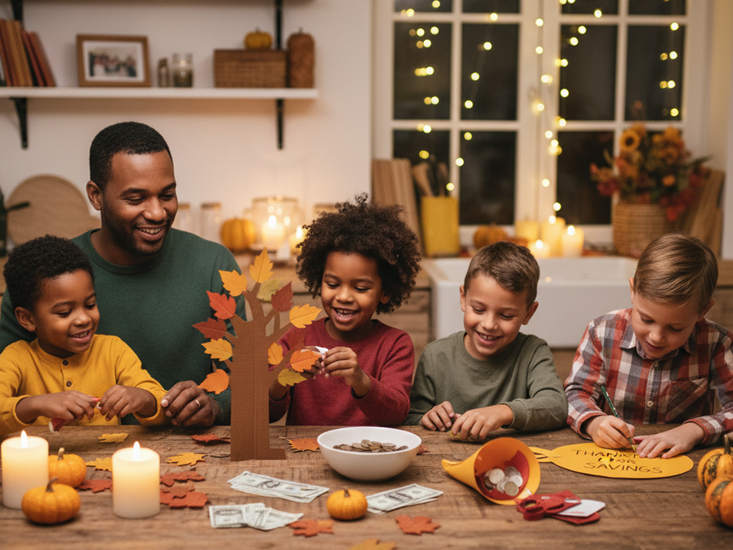
Thanksgiving offers a unique opportunity to blend gratitude, family bonding, and financial education into meaningful experiences your children will remember for years. These 15 Thanksgiving activities for kids prove that money lessons don’t have to be boring lectures—they can be engaging, age-appropriate activities that strengthen family relationships while building crucial life skills.
The children who participate in these activities will enter adulthood with advantages their peers may lack: appreciation for what they have, understanding of what things cost, and confidence in making smart financial decisions. They’ll be less likely to struggle with impulse purchases, more likely to save consistently, and better prepared to handle financial challenges.
Start small this year. Choose two or three activities that match your children’s ages and your family’s interests. The goal isn’t perfection—it’s progress. Every conversation about needs versus wants, every moment spent appreciating family investments in traditions, and every dollar saved or donated builds your children’s financial foundation.
If you want more information about how to start new financial habits with your kids, check our article on kid-friendly New Year’s resolutions.
FAQ Section
What are the best free Thanksgiving activities for kids? Free activities that build both gratitude and money skills include household item decoration challenges, community volunteer opportunities, nature-based gratitude walks, and library-sponsored holiday programs. These activities teach resourcefulness and demonstrate that meaningful experiences don’t require significant spending.
How can I make Thanksgiving activities for kids educational but fun? The key is hands-on involvement and age-appropriate challenges. Let younger children handle real money during pretend shopping games, involve middle schoolers in actual meal budgeting, and challenge teenagers with complex research projects. When children feel ownership and see real results, education becomes engaging.
What’s the right age to start combining Thanksgiving activities for kids with money lessons? Financial concepts can be introduced as early as age 3 through simple activities like penny counting and needs identification. The sophistication increases with age, but basic concepts like “money is needed to buy things” and “we can’t have everything we want” are appropriate for preschoolers. How do I make Thanksgiving day activities for kids meaningful without being preachy? Focus on hands-on experiences rather than lectures. Instead of talking about gratitude, create opportunities for children to experience appreciation naturally—through cost calculations, charity research, or tradition analysis. Let them draw their own conclusions from real data and experiences.
Discover more from Money Parents
Subscribe to get the latest posts sent to your email.