
Teaching children about money doesn’t have to wait until they’re older. In fact, the earlier you start, the better equipped they’ll be to handle financial challenges throughout their lives. New Year’s Resolutions for kids provide the perfect opportunity to introduce financial literacy concepts in a fun, goal-oriented way that children and teens can understand and embrace.
Whether your child is just learning to count coins or your teenager is preparing for college, setting New Year’s Resolutions for kids creates lasting money habits while strengthening family bonds. These resolutions don’t just teach financial concepts—they help children develop life skills that will serve them well into adulthood. Let’s explore how to make this New Year a turning point for your family’s financial future by creating meaningful New Year’s Resolutions for kids that actually stick.

What Is a New Year’s Resolution? (Why They Matter for Kids)
A New Year’s resolution is a promise people make to themselves to change or improve something in their lives starting January 1st. For kids, resolutions are powerful learning tools that teach goal-setting, personal responsibility, and the satisfaction that comes from achieving something meaningful.
When children create financial resolutions, they’re not just learning about money—they’re developing critical life skills. New Year’s Resolutions for kids help children understand that financial success doesn’t happen by accident; it requires planning, patience, and consistent effort.
Financial resolutions are particularly valuable for children because money concepts can seem abstract. By setting concrete, achievable New Year’s Resolutions for kids, children can see real progress and understand how their choices impact their financial future. A child who resolves to save half their allowance will experience firsthand how small, consistent actions lead to bigger rewards.
Research shows that children who learn financial concepts early are more likely to make sound money decisions as adults. They’re less likely to accumulate debt, more likely to save for emergencies, and better equipped to plan for major life expenses like college or home ownership.
The key to successful New Year’s Resolutions for kids lies in making them age-appropriate, specific, and tied to things they care about. A five-year-old might resolve to put one dollar from their allowance into their piggy bank each week, while a teenager might commit to researching college costs and creating a savings plan.
Creating Effective New Year’s Resolutions for Kids by Age Group
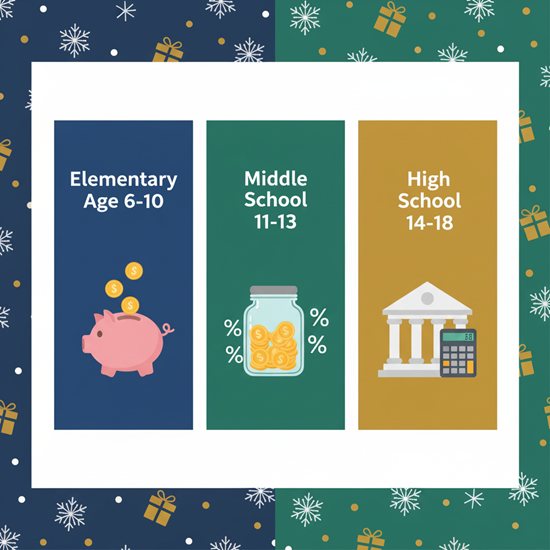
Elementary Age (6-10)
Children in elementary school are just beginning to understand money as a concept. When creating New Year’s Resolutions for kids this age, remember they’re learning that different coins and bills have different values, and they’re starting to grasp that money is needed to buy things they want.
At this age, New Year’s Resolutions for kids should be simple, visual, and tied to immediate rewards. Elementary-aged children think in concrete terms, so abstract concepts like “saving for the future” need to be connected to specific, short-term goals they can visualize and achieve relatively quickly.
The best financial resolutions for this age group involve physical money they can see and count. Clear containers for saving, colorful charts to track progress, and small, achievable goals work best. These children are also beginning to understand the difference between needs and wants, making this an excellent time to introduce basic budgeting concepts.
Parents should expect to provide significant guidance and reminders for this age group. The goal isn’t perfection—it’s building positive associations with saving and smart spending while developing the habit of setting and working toward financial goals.
Middle School (11-13)
Middle schoolers are developing more sophisticated thinking skills and can handle slightly more complex financial concepts. They’re often receiving larger allowances, earning money from small jobs, and beginning to want more expensive items that require saving over longer periods.
This age group can understand percentages, which opens up opportunities for resolutions involving saving specific portions of their income. They can also grasp the concept of opportunity cost—understanding that choosing to spend money on one thing means they can’t spend it on something else.
Middle school is an excellent time to introduce the concept of multiple savings goals. Children this age can manage saving for both short-term wants (a new video game) and longer-term goals (a bicycle or special trip). They can also begin to understand how interest works and why saving money in a bank account might be better than keeping it in a piggy bank.
Technology becomes more relevant for this age group. Many middle schoolers are comfortable using apps and online tools, making this a good time to introduce age-appropriate financial apps or online savings accounts designed for children.
High School Teens (14-18)
High school students are preparing for adult financial responsibilities and can handle sophisticated financial concepts. Many have part-time jobs, receive larger amounts of money for birthdays and holidays, and are beginning to think seriously about college and career costs.
Teenagers can set resolutions involving real-world financial challenges like saving for a car, contributing to college expenses, or managing a clothing budget. They can understand concepts like compound interest, credit scores, and the long-term impact of financial decisions made during their teenage years.
This age group benefits from resolutions that mirror adult financial responsibilities. They can manage checking accounts, learn about investing basics, and understand how debt works. High school is also an ideal time to discuss family financial values and help teens understand how their money choices reflect their personal priorities.
The resolutions for this age group should increasingly focus on building skills they’ll need as independent adults. This includes everything from comparison shopping—including navigating Black Friday deals safely and smartly—to budgeting, understanding insurance, and learning about taxes. If you want to learn more about the skills every teenager needs to learn, read our full article with the 7 habits of highly effective teens.
Top 10 New Year’s Resolutions for Kids

These New Year’s Resolutions for kids are designed specifically for children ages 6-12, focusing on fundamental money concepts that build a strong foundation for future financial success.
1. Save Half of All Money Received
This resolution teaches children the fundamental concept of paying yourself first. Whether it’s allowance, birthday money, or earnings from small chores, saving half creates an automatic savings habit. Start with a clear jar or piggy bank so kids can watch their money grow visually.
2. Learn the Value of Every Coin and Bill
Many children can count money before they truly understand its value. This resolution involves activities like grocery store math, where kids calculate how many quarters equal a dollar or figure out if they have enough money for a small purchase.
3. Keep a Spending Diary for One Month
Have children write down or draw pictures of everything they spend money on for 30 days. This activity helps kids become aware of their spending patterns and introduces the concept of tracking money—a skill they’ll use throughout their lives.
4. Earn Money Through Age-Appropriate Chores
Beyond regular household responsibilities, kids can make extra money by taking on additional chores or small tasks. This might include washing cars, organizing closets, or helping with yard work. The goal is connecting effort with earning. Find here our list of age-appropriate chores and free printable.
5. Save for One Special Thing They Really Want
Help your child identify something they want that costs more than their usual purchases. Create a savings chart showing progress toward this goal. This teaches delayed gratification and the satisfaction of working toward something meaningful.
6. Learn to Comparison Shop for Three Items
Take your child shopping and show them how to compare prices on items like cereal, toys, or school supplies. Let them discover that the same item might cost different amounts at different stores, introducing the concept of being a smart consumer.
7. Start a Small Business or Service
Even young children can provide simple services like pet-sitting for neighbors, selling lemonade, or creating artwork to sell to family members. This introduces entrepreneurship and shows how people earn money by providing value to others.
8. Donate Money to a Cause They Care About
Set aside money specifically for charitable giving. Let your child research and choose a cause that matters to them. This teaches that money can be used to help others and introduces the concept of giving back to the community.
9. Learn About Needs Versus Wants
Create a game where children categorize different items as needs (food, shelter, clothing) or wants (toys, candy, entertainment). This fundamental concept helps children make better spending decisions throughout their lives.
10. Open Their First Bank Account
Many banks offer special accounts for children with low or no minimum balances. Take your child to the bank, let them fill out paperwork with help, and show them how deposits and withdrawals work. This introduces formal banking concepts and makes saving feel more “grown-up.” Opening a bank account is one of the most practical New Year’s Resolutions for kids who are ready to take their money management to the next level.
Top 10 New Year’s Resolutions for Teens

These resolutions address the more complex financial challenges teenagers face as they prepare for adult responsibilities and greater financial independence.
1. Get a Part-Time Job or Increase Work Hours
Employment teaches teens the value of work and provides steady income for savings and spending goals. Even just a few hours per week, either in person or working from home, can provide valuable experience with time management, customer service, and workplace responsibilities.
2. Save 30% of All Income for Future Goals
This resolution builds on childhood savings habits but with a more sophisticated approach. Teens should save for multiple goals: emergency fund, college expenses, or major purchases like a car. Help them learn delayed gratification and understand how consistent saving compounds over time.
3. Create and Stick to a Monthly Budget
Teenagers can learn to budget using apps, spreadsheets, or simple pen-and-paper methods. Include categories for savings, fixed expenses (like car insurance), variable expenses (entertainment, clothing), and charitable giving. Review and adjust monthly.
4. Research and Understand College Costs
Have teens research the total cost of attending their preferred colleges, including tuition, room and board, books, and personal expenses. This real-world research helps them understand the importance of saving and potentially earning scholarships.
5. Learn About Credit Scores and How They Work
While teens can’t get credit cards independently, they can learn how credit works, what affects credit scores, and why good credit matters for future goals like renting apartments or buying cars. You might find these book helpful:
- Teens Soar in Their Credit Score by Cheurlie Pierre-Russell
- My First Step to a Successful Credit Score for Teens and Beginners by Sweet Smart Books
6. Start Investing with Small Amounts
With parental guidance and appropriate accounts, teens can begin learning about investing through simple index funds or educational investment apps designed for beginners. Start with small amounts and focus on learning rather than returns. Find full guide here: A Teenager’s Guide to Investing in the Stock Market.
7. Pay for One Major Expense Independently
Whether it’s car insurance, a cell phone bill, or clothing expenses, having teens take responsibility for a regular expense teaches budgeting and prioritization. They learn that money choices have real consequences.
8. Comparison Shop for Major Purchases
Before buying expensive items like electronics, sports equipment, or formal wear, teens should research prices across multiple retailers, read reviews, and consider both quality and cost. This develops smart consumer habits.
9. Learn About Different Types of Bank Accounts
Teens should understand the differences between checking and savings accounts, how interest works, and what fees to avoid. Many banks offer student accounts with special terms that can help teens avoid common banking mistakes. You can find a full guide here on Banking Basics for Teens.
10. Create a Post-High School Financial Plan
This comprehensive resolution involves calculating costs for their chosen path after graduation (college, trade school, work), researching financial aid options, and creating a timeline for achieving financial independence. This big-picture planning helps teens make informed decisions about their future.
Top 10 New Year’s Resolution Ideas for Parents

Parents play a crucial role in their children’s financial education. These resolutions help parents model good financial behavior while creating teachable moments for the whole family.
1. Have Monthly Family Money Meetings
Schedule regular family discussions about financial goals, upcoming expenses, and money values. These meetings shouldn’t focus on family financial stress but rather on goal-setting, planning for fun activities, and celebrating financial achievements.
2. Model Good Financial Behavior Daily
Children learn more from what they observe than what they’re told. Show kids how you comparison shop, explain why you’re saving for specific goals, and demonstrate thoughtful spending decisions. Make your financial thinking visible to your children.
3. Give Age-Appropriate Allowances with Clear Expectations
Whether you tie allowance to chores or provide it unconditionally, be consistent and clear about expectations. Use allowance as a teaching tool by discussing how much to save, spend, and share with others.
4. Involve Kids in Real Family Financial Decisions
When planning family vacations, choosing between activities, or making household purchases, include children in age-appropriate discussions about costs and trade-offs. This shows them that all spending involves choices and priorities.
5. Create Visual Savings Goals for Family Projects
Whether you’re saving for a family vacation, home improvement, or special celebration, create visual progress tracking that kids can understand and contribute to. This shows children that families work together toward shared financial goals.
6. Teach Kids About Family Values Around Money
Discuss what your family believes about money, giving, saving, and spending. These values-based conversations help children understand that financial decisions reflect personal and family priorities. Family traditions like Thanksgiving provide perfect opportunities to discuss gratitude and giving back – check out our Thanksgiving activities that reinforce family values. Focus on teaching an abundance mindset that emphasizes opportunities rather than limitations.
7. Review and Improve Your Own Financial Habits
Children benefit when parents continue learning about money. Read financial books, listen to podcasts, or take courses to improve your own financial literacy. Share age-appropriate insights with your children.
8. Open College Savings Accounts (529 Plans) for Each Child
Even small, regular contributions to college savings plans can make a significant difference over time. Involve older children in understanding how these accounts work and how compound interest helps money grow. Find more details in our article on how to optimize your 529 Savings Plan.
9. Teach Kids About Insurance and Financial Protection
Explain how insurance protects families from financial disasters and why emergency funds matter. These concepts help children understand that smart financial planning includes preparing for unexpected events.
10. Plan and Involve Kids in Charitable Giving
Make giving back a family priority by researching charities together, volunteering as a family, or letting children choose causes to support with family donations. This teaches children that money can be used to help others and make a positive impact.
How Parents Can Support Their Children’s New Year’s Resolutions for Kids

Supporting New Year’s Resolutions for kids requires patience, consistency, and age-appropriate financial guidance. The goal isn’t perfection—it’s building positive money habits and associations that will benefit children throughout their lives.
Create Visual Progress Tracking
Children respond well to visual representations of their progress. For younger kids, this might mean clear jars for different savings goals or colorful charts showing money saved each week. Teenagers might prefer apps or spreadsheets, but the principle remains the same: make progress visible and celebrate milestones.
Provide Regular Check-Ins Without Nagging
Schedule weekly or monthly conversations about financial goals without making them feel like interrogations. Ask open-ended questions like “How do you feel about your saving progress?” or “What did you learn about spending this week?” Focus on learning rather than judgment.
Make Learning Fun and Relevant
Connect financial concepts to things your children already care about. If your daughter loves horses, use horse-related examples when discussing saving and spending. If your son is interested in video games, discuss the economics of in-game purchases and how those costs add up over time. Avoid focusing on what they can’t afford—instead, help them see the abundance of opportunities that come with smart money choices. The best New Year’s Resolutions for kids are those that connect to their personal interests and passions.
Celebrate Achievements Appropriately
When children meet their financial goals, acknowledge their success in ways that reinforce the behavior without undermining the lesson. Instead of buying them something expensive, you might let them choose a family activity or give them non-monetary recognition that shows you’re proud of their effort and discipline.
Be Patient with Setbacks
Children will make mistakes with money—spending impulsively, forgetting to save, or losing motivation. Use these moments as learning opportunities rather than reasons for punishment. Help them understand what went wrong and how they can make different choices next time.
Connect Resolutions to Real-World Experiences
Take advantage of everyday opportunities to reinforce financial lessons. At the grocery store, show children how you use coupons or choose generic brands. When planning family activities, involve kids in discussions about costs and budget constraints.
Adjust Goals as Needed
If a resolution proves too challenging or too easy, work with your child to modify it. The goal is building successful habits, not rigidly sticking to arbitrary numbers. A child who consistently saves 20% of their allowance might be ready to increase to 30%, while another child might need to start with 10%.
New Personal Finance Habits to Start Before the End of the Year
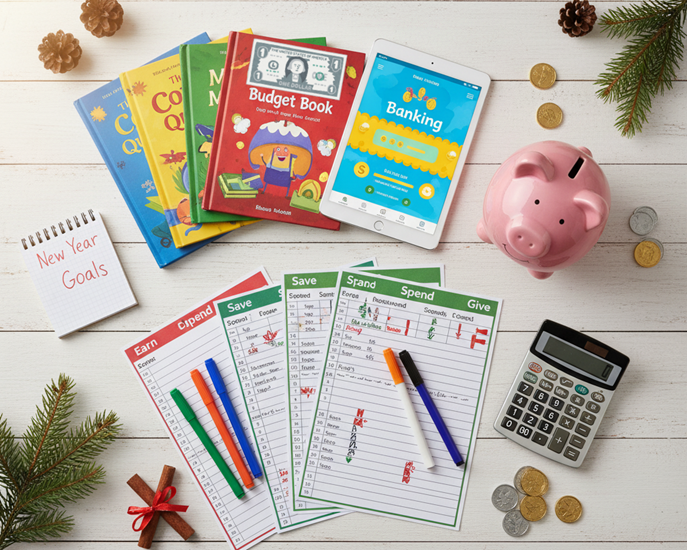
Starting new financial habits before January 1st gives families time to establish routines and work out challenges before the official “resolution period” begins. These practices create momentum and increase the likelihood of long-term success.
Implement Weekly Money Talks
Begin having regular family conversations about money topics appropriate for each child’s age. Younger children might discuss the difference between needs and wants, while teenagers can participate in discussions about college costs or family financial goals. Make these conversations positive and educational rather than stressful.
Start Automatic Savings Plans
Set up systems that make saving effortless. For younger children, this might mean immediately putting half of any money received into savings before they have a chance to spend it. Teenagers can set up automatic transfers from checking to savings accounts or automatic investments in simple index funds.
Begin Tracking Family Expenses
Involve age-appropriate children in understanding where family money goes each month. This doesn’t mean sharing private financial details, but rather helping kids understand that families have budgets and make choices about spending priorities. The holiday season is an ideal time to practice budget-conscious spending as a family – see our complete guide to Christmas on a budget for practical strategies. Children can track their own spending as part of this family practice.
Create Physical Spaces for Financial Management
Designate areas in your home for financial organization. This might include a special place for children’s savings containers, a family vision board, a chart for tracking financial goals, or a bulletin board for displaying progress charts. Having dedicated spaces reinforces that financial management is a priority.
Establish Earning Opportunities
Before the New Year arrives, create systems for children to earn money beyond regular allowances. This might involve extra chores, small business opportunities, or helping neighbors with age-appropriate tasks. Having established earning opportunities makes savings resolutions more achievable.
Research and Compare Financial Products
Use the end of the year to research bank accounts, investment options, and financial tools that might benefit your family’s financial education goals. Compare children’s savings accounts, look into educational investment platforms, or research financial literacy curricula you might want to implement.
Plan Financial Field Trips
Schedule visits to banks, credit unions, or financial institutions where children can see how money management works in the real world. Many financial institutions offer educational programs for children and families. Planning these experiences in advance creates anticipation and learning opportunities.
Making New Year’s Resolutions for Kids Stick: Tips for Success

The key to successful New Year’s Resolutions for kids lies in making them specific, achievable, and connected to things children genuinely care about. Generic goals like “save more money” rarely succeed because they don’t provide clear direction or motivation.
Make Goals Specific and Measurable
Instead of “save money,” try “save $5 from allowance each week” or “save 50% of birthday money.” Specific goals provide clear targets and make it easy to track progress. Children need to know exactly what success looks like and how to measure their progress along the way.
Connect Goals to Personal Interests
The most successful resolutions tie into things children already value. A child who loves art might resolve to save money for high-quality art supplies, while a sports-enthusiast might save for equipment upgrades. When financial goals support personal passions, children have intrinsic motivation to succeed.
Start Small and Build Gradually
Success breeds success, especially with children. It’s better to set modest goals that children can achieve consistently than ambitious goals that lead to frustration and giving up. A child who successfully saves $1 per week can gradually increase to $2 per week, building confidence and capability over time.
Create Accountability Systems
Help children develop ways to stay accountable to their goals without creating pressure or stress. This might involve progress charts, savings jars they can see daily, or regular check-ins with parents or siblings. The accountability should feel supportive rather than punitive.
Plan for Obstacles and Setbacks
Discuss potential challenges before they arise and develop strategies for handling them. If a child’s goal is to save half their allowance, talk about what they’ll do when something they really want costs more than their available spending money. Having plans for difficult situations increases success rates.
Celebrate Progress, Not Just Final Achievement
Acknowledge effort and progress regularly, not just when goals are completely met. A child who saves money for eight weeks straight deserves recognition even if they haven’t yet reached their final savings target. Celebrating progress maintains motivation and reinforces positive behavior.
Link Short-Term Actions to Long-Term Benefits
Help children understand how their current financial choices connect to future opportunities and freedom. A teenager who saves money consistently now will have more options for college, travel, or career choices later. Making these connections helps children see beyond immediate gratification.
Free Resources and Tools for Families

Building financial literacy doesn’t require expensive programs or complicated systems. Many excellent resources are available at no cost to help families implement and maintain financial resolutions successfully.
Educational Websites and Apps
PiggyBot allows children to take photos of their savings goals and track progress visually. Greenlight offers family financial management tools with parental controls and educational components. Many banks provide online financial literacy games and activities designed specifically for children and teenagers.
Library Resources
Most public libraries offer financial literacy books for all age groups, from picture books about money concepts for young children to comprehensive guides for teenagers preparing for financial independence. You can explore our selection of the best children’s books about money. Many libraries also host financial literacy workshops and events for families.
Government and Non-Profit Educational Materials
The U.S. Treasury Department provides free lesson plans and activities for teaching children about money. Jump$tart Coalition offers comprehensive financial literacy resources organized by age group. These materials are developed by financial experts and educators specifically for family use.
Community Resources
Local credit unions often provide financial education programs for children and families. Many offer special savings accounts for children with educational components and incentives for consistent saving. Community centers sometimes host financial literacy workshops or camps during school breaks.
Online Calculators and Tools
Free online calculators can help families understand concepts like compound interest, college costs, and savings goals. These tools make abstract concepts concrete and help children see how their money choices impact future outcomes. Many are designed specifically for educational use with children.
Family Budget Templates
Budget planners designed for families can help parents model financial planning while involving children in age-appropriate ways. These templates often include sections for family financial goals and can be adapted for children’s personal use as they develop their own money management skills.

The journey toward financial literacy is a marathon, not a sprint. By setting thoughtful New Year’s Resolutions for kids focused on money skills, families create opportunities for learning, bonding, and building habits that will benefit children throughout their lives. Remember that the goal isn’t perfection—it’s progress. Every conversation about money, every dollar saved, and every smart spending choice contributes to your children’s financial education and future success.
Start where your family is now, choose New Year’s Resolutions for kids that fit your children’s ages and interests, and be patient with the process. Financial literacy is one of the greatest gifts you can give your children, and New Year’s Resolutions provide the perfect framework for making this important learning both structured and enjoyable.
DISCLOSURE: We often review or link to products and services we believe you might find helpful. This article contains affiliate links, which means if you click a link and make a purchase, we may receive a small commission at no extra cost to you. This helps us keep MoneyParents.com running and continue providing free financial education content for families.