

As parents, we’ve all been there. Your child sees a toy at the store and wants it right now. They beg, plead, and maybe even throw a tantrum when you say “maybe next time.” While these moments can be exhausting, they’re actually perfect opportunities for teaching delayed gratification, one of life’s most valuable skills.
Learning delayed gratification isn’t just about preventing meltdowns in the toy aisle. It’s the foundation of financial literacy and lifelong money management skills. Children who master this ability are more likely to become adults who save money, avoid debt, and make thoughtful financial decisions.
In this comprehensive guide, we’ll explore everything you need to know about teaching delayed gratification to your children, from understanding the science behind it to practical strategies you can implement at every age.

What Is Delayed Gratification?
Delayed gratification is the ability to resist immediate rewards in favor of larger, later benefits.
Start Teaching Delayed Gratification Today: Quick Checklist
Not sure where to begin? Here are 5 actions you can implement right now:
✅ Choose one visual timer activity – Use your phone timer for a 5-minute wait before snack time
✅ Create a simple wish list – Have your child draw or write 3 things they want, then wait 48 hours before discussing
✅ Set one savings rule – “Save 25% of any money you receive before spending”
✅ Practice a waiting script – Next store visit, try: “Let’s add that to your wish list and talk about it at home”
✅ Model one example – Verbalize your own delayed gratification decision: “I’m waiting until the weekend sale to buy this”
How to Teach Delayed Gratification to Kids: Age-Appropriate Strategies
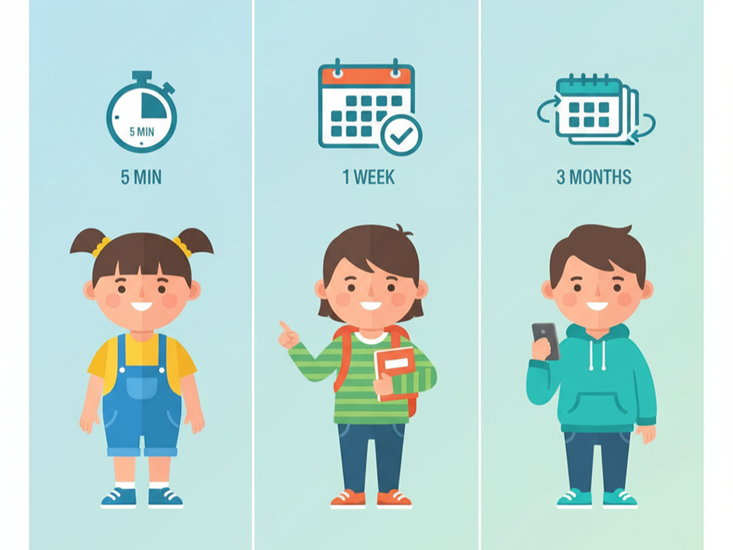
Preschoolers (Ages 3-5): Building the Foundation
At this age, children are just beginning to understand the concept of time and future rewards. Keep expectations realistic and focus on very short delays.
Practical Strategies:
- The Timer Game: Use a visual timer for small delays. “We’ll have a snack in 5 minutes when the timer goes off.”
- First/Then Language: “First we clean up toys, then we watch a movie.”
- Savings Jar: Let them put coins in a clear jar and watch their money grow before spending it on something special.
Real-World Example: Sarah’s 4-year-old daughter Emma wanted candy at the grocery store. Instead of saying no outright, Sarah said, “If you help me shop without asking for candy, you can choose a special treat at the end.” Emma learned that waiting and helping led to a better reward than immediate demands.
Elementary Age (Ages 6-10): Expanding Time Horizons
School-age children can handle longer delays and more complex reward systems. This is prime time for teaching delayed gratification through money and savings.
Practical Strategies:
- Allowance with Conditions: Provide weekly allowances but require saving a portion before spending.
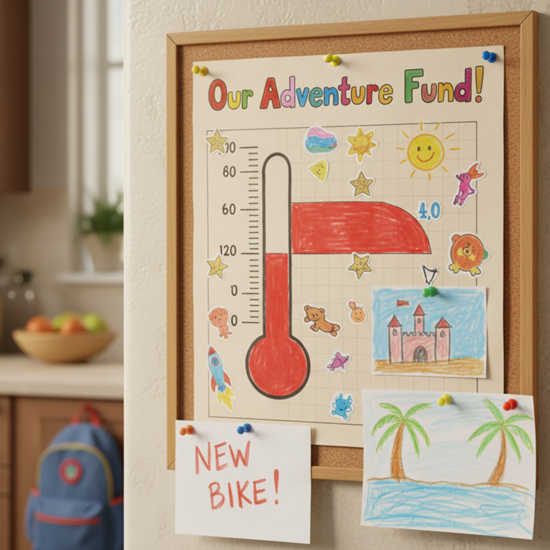
- Goal Charts: Create visual charts tracking progress toward bigger purchases.
- The Matching Game: Match their savings dollar-for-dollar when they save for specific goals.
Activity Idea: Create a “wish list” system where your child writes down things they want. Implement a waiting period – if they still want the item after two weeks, they can work toward earning or saving for it. More tips on how to distinguish between needs and wants here.
It is also at this age that they can understand concepts of longer-term goal setting and even New Year’s Resolutions.
Tweens and Teens (Ages 11+): Real-World Applications

Older children can handle complex delayed gratification scenarios that mirror adult financial decisions.
Practical Strategies:
- Banking Basics: Open a savings account and show how interest compounds over time.
- Job Earnings: Encourage part-time work or chores for pay. Try these 30+ ways for kids to make money.
- Big Purchase Planning: Help them save for expensive items like phones, bikes, or concert tickets.
Real-World Example: Mike’s 13-year-old son wanted the latest gaming console. Instead of buying it immediately, they calculated how much he’d need to save from his allowance and lawn-mowing money. It took six months, but his son later said the console felt more valuable because he’d worked for it.
Activities and Games to Practice Delayed Gratification

The Save-Up Challenge
Choose a family goal (like a vacation or special outing) and have everyone contribute. Use a visual tracker to show progress and celebrate milestones together.
The Two-Choice Game
Regularly present your child with choices that involve waiting: “Would you like one cookie now or two cookies after dinner?”
Seasonal activities
During November, try incorporating Thanksgiving activities for kids that naturally combine waiting, saving, and Thanksgiving gratitude – helping children appreciate what they already have while working toward new goals.
Delayed Gratification Bingo
Create a bingo card with various waiting scenarios: “Waited to spend allowance,” “Saved birthday money,” “Chose homework before TV.” Reward completed cards with special family activities.
Age-Specific Delayed Gratification Milestones
| Age Group | Realistic Waiting Period | Sample Goals |
| 3-5 years | 5-15 minutes | Small toy, special snack |
| 6-8 years | 1-7 days | Book, art supplies, small toy |
| 9-12 years | 1-4 weeks | Video game, sports equipment |
| 13+ years | 1-6 months | Phone, computer, concert tickets |
Why Does It Matter? The Science Behind Delayed Gratification
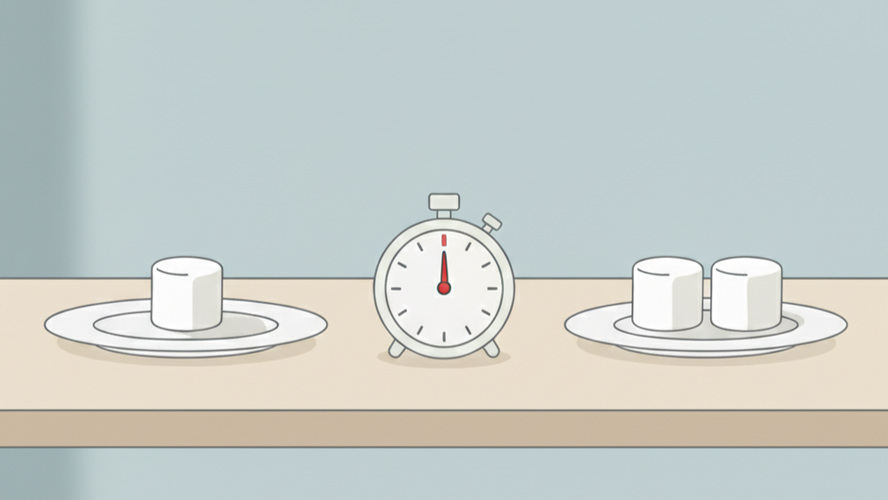
The famous Stanford Marshmallow Experiment, conducted by psychologist Walter Mischel in the 1970s, demonstrated just how powerful this skill can be. Researchers offered children a choice: eat one marshmallow now, or wait 15 minutes and get two marshmallows.
The results were remarkable. Children who waited for the second marshmallow showed better academic performance, lower obesity rates, and fewer behavioral problems later in life. Follow-up studies revealed these same children grew up to have higher SAT scores, better relationships, and greater financial success.
A 2018 replication study by NYU researchers found that a child’s ability to wait was more strongly influenced by their family’s economic background and home environment than previously thought.
The good news? This reinforces that delayed gratification is a teachable skill, not a fixed personality trait.
Connecting Delayed Gratification to Money Skills
Saving vs. Spending Decisions
Use real money scenarios to practice: “You have $20. You can buy this $20 toy now, or save your money for three more weeks and buy the $35 toy you really want.”
Understanding Opportunity Cost
Help children understand that choosing one thing means giving up another. “If we spend money on fast food tonight, we won’t have as much for our weekend movie plan.” Read more in our article on how to explain opportunity cost to a ten-year-old.
Introduction to Investing Concepts
For older children, explain how money grows over time. Show them savings account statements or use online calculators to demonstrate compound interest.
Common Challenges and What NOT to Do When Teaching Delayed Gratification

“But Everyone Else Has One!”
The peer pressure argument is powerful, especially with older children. Address this by:
- Acknowledging their feelings without giving in
- Discussing family values and financial priorities
- Offering compromise solutions (like contributing to the purchase if they save half)
Inconsistent Boundaries
Mixed messages confuse children about when delayed gratification is expected. Avoid this by:
- Having clear family rules about spending and saving
- Staying consistent between parents/caregivers
- Explaining exceptions when they occur
The “Instant Everything” Culture
Modern life often rewards immediate gratification. Combat this by:
- Modeling delayed gratification yourself
- Pointing out examples of waiting leading to better outcomes
- Creating family traditions around saving and planning
Don’t Use Bribes
There’s a difference between natural consequences and bribes. Focus on logical connections between actions and outcomes rather than arbitrary rewards. More on how to keep your calm when talking to kids about money.
Don’t Make Impossible Demands
Asking a 4-year-old to wait a month for something they want sets them up for failure. Keep expectations age-appropriate.
Don’t Implement Too Advanced Financial Activities
Don’t confuse your child with abstract or advanced concepts before they master the basics. For example, you may hear about “Buy Nothing Day”, but before introducing it, explore the Buy Nothing Day pros and cons to ensure it’s an appropriate challenge for your kid right now.
Don’t Forget to Follow Through
If you promise a reward for waiting, make sure to deliver. Breaking promises undermines trust and future cooperation.
Troubleshooting: When Children Struggle with Waiting
Not every child will take to delayed gratification naturally. Some may have temperaments that make waiting particularly difficult. Here are strategies for persistent challenges:
Break Goals into Smaller Steps: Instead of one big wait, create mini-milestones. If your child is saving $50 for a toy, celebrate every $10 saved.
Use Visual Aids: Charts, jars, and progress thermometers make abstract concepts concrete for children who need to “see” their progress.
Adjust Expectations: Some children may need longer to develop this skill. That’s okay – focus on gradual improvement rather than perfection.
Remember, it’s never too late to start teaching financial skills. If you’re just beginning your child’s money education journey or feel like you’re behind, check out our guide on when to start teaching kids about money, which includes expert tips on how to catch up on financial education even if you’re starting later than you’d planned.
Tip: Both kids and adults can fall into “urgent” marketing traps, especially during high-pressure shopping events like Black Friday. Learn how to navigate these situations safely and teach your children smart shopping habits with our complete Safety Tips for Black Friday Shopping guide.
Building Financial Habits & Long-Term Payoff

Teaching delayed gratification isn’t just about individual moments – it’s about creating lasting patterns that will serve your children throughout their lives.
Model the Behavior
Children learn more from what they see than what they’re told. Share your own saving money tips and decision-making process. Let them see you comparing prices, waiting for sales, or saving for family purchases, because teaching kids about money starts with you.
Celebrate the Wins
When your child successfully delays gratification, acknowledge their effort. “I noticed you waited two weeks to buy that game like you planned. How does it feel now that you have it?”
Make It a Family Value
Incorporate delayed gratification into your family’s core values. Make it clear that thoughtful decision-making and patience are qualities your family prizes.
Financial Success in Adulthood
Children who learn delayed gratification don’t just become better at waiting – they develop a suite of skills that contribute to financial success:
- Better impulse control leads to fewer regrettable purchases
- Goal-setting abilities help with saving for major life events
- Patience with investments allows money to grow over time
- Thoughtful decision-making prevents costly financial mistakes
These skills compound over time, just like interest in a savings account. A child who learns to wait and save at age 8 may become an adult who can comfortably afford a house, avoid credit card debt, and retire with financial security.
Frequently Asked Questions About Teaching Delayed Gratification
What Is Delayed Gratification
Delayed gratification is the ability to resist the temptation of immediate pleasure in favor of a larger, long-term reward. Examples include:
- Saving money instead of spending it immediately
- Choosing quality items over cheap alternatives that need frequent replacement
- Working toward long-term goals like college savings or retirement
- Avoiding impulse purchases that derail budgets
What age can kids learn delayed gratification?
Children as young as 3 years old can begin learning basic delayed gratification skills with very short wait times (5-15 minutes). The ability develops progressively, with preschoolers handling minutes, school-age children managing days to weeks, and teens capable of waiting months for larger goals.
How do I teach delayed gratification to a child with ADHD?
Children with ADHD benefit from shorter wait times, more frequent check-ins, and highly visual progress tracking. Use timers they can see, break goals into smaller steps, provide immediate positive feedback, and consider consulting with a pediatrician or child psychologist for personalized strategies. Executive function challenges are real—adjust expectations and celebrate small wins.
Is using rewards for waiting the same as bribery?
No. Rewards tied to natural consequences teach cause-and-effect relationships, while bribes are arbitrary payments to stop unwanted behavior. Saying “Save for two weeks and buy the toy you want” teaches planning. Saying “Stop whining and I’ll buy you candy” is bribery that reinforces demanding behavior.
How long should a 5-year-old be asked to wait?
Five-year-olds can typically handle 10-20 minute waits with support. For larger goals, break them into same-day milestones: “We’ll go to the park after lunch and quiet time” works better than “We’ll go to the park this weekend.”
What are some examples of delayed gratification at school?
Common school examples include: finishing homework before screen time, practicing an instrument daily to improve for a recital, saving recess tickets for a bigger prize, completing a reading challenge over weeks for a reward, or studying consistently instead of cramming before tests.
How do I stop meltdowns when my child has to wait?
Acknowledge their feelings first: “I know waiting is hard.” Then redirect with concrete steps: “Let’s look at your chart and see how close you are!” Use visual timers, offer a distraction activity during the wait, and praise any waiting effort—even partial success. If meltdowns persist, the wait time may be too long for their current ability.
Can delayed gratification skills help with screen time management?
Absolutely. Apply the same principles: set clear limits, use timers, offer choices (“30 minutes now or 45 minutes after homework”), create earning systems for extra screen time, and model healthy device habits yourself. Screen time is one of the most relevant modern applications of delayed gratification.
Is delayed gratification always good for kids?
Balance is important. Some situations require flexibility—during illness, major life transitions, or genuine emergencies. The goal is teaching thoughtful decision-making, not rigid deprivation. Children also need age-appropriate spontaneity and joy in the present moment.
Conclusion
Teaching delayed gratification to children is one of the greatest gifts we can give them. It’s the foundation of financial literacy, emotional regulation, and lifelong success. While it requires patience and consistency from parents, the long-term benefits – both for our children and our family’s financial well-being – make the effort worthwhile.
Remember, every “no, let’s wait” is an investment in your child’s future. Every savings goal achieved is practice for the financial decisions they’ll face as adults. And every moment of patience they learn now is building the mental strength they’ll need to thrive in an instant-gratification world.
Start small, stay consistent, and celebrate the progress along the way. Your future adult children – and their bank accounts – will thank you.
References:
- Watts, T. W., Duncan, G. J., & Quan, H. (2018). Revisiting the Marshmallow Test: A Conceptual Replication Investigating Links Between Early Delay of Gratification and Later Outcomes. Psychological Science.
- Mischel, W. (2014). The Marshmallow Test: Mastering Self-Control. Little, Brown and Company.
