

Looking for ways for kids to make money? There’s something magical about watching your child earn their first dollar. The pride on their face, the way they carefully count the bills, the excitement as they realize their work created something tangible—it’s a moment that stays with them and marks the beginning of their financial journey.
Teaching kids to earn money isn’t just about the cash in their piggy bank. It’s about building financial literacy from the ground up, developing a strong work ethic, and fostering the kind of independence that will serve them throughout their lives. Whether your child is 8 or 14, there are age-appropriate ways to make money for kids that go beyond a simple allowance.

This guide focuses on earning opportunities kids can start immediately in your neighborhood and community. These are practical, accessible ways for kids to make money while learning valuable real-world skills.
Why You Should Teach Ways for Kids to Make Money (Not Just Give Allowance)
Financial Literacy Starts with Earning
When kids receive allowance without earning it, they learn that money appears without effort. When they work for their money—even in simple ways—they begin to understand the fundamental connection between work and compensation. They learn that money has real value because they’ve invested their time and energy to get it.
This early understanding shapes how they’ll view money throughout their lives. The ten-year-old who walks dogs for $10 per walk learns that an hour of work equals a specific amount of money, which helps them understand pricing, budgeting, and the value of purchases in concrete terms. These are foundational lessons in ways for kids to make money that will serve them into adulthood.
Building Real-World Skills Early

Every earning opportunity teaches more than just how to make money. Dog walking teaches responsibility and time management. Babysitting builds problem-solving skills and confidence. Selling handmade crafts requires creativity, marketing, and customer service.
These aren’t abstract lessons from a textbook—they’re real experiences with real consequences. When a customer is unhappy, your child learns to communicate professionally and fix problems. When their lemonade stand doesn’t attract buyers, they learn about location and pricing. These lessons stick because they matter in the moment.
When Kids Are Ready to Start Earning
Most kids are ready to start earning in simple ways around age 8. At this age, they can handle basic tasks like washing cars, selling crafts, or helping with yard work under supervision. By 10-12, they’re ready for more independent work like dog walking or mother’s helper roles. Around 13-14, many are mature enough for babysitting, tutoring, and running small service businesses.
The key isn’t just age—it’s maturity. Look for signs your child can follow through on commitments, communicate clearly with adults, and handle minor setbacks without giving up. If they’re asking about ways to make money for kids, that initiative itself is often a good indicator they’re ready to try.
Easy Ways for Kids to Make Money (Ages 8-12)

Simple, low-barrier opportunities perfect for younger kids. We’ve organized these from most creative and unique to tried-and-true classics—because while everyone knows about yard work and chores, you’re probably looking for fresh ideas your child will actually get excited about.
Creative Money-Making Ideas
Selling handmade crafts

Kids have always loved making things, and now there’s a market for it. Friendship bracelets, painted rocks with inspirational messages, homemade slime in creative colors, and beaded keychains are consistently popular. The beauty of craft selling is that kids can create during their free time, then sell at neighborhood events, craft fairs, family gatherings, or even to classmates (with school permission).
Pricing depends on complexity and materials, but most kid-made crafts sell well in the $2-10 range. The key is helping your child price for profit—if supplies cost $1 and it takes 30 minutes to make, they should charge enough to make their time worthwhile while staying competitive.
Lemonade stand with a twist
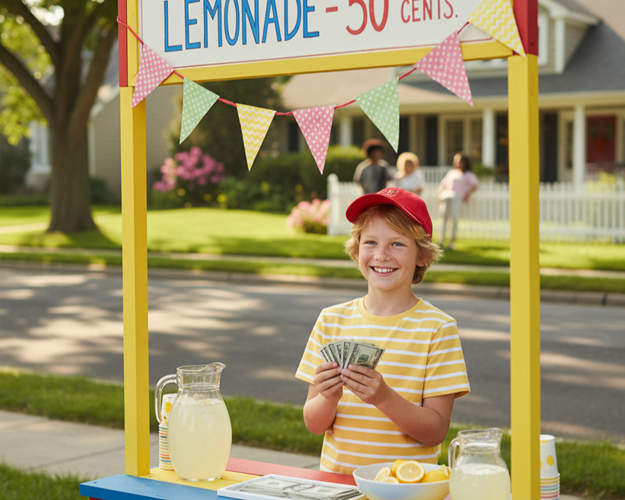
The classic lemonade stand works because it teaches so many fundamentals: making the product, pricing it, choosing a location, attracting customers, and handling money. But modern kids can put creative spins on this timeless opportunity.
Try specialty flavors like strawberry lemonade or mint-infused options. Create themed stands around holidays or local sports teams. Add complementary items like cookies or frozen fruit bars. Location matters enormously—high foot traffic areas like near parks, during neighborhood events, or on hot days at the community pool will drastically outperform a quiet street.
Check local regulations about permits and food handling, and always supervise younger kids. This is an excellent opportunity to teach entrepreneurship principles in action.
Bake sale or homemade treats
If your child loves baking, turning that passion into income is straightforward. Decorated cookies, brownies, rice crispy treats, and cupcakes are perennial favorites because they’re easy to transport and eat. Kids can sell at neighborhood events, after church services, at sports games, or at local farmer’s markets (check vendor requirements).
Food safety is crucial. Use clean equipment, proper storage, and consider allergies by labeling ingredients. Packaging matters too—individually wrapped items in clear bags with ribbons or stickers look more professional and justify higher prices. Most homemade baked goods sell well between $1-5 per item depending on size and complexity.
Pet sitting or dog walking
For animal-loving kids, pet care is ideal. Start with neighbors and family friends whose pets your child already knows. Walking dogs for $10-15 per walk or checking in on cats while owners are away builds both responsibility and income.
Safety is paramount. Kids should only care for gentle, well-trained pets, and younger children need parent supervision, especially for larger dogs. A nice touch that builds trust: have your child send photo updates to owners. People love seeing their pets happy, and it demonstrates reliability.
Service-Based Ways for Kids to Make Money
Car washing service

A car washing service can operate from your driveway or go mobile. The startup costs are minimal—soap, sponges, buckets, and towels—and most families already have these supplies. Kids can charge $10-20 per car or $15-25 for larger vehicles like SUVs and trucks. This is one of the easiest ways to make money for kids because the results are immediately visible, which is satisfying for kids, and customers pay on the spot. Weekend mornings often work best when people are home and willing to have their cars washed.
Selling old toys and clothes
This opportunity teaches two valuable lessons at once: decluttering and earning. Help your child go through their room and identify toys they’ve outgrown, clothes that no longer fit, and books they’ve finished with. It’s one of the good ways for kids to make money while also teaching them about sustainability and letting go of unused items.
Garage sales are the traditional route, but consignment shops and online platforms like Facebook Marketplace (with parent help), Mercari, or Poshmark Kids can reach more buyers. The key is pricing to sell, not pricing to keep. If your child is attached to the price, they’re probably attached to the item and shouldn’t be selling it yet.
Holiday decorating service
Seasonal demand creates premium pricing opportunities. Many neighbors, especially elderly residents or busy families, appreciate help hanging holiday lights, setting up yard decorations, or arranging indoor seasonal displays. Kids can charge $20-40 per house depending on the scope of work.
Safety note: Adults should handle anything requiring ladders or roof access. Kids can manage ground-level decorations, untangling lights, placing yard stakes, and arranging displays. The timing is predictable—Thanksgiving through early December for winter holidays, October for Halloween, spring for Easter—making it easy to plan.
Seasonal Money-Makers
Seasonal crafts
Timing is everything with seasonal crafts. Start production 4-6 weeks before major holidays to build inventory. Handmade Christmas gifts, holiday cards, ornaments, gift baskets, and seasonal decorations sell well to family members, at craft fairs, and through parents’ social networks.
Halloween offers especially good opportunities for kid-made items—check out our guide to Halloween business ideas for specific projects. The advantage of seasonal items is that demand is concentrated and predictable, making it easier for kids to focus their efforts for maximum return.
Snow shoveling
For kids in snowy climates, winter creates consistent earning opportunities. Shoveling driveways and walkways requires physical work but commands good rates—typically $10-25 depending on driveway size and snow depth.
Safety is crucial. Teach proper shoveling technique to avoid strain, ensure kids dress warmly in layers, and set reasonable limits on how much they take on. Building a route of regular customers means reliable income throughout winter. Some enterprising kids even offer season contracts—shovel all winter for a flat fee paid upfront—which guarantees income and teaches contract thinking.
The Classics (That Still Work)
Let’s not overlook the obvious—these traditional methods may seem basic, but they’re proven first earning experiences that teach fundamental work skills. While you’re looking for innovative easy ways for kids to make money, don’t discount these time-tested approaches.
Yard work for neighbors
Raking leaves, weeding, watering plants, and picking up sticks might be the most common way kids earn money, and there’s good reason these tasks remain popular. They’re straightforward, have clear completion points, and are always needed.
The key to success is reliability. If your child commits to watering Mrs. Johnson’s garden while she’s on vacation, they need to follow through every scheduled day. This builds trust and leads to repeat business and referrals. Pricing ranges from $10-20 per hour or per job depending on your area and the work involved.
While it’s obvious, yard work teaches valuable lessons about physical labor, working outdoors, and maintaining commitments—all within the safety of your neighborhood.
Extra chores for pay
This is different from regular household contributions. These are above-and-beyond tasks: deep cleaning bathrooms, organizing the garage, washing family cars, or decluttering the basement. Rates typically range from $5-15 depending on task difficulty and time required.
The important distinction here is teaching the difference between expected family contributions and earning opportunities. Everyone should help with basic household tasks, but extra, more challenging work can be compensated. This serves as a stepping stone—kids practice work skills at home before offering services to neighbors, building confidence in a safe environment.
Ways for Tweens to Make Money (Ages 10-14)
As kids get older, their independence grows—and so do their earning opportunities. Tweens can handle more responsibility, work with less supervision, and often command higher rates. These ways to make money for kids aged 10-14 are organized from most unique and engaging to tried-and-true services.
Creative and Specialized Services
Face painting at parties

Face painting is a specialized skill that sets tweens apart. Initial investment in quality face paint kits runs $20-40, and kids need to practice designs beforehand. Once proficient, they can charge $30-50 for two hours at a birthday party, or $5-8 per face.
Marketing happens through word-of-mouth at school and among parents planning parties. Building a portfolio with photos (always ask permission) helps demonstrate skill. This opportunity is particularly good for artistic tweens who enjoy working with younger children. It’s memorable, fun, and commands premium rates for a unique service.
Gift wrapping service
During holiday seasons or for special occasions, many people happily pay for professional-looking gift wrapping. Tweens can charge $3-7 per gift depending on size and complexity. November through December is peak season, but Mother’s Day, Father’s Day, and graduation seasons also offer opportunities.
Set up at local events with permission, offer door-to-door service in your neighborhood, or advertise through parents’ social networks. Materials are simple: wrapping paper, ribbons, tape, and scissors. Some customers provide their own materials, while others prefer to pay extra for the wrapper to supply everything.
Party helper
Being a party helper means assisting at children’s birthday parties—setting up decorations, leading games, helping supervise activities, serving food, and cleaning up afterward. It’s perfect for energetic tweens who are good with kids but not quite ready for solo babysitting.
Rates typically run $40-60 for 3-4 hours. Some families want helpers who work independently, while others want someone working alongside parents. Either way, it’s valuable experience in childcare, event management, and handling multiple tasks under pressure. Market through connections at school, as parents often know other parents planning parties.
Tech help for seniors
Many seniors struggle with technology but prefer learning from patient young people rather than frustrated adult children. Tweens can teach smartphone basics, email, video calls, social media, and troubleshoot simple issues. This is one of the most rewarding ways for kids to make money because it creates meaningful intergenerational connections.
Rates range from $15-25 per hour—significantly less than professional tech support, but entirely reasonable for a tween’s time. Marketing happens through family connections, churches, and community centers. This work is particularly valuable because seniors often become fond of their young tech helpers.
Service-Based Income
Babysitting

Babysitting is often the first “real job” tweens undertake. Getting Red Cross babysitting certified (course costs around $35) is highly recommended—it teaches safety, basic first aid, and age-appropriate activities while giving parents confidence in hiring your child.
Start with family friends whose children your tween already knows. Rates typically range from $10-15 per hour depending on location, experience, and number of children. Most communities consider 12-13 appropriate for beginning babysitting, though maturity matters more than age.
Building trust requires professionalism: arriving five minutes early, bringing activity ideas, texting parents updates, and leaving the home clean. These habits distinguish good babysitters from mediocre ones and lead to regular clients and referrals.
Tutoring younger kids
If your tween excels in particular subjects—reading, math, science, or foreign languages—tutoring offers excellent earning potential. Rates of $10-20 per hour are reasonable (much lower than adult tutors, but fair for student tutors). Sessions can happen in-person or virtually.
Marketing works best through school connections. Sometimes teachers will recommend student tutors to parents of struggling students. Your child can also advertise through school bulletin boards (with permission) or parents’ social networks. The beauty of tutoring is that it reinforces your child’s own knowledge while helping others—everyone benefits.
Mother’s helper
For younger tweens not quite ready for solo babysitting, being a mother’s helper bridges the gap. This means working while parents are home but in a different room or on a different floor—playing with kids, helping with snacks, and providing light supervision.
Rates are lower than babysitting ($8-10/hour) because of the reduced responsibility, but it provides valuable experience, builds references, and helps kids determine if they actually enjoy childcare before committing to babysitting. It’s an excellent stepping stone that teaches the basics in a safe, supervised environment.
Plant care service
As houseplants have become increasingly popular, many “plant parents” need help maintaining their collections, especially when traveling. Tweens can offer watering, repotting, light pruning, and care for both indoor and outdoor plants.
Rates typically run $10-15 per visit, or $50-100 for complete vacation care (multiple visits over a week or two). Building seasonal contracts—watering twice weekly all summer—creates reliable, recurring income. This works especially well for tweens who are responsible and interested in plants but might not be ready for pet care or babysitting.
Errand running for neighbors
Elderly or mobility-limited neighbors often need help with simple errands: grocery pickup, mail collection during vacations, dropping off package returns, or picking up prescriptions. Tweens can charge $10-20 depending on time and distance involved.
This only works with well-known neighbors your family trusts completely. The opportunity teaches reliability and service while building meaningful relationships in your community. Many seniors deeply appreciate this help and become regular clients who recommend your child to their friends.
Reselling and Entrepreneurial Ideas
Garage sale flipping
This opportunity teaches business fundamentals: buy low, sell high. Tweens scout garage sales and thrift stores for undervalued items, then resell at local markets, consignment shops, or online platforms with parent help. Popular flip items include vintage toys, board games, books, and sports equipment. This is one of the more entrepreneurial ways to make money for kids who enjoy the thrill of finding hidden treasures.
Starting capital of $20-50 is usually sufficient. The real education comes from learning what sells and what doesn’t, how to negotiate prices, and understanding profit margins after accounting for your initial investment and selling fees. Not every item will profit, which teaches risk and decision-making.
Seasonal item reselling
This is more strategic than garage sale flipping because it leverages predictable seasonal demand. Buy sports equipment at end-of-season sales, then resell before the next season starts. Stock up on school supplies in August for resale. Buy Halloween costumes in November for 75% off, store them, and resell next October.
Understanding supply and demand cycles creates better margins than random flipping. It also teaches planning, delayed gratification (buying now to sell later), and inventory management. The challenge is storage space and having capital tied up in inventory, but the rewards can be substantial for patient, strategic tweens.
Traditional Services (That Build Work Ethic)
These may be obvious, but they’re excellent opportunities for tweens to develop strong work habits and earn consistent income.
Lawn care and yard work
This is more advanced than younger kids’ basic yard work. Tweens can handle mowing, edging, raking, weeding, and mulching. Equipment considerations matter—some start with family tools, while others invest their earnings in their own equipment for better results and more clients.
Rates range from $20-40 per lawn depending on size and services offered. Building a roster of regular weekly or bi-weekly clients creates reliable income all summer. While it’s physically demanding outdoor work, that’s precisely what teaches strong work ethic, and the rates reflect the value of that labor.
Window washing
Washing exterior ground-level windows for residential homes is straightforward work that homeowners often put off. Tweens can charge $20-35 per house depending on window count. Supplies are simple and inexpensive, and safety is manageable since this only involves outside, ground-level work—no ladders or second stories.
Spring and fall are peak seasons when people want clean windows. The work teaches attention to detail and customer satisfaction—streaky windows mean callbacks, while crystal-clear results lead to recommendations and regular clients.
Organizing services
Many families struggle with clutter in garages, closets, playrooms, and basements. Detail-oriented tweens can offer organizing services at $12-18 per hour or per-project pricing. This is less physically demanding than lawn care but requires patience, problem-solving, and organizational thinking.
Professional organizers charge $75+ per hour, so hiring a tween at a fraction of that price is appealing to budget-conscious families who need help but can’t afford premium services. Your child learns valuable organizational skills they’ll use throughout life while helping others create order from chaos.
What About Online Opportunities?

While this guide focuses on local, in-person ways for kids to make money, many parents wonder about online opportunities. Most digital platforms require users to be at least 13 years old due to COPPA (Children’s Online Privacy Protection Act) regulations, and even teen-appropriate platforms often need more independence than younger kids possess.
For teens (13+) ready to explore digital earning, help them find online business ideas for teens, including freelancing and content creation. For those who want to work online instead of starting a business, check out our comprehensive guide: Easy Online Jobs for Teens. Both articles cover age-appropriate platforms, safety guidelines, and realistic earning expectations for the online space.
For now, the local opportunities above offer immediate earning potential with valuable face-to-face skill development. These in-person ways for kids to make money build confidence and work ethic that will serve them in any future earning endeavor, online or offline.
How to Help Your Child Get Started

Setting Up for Success
Starting the conversation
Rather than pushing your child toward earning opportunities, start by asking what interests them. A creative child might love making crafts to sell, while an active child prefers physical work like lawn care. An outgoing tween might excel at babysitting, while a quieter child might prefer behind-the-scenes work like organizing or plant care. Understanding their interests helps you identify the best ways for kids to make money that match their personality.
Set realistic expectations about earnings. Most kids won’t make $100 their first week. Progress takes time, and early efforts focus more on learning than earning. Emphasize that building a reputation and client base requires patience and quality work.
Creating a simple plan
Even informal earning benefits from basic planning. Help your child think through supply costs, pricing, time commitment, and how they’ll find customers. Our Kids Business Plan template works even for simple earning activities—it helps kids think systematically about their efforts.
Practice scenarios together. What if a customer isn’t happy with the work? What if they can’t complete a commitment? Role-playing these situations prepares them for real challenges and builds confidence in handling problems professionally.
Safety first
Your child should only work for people your family knows well—neighbors you trust, family friends, church members, or parents of their classmates. For younger kids, you should personally know every customer. As children get older and more independent, this can expand gradually, but safety always comes first.
Supervision requirements vary by age. Eight-year-olds need direct oversight for most activities. Twelve-year-olds need periodic check-ins. Fourteen-year-olds might work quite independently, but parents should always know where they are, what they’re doing, and when they’ll be home.
Transportation matters too. How will your child get to jobs? Will you drive them? Can they bike safely? These logistics need planning before committing to customers.
Getting the word out
Create simple flyers together—kids can design them on Canva, then print or share digitally. Include services offered, contact information (parent’s phone/email), and rates if appropriate. Post in your neighborhood, share on community bulletin boards, or have your child hand-deliver to nearby homes with a parent.
Word-of-mouth through family and friends is often the best starting point for ways to make money for kids. Let people know your child is looking for work and what services they offer. Parents’ social networks—both in-person and online community groups—can be powerful marketing tools when used appropriately.
Don’t underestimate door-to-door introduction with a parent, especially in close-knit neighborhoods. A brief, polite introduction can generate immediate opportunities: “Hi, I’m Alex from down the street, and I’m offering dog walking services this summer. Would you be interested?”
Teaching Money Management

Opening a savings account
If your child doesn’t already have one, opening a kids’ savings account at your local bank makes earnings feel official and important. Bringing deposits to the bank and watching the balance grow is tangible and motivating.
Teach the save/spend/give model from the beginning. A common split for kids is 50% save, 30% spend, 20% give, though families can adjust these percentages. The key is establishing the habit early that not all money earned should be spent immediately.
Tracking earnings
Help your child keep a simple record of earnings—either a basic spreadsheet or a notebook works fine. Record the date, customer, service provided, and amount earned. This teaches record-keeping and helps them see patterns in their busiest times or most profitable services.
Introduce the concept of profit versus revenue. If your child earns $20 from a bake sale but spent $8 on ingredients, their profit is $12. Understanding that all money earned isn’t purely profit is an important lesson many adults still struggle with.
Setting financial goals
Kids work harder when they’re working toward something specific. Help your child set both short-term goals (a new video game, special outing) and long-term goals (saving for a bike, contributing to college fund, buying a laptop).
Visual progress trackers work wonderfully—a chart showing their goal amount and coloring in progress as they earn. Watching that chart fill up provides motivation during the slower, more challenging moments.
Legal and Tax Considerations
When income needs to be reported
Generally, children’s informal earnings (babysitting, lawn mowing, dog walking) don’t require tax reporting until they reach around $600 annually, though this varies. If your child is working as an actual employee (not for themselves), different rules apply. These are general guidelines—consult a tax professional for specific advice.
The bigger benefit of discussing taxes early is education. Even if your child isn’t filing taxes, explaining that a portion of earnings typically goes to taxes prepares them for adult financial reality. Some families even have kids set aside 10-15% of earnings in a “tax jar” as practice for future tax obligations.
Work permits and age restrictions
Informal, self-employment work (the opportunities in this guide) doesn’t typically require work permits. However, if your tween wants formal employment (working at a business as an employee), most states have age restrictions and work permit requirements.
State rules vary significantly. Some states allow 14-year-olds to work with restrictions, while others require age 16. Some require school paperwork and proof of age. If your child progresses from informal earning to formal employment, research your specific state’s requirements.
Common Challenges (And How to Solve Them)
“Nobody Wants to Hire My Kid”
The problem: Your child is motivated and ready to work, but customers aren’t materializing. Weeks go by with little or no response to their efforts.
Solutions: Start with absolute certainty—family and close friends. These first customers provide experience, references, and confidence. Consider offering the first service at a discount or even free to build testimonials and word-of-mouth.
Create professional-looking flyers rather than hastily written notes. Quality presentation suggests quality service. Follow up with every satisfied customer asking if they know anyone else who might need help—personal recommendations are powerful.
Most importantly, be patient. Building a customer base takes time. Word spreads slowly at first, then accelerates as reputation builds. The first customer is the hardest to get; the fifth comes much easier.
Losing Interest Quickly
The problem: Initial excitement fades after a week or two. Your child who was eager to start their dog-walking business suddenly finds excuses to avoid commitments.
Solutions: First, ensure the opportunity matches your child’s personality. Introverted kids might hate door-to-door services but love behind-the-scenes work like crafting or organizing. Extroverted children thrive on customer interaction but might struggle with solitary tasks.
Set achievable milestones with small rewards. Rather than focusing on earning $100 (which feels distant), celebrate earning the first $10, then $25, then $50. These incremental wins maintain motivation.
Make it social when possible. Some tasks work well with friends—two kids washing cars together makes the work faster and more fun. Just ensure they split earnings fairly and both contribute equally.
Finally, recognize when to pivot versus when to push through. Trying something three or four times before quitting is reasonable. Giving up after one difficult experience isn’t. Help your child distinguish between normal challenges and genuine mismatch.
Pricing Their Services
The problem: Your child either prices too high and gets no customers, or too low and works hard for minimal pay while competitors get the business.
Solutions: Research local rates by asking neighbors what they’d pay or what they’ve paid other kids for similar services. Rates vary significantly by region—what works in suburban California differs from rural Iowa.
Start competitively, then increase with experience. A brand-new babysitter might charge $10/hour, while an experienced sitter with certifications and references can command $15/hour. The same applies to lawn care, pet care, and other services.
Teach your child not to undervalue their work. The $1 car wash doesn’t teach good business principles—it teaches that work is nearly worthless. Even kid services deserve fair compensation for time and effort invested.
Consider creating pricing tiers. Basic service at one rate, premium service (extra attention to detail, additional tasks) at a higher rate. This gives customers options while maximizing earning potential.
Balancing Earning with School and Play
The problem: Your child becomes overcommitted, with earning activities cutting into homework time, sleep, or just being a kid. Stress replaces enjoyment, and grades or mood suffer.
Solutions: Set clear boundaries from the start. Many families limit earning activities to weekends only during the school year, or cap total work time at 2-3 hours per week. Summer can accommodate more, but balance still matters.
Time management becomes crucial. Help your child schedule commitments in a calendar or planner. If Saturday already has soccer practice and a birthday party, there’s no room for a three-hour babysitting job.
Remember that earning should enhance childhood, not replace it. Kids need time for play, rest, hobbies, and just hanging out with friends. If earning is causing stress, scale back immediately. The money isn’t worth sacrificing wellbeing.
Watch for warning signs: declining grades, irritability, exhaustion, complaints about commitments, or loss of interest in activities they previously enjoyed. These signal it’s time to reduce the workload.
Dealing with Difficult Customers
The problem: A customer complains about the work, has unrealistic expectations, is slow to pay, or treats your child disrespectfully.
Solutions: Teach professional communication first. If a customer is unhappy, the response is: “I’m sorry you’re not satisfied. What can I do to make it right?” Often, willingness to fix problems resolves the situation.
However, parents should step in immediately for serious issues—customers who don’t pay, make inappropriate requests, or treat your child poorly. Contact them directly, resolve the situation, and end the relationship if necessary.
Learning from negative experiences is valuable. After an issue is resolved, discuss with your child: What went wrong? What could have prevented it? What did they learn? Sometimes problems arise from miscommunication that can be avoided next time by setting clearer expectations upfront.
Finally, teach your child that sometimes you “fire” customers. If someone is consistently difficult, pays late, or makes your child uncomfortable, it’s okay to politely decline future work. Not all money is worth earning.
Age-by-Age Quick Reference Guide on The Ways to Make Money for Kids
Pin this for later. Follow us on Pinterest.
| Age Range | Best Opportunities | Supervision Level | Average Earning Potential | Key Skills Developed |
| 8-9 | Lemonade stand, selling crafts, extra chores, car washing | High (direct supervision, always present) | $5-20/week | Basic money math, customer interaction, responsibility |
| 10-11 | Dog walking, yard work, mother’s helper, bake sales, snow shoveling | Medium (nearby, frequent check-ins) | $20-50/week | Time management, service quality, basic marketing |
| 12-14 | Babysitting, tutoring, tech help, seasonal services, party helper, organizing | Low (initial setup help, periodic check-ins) | $50-150+/week | Independence, problem-solving, professional communication, financial planning |
Making It a Learning Experience

Questions to Ask Your Child
Regular conversations about their earning experiences deepen the learning. Try these questions after they complete jobs:
- What did you learn today while earning?
- How did you solve [specific problem that came up]?
- What would you do differently next time?
- How does earning your own money make you feel?
- What are you saving for? How close are you?
These questions help children reflect on their experiences rather than just collecting payment and moving on. The reflection is where deep learning happens.
Connecting Earning to Financial Literacy
Every earning experience creates teachable moments. When your child wants to buy something, discuss whether it’s a want or a need. Talk about how many hours of work that purchase represents—”That video game costs $60, which equals six hours of dog walking. Is it worth six hours of your work?”
Delayed gratification becomes tangible when kids save money toward goals. They experience the challenge of not spending immediately and the greater satisfaction of eventually buying something bigger than they could afford with just one day’s earnings.
Even informal discussions about taxes help. “If you were an adult, about 20-30% of your earnings would go to taxes. That means your $50 would really be $35-40.” This isn’t meant to discourage them, but to prepare them for financial realities they’ll face later.
Opportunity cost becomes real too. Time spent earning is time not spent playing video games or hanging out with friends. This trade-off helps kids think about how they value their time and what they’re willing to sacrifice for their goals.
When to Encourage Business Expansion
Watch for signs your child is ready to think bigger:
- Consistent customers asking for additional services
- Your child naturally suggesting expansion ideas
- Mastery of current offerings with time and energy for more
- Expressing desire to grow beyond current activities
At this point, it might be time to transition from simple earning to actual entrepreneurship. Our guide to Business Ideas for Kids explores opportunities that require more planning, setup, and ongoing operation.
The difference is significant. Babysitting once a week is earning. Creating a babysitting business with multiple sitters, scheduled bookings, and marketing is entrepreneurship. Mowing lawns in summer is earning. Starting a year-round lawn care business with multiple services, equipment investment, and business planning is entrepreneurship.
If your child is ready for that level, our Kids Business Plan template helps formalize their ideas into structured businesses. Some kids thrive with this structure, while others prefer the simplicity of earning without the complexity of running a business. Both paths are valuable.
What Success Looks Like

It’s Working When You See:
- Customers recommending without being asked
- Repeat bookings without prompting
- Gradual price increases accepted
- Natural expansion requests (“Can you also…?”)
- Child gaining confidence and independence
- Consistent earnings week over week
Red Flags Requiring Adjustment:
- No growth after 6-8 weeks
- Customers not rebooking
- Child consistently frustrated or overwhelmed
- Earnings inconsistent or declining
- Safety concerns arising
- Grades or mood suffering
Realistic Timeline Expectations:
- Weeks 1-4: Slow start, 1-2 customers, learning phase
- Months 2-3: Word spreading, 3-5 customers if quality is good
- Months 4-6: Steady state, repeat customers, referrals coming naturally
- 6+ months: Established reputation, potential to expand services or raise rates
Use these benchmarks to guide conversations with your child: “Let’s check—are we seeing customers come back? Are we getting referrals? What can we improve?”
Best Ways for Kids to Make Money- Starting Small, Thinking Big

Teaching your child ways to make money isn’t just about the cash in their piggy bank—it’s about building a foundation for lifelong financial confidence. Whether they’re setting up their first lemonade stand at 8 or building a neighborhood babysitting reputation at 13, every dollar earned teaches lessons about value, work ethic, and goal-setting.
The skills they develop now—responsibility, communication, money management, and resilience—will serve them far beyond childhood. And when they buy their first big purchase with money they earned themselves? That pride is priceless.
Remember:
- Start with one idea that matches your child’s interests and age
- Prioritize safety and supervision appropriate to their maturity
- Focus on the learning experience, not just the income
- Celebrate small wins and learn from setbacks
- Let them experience natural consequences (within reason)
The ten-year-old who walks dogs isn’t just earning spending money—they’re learning that commitments matter, that quality work leads to repeat business, and that their effort has tangible value. The thirteen-year-old babysitter isn’t just making $15 an hour—they’re developing confidence, problem-solving skills, and professional communication that will benefit them in every future job.
Ready to help your child take action? Choose 1-2 ideas from this guide that match their interests and abilities. Sit down together this week to make a simple plan: what supplies do they need? How will they find customers? What will they charge? Then let them take the lead while you provide support and guidance.
The journey from that first earned dollar to financial independence starts now. Give your child the gift of learning to earn—it’s an investment that compounds throughout their lifetime.
