
The average American family spends between $800 and $1,000 on Christmas gifts every year. What if you could cut that amount in half while teaching your kids some of the most valuable financial lessons they’ll ever learn? That’s exactly what happens when you involve your children in making homemade Christmas gifts.
Creating handmade presents isn’t just about saving money—though you’ll definitely do that. It’s about showing your kids that thoughtfulness, creativity, and effort matter more than a price tag. Every time your child makes a gift, they’re also learning about budgeting, comparing costs, understanding value, and making intentional spending decisions.
In this complete guide to homemade Christmas gifts, you’ll find 21 DIY Christmas gift ideas organized by age group, complete with cost breakdowns, time estimates, and the specific money lessons hidden in each project. Whether you have a preschooler or a teenager, you’ll discover practical, budget-friendly homemade gifts for Christmas that teach financial literacy while creating lasting holiday memories.
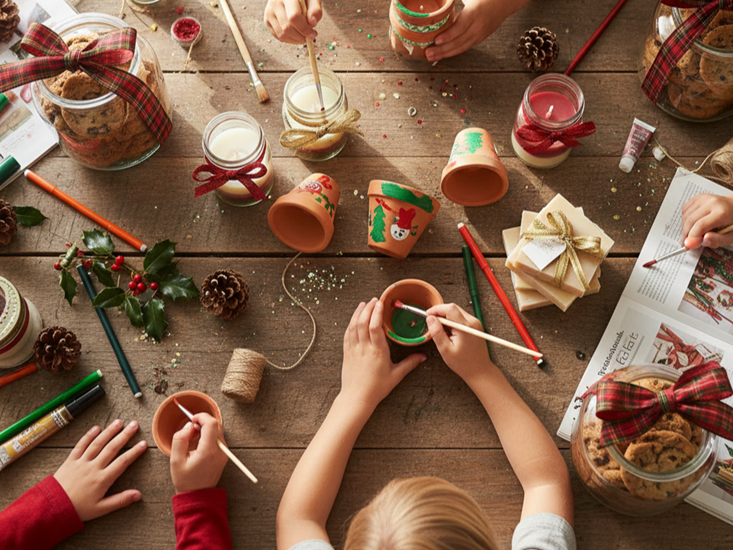
📋 What’s covered in this guide:
Why Homemade Christmas Gifts Matter for Your Family’s Finances
The Real Cost of Holiday Gift-Giving
Let’s talk numbers. According to the National Retail Federation, the average person plans to spend about $875 on holiday gifts, decorations, and celebrations. For many families, this number climbs even higher when you factor in gifts for extended family, teachers, and friends. If you’re looking for other ways to reduce this spending, check out our complete guide to Christmas on a budget.
Here’s the good news: homemade Christmas gifts typically cost 50-70% less than their store-bought equivalents. A handmade candle might cost you $4 in materials compared to a $15-20 store-bought version like these candles. A jar of homemade granola costs about $5 to make versus $12-15 for a premium granola brand like this one.
Quick Comparison: Homemade Christmas Gifts vs. Store-Bought
| Gift Type | Store-Bought Cost | Homemade Cost | Savings |
| Scented Candle | $15-20 | $4-6 | $10-15 |
| Bath Products | $12-18 | $3-5 | $8-14 |
| Gourmet Food Gift | $20-30 | $5-8 | $15-22 |
| Personalized Item | $25-40 | $6-10 | $15-30 |
| Handmade Scarf | $30-50 | $6-8 | $22-42 |
If you make just half of your gifts this year, you could easily save $300-500. That’s money that could go toward your emergency fund, college savings, or a family vacation.
Teaching Kids That Thoughtfulness Beats Price Tags
One of the most powerful lessons kids learn from making homemade Christmas gifts is that the best presents aren’t always the most expensive ones. When your daughter spends an afternoon making salt dough ornaments with her handprints, she’s learning that her time, effort, and personal touch create something priceless.
Sarah, a mom from Ohio, shared her experience: “Last year, my 8-year-old son made painted flower pots for his grandparents. They cost maybe $3 each to make. His grandmother cried when she opened it and said it was her favorite gift. My son learned that making something with love matters more than buying something expensive.”
This lesson combats the “bigger is better” mentality that advertising constantly pushes on our kids. It teaches them to think about what recipients actually want and value, rather than defaulting to the most expensive option.
Financial Literacy Skills Hidden in Gift-Making

Every homemade Christmas gift project is secretly a financial literacy lesson. Here’s what kids learn:
Budgeting: When you give your child $20 to make three gifts, they learn to divide resources and make choices. Can they afford the fancy ribbons, or should they stick with affordable twine to stay within budget?
Cost Comparison: Making a gift provides the perfect opportunity to compare homemade versus store-bought costs. Your kids will see firsthand that a $4 homemade candle is essentially the same as a $20 retail candle.
Understanding Markup: When kids realize that store-bought granola costs $15 but only $5 to make, they begin understanding how businesses price products. This awareness helps them become smarter consumers.
Time Value: Older kids start to understand that their time has value. If it takes two hours to make a gift that saves $10, is that a good trade? These conversations plant seeds for future financial decision-making (this book can help teach your kid money decision skills).
Delayed Gratification: Perhaps most importantly, making homemade Christmas gifts teaches kids to wait for results. They can’t have the finished candle today—they must wait for it to cool. The painted pot needs time to dry and cure. This practice of working now for rewards later is one of the most powerful predictors of financial success. Kids who learn to delay gratification are better at saving money, avoiding impulse purchases, and making long-term financial plans.
How to Get Started Making Easy Homemade Christmas Gifts
Setting Your Homemade Gift Budget
Before you dive into DIY Christmas gift ideas, sit down with your kids and set a realistic budget. A good starting point is to decide how much you’d normally spend on gifts, then allocate 50-60% of that amount to homemade gift supplies.
For example, if you typically spend $400 on gifts, budget $200-250 for materials to make homemade Christmas gifts. This gives you a cushion for supplies while still achieving significant savings.
Involve your kids in this budgeting conversation. Pull out a notebook and write down:
- How many homemade gifts for Christmas you need to make
- Who they’re for
- Rough cost per gift ($3-10 depending on complexity)
- Total budget
This exercise itself is valuable financial education. Your kids see that even “free” homemade gifts require planning and budgeting.
Essential Supplies for Making Homemade Christmas Gifts
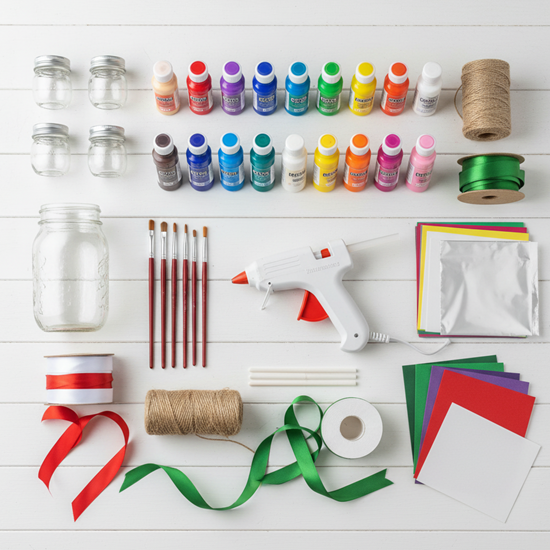
Smart shopping means investing in versatile supplies you’ll use for years. Here’s a starter kit that covers most DIY Christmas gift projects:
Basic Supply Kit (One-Time Investment: $40-60)
- Hot glue gun and glue sticks
- Acrylic paint set
- Paint brushes
- Mod Podge
- Twine or ribbon
- Mason jars (buy in bulk or upcycle)
- Clear cellophane bags
- Cardstock and construction paper
Where to Find Deals:
- Dollar Tree: Mason jars, ribbon, basic craft supplies
- Thrift stores: Unique containers, mugs for candles, fabric
- Craft store sales: Stock up when Michael’s or Hobby Lobby runs 40-50% off sales
- After-holiday clearance: Buy supplies for next year in January
Parent Tip: Create a “craft supply box” and designate it solely for making homemade Christmas gifts. This prevents the “we already have that somewhere” supply-buying duplicates.
Time Management Tips for Busy Parents
Let’s be honest—the holidays are already hectic. Adding DIY Christmas gift projects might sound overwhelming, but with smart planning, it becomes manageable and even fun.
Start Early: Begin making your homemade Christmas gifts in early November, or even late October. This spreads the work over 6-8 weeks instead of cramming everything into December.
Weekend Craft Sessions: Dedicate one weekend morning every two weeks to gift-making. Put on holiday music, set out supplies, and make it a special family ritual.
Assembly Line Approach: If you’re making the same homemade gift for multiple people, do each step for all gifts at once. Paint all the pots, then seal all the pots, then plant all the pots. This is much faster than completing one gift at a time.
Keep Expectations Realistic: Don’t try to make every gift homemade your first year. Pick 3-5 recipients and make gifts for them. You can always expand next year.
Easy Homemade Christmas Gifts to Make with Kids (By Age Group)
Now let’s get to the fun part—the actual DIY Christmas gift ideas! We’ve organized these homemade Christmas gifts by age group so you can quickly find projects that match your child’s abilities.
For Ages 3-5: Simple Homemade Christmas Gifts
These projects are perfect for little hands. They require minimal fine motor skills but create gifts that families will treasure forever.
1. Salt Dough Handprint Ornaments

This is one of the most meaningful homemade Christmas gifts young children can make. The recipe uses ingredients you probably already have in your pantry.
Materials Needed:
- 2 cups flour
- 1 cup salt
- 1 cup water
- 1 tsp cinnamon (makes them smell wonderful)
- Twine or ribbon
- Kid-safe acrylic paint
- Cookie cutters (optional)
Step-by-Step:
- Mix flour, salt, and water until it forms a dough
- Add cinnamon and knead
- Roll out to about ¼ inch thickness
- Press your child’s hand into the dough or use cookie cutters for shapes
- Use a straw to poke a hole at the top for hanging
- Bake at 200°F for 2-3 hours until hard
- Let cool, then paint and add child’s name and year
- Thread twine through the hole
Money Lesson: This project teaches kids that pantry staples they see every day can become treasured keepsakes. You’re literally transforming 50 cents worth of flour and salt into something priceless. This is the foundation of understanding that creativity and effort add value.
Time: 45 minutes active time (plus baking time)
Cost per gift: $0.50-1
Parent Tip: Make extras! These ornaments sometimes crack or break. Having backups saves tears. Plus, you’ll want to keep one for yourself.
2. Hand-Painted Flower Pots
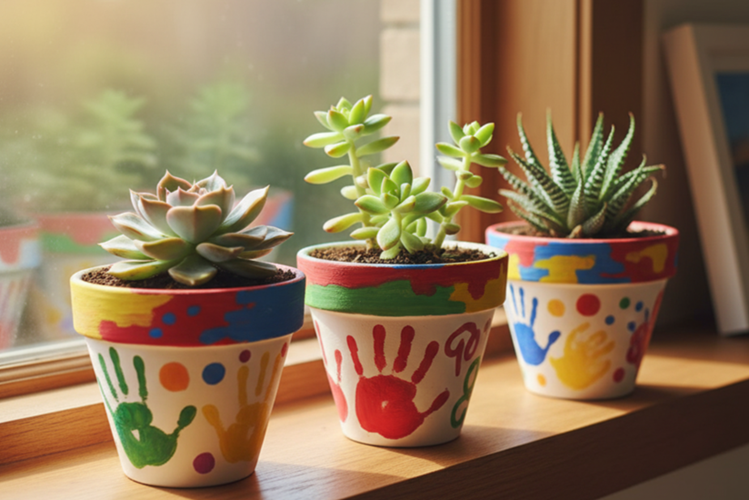
Young kids love painting, and flower pots are the perfect canvas for easy homemade Christmas gifts. These make great gifts for grandparents, teachers, or neighbors.
Materials Needed:
- Terracotta pots (4-inch size works well)
- Acrylic paint in various colors
- Paint brushes or sponges
- Clear acrylic sealer spray
- Small plants, succulents, or seed packets
Step-by-Step:
- Let kids paint the pots with any design they want (abstract, handprints, stripes)
- Allow to dry completely (usually 2-3 hours)
- Parents spray with clear sealer to protect the paint
- Add a small plant or include a seed packet with planting instructions
Money Lesson: You’re buying a plain item for $1-2 and transforming it through creativity into something that could sell for $10-15. This teaches that adding personalization and effort increases value—a key business concept.
Time: 30 minutes
Cost per gift: $2-3
Quick Win: If you don’t want to deal with live plants, fill the pots with candy or small toys instead.
3. Homemade Playdough Kits

Kids love receiving playdough, and homemade versions are safer and cheaper than store-bought—making them perfect easy homemade Christmas gifts to make.
Materials Needed:
- 1 cup flour
- ½ cup salt
- 2 tsp cream of tartar
- 1 cup water
- 1 tbsp vegetable oil
- Food coloring
- Small containers or mason jars
- Cookie cutters (include a few with each kit)
Step-by-Step:
- Mix all dry ingredients in a pot
- Add water, oil, and food coloring
- Cook over medium heat, stirring constantly until it forms a ball (about 5 minutes)
- Let cool completely
- Package in containers with a few cookie cutters and a tag with the gift-giver’s name
Money Lesson: Store-bought playdough costs about $15. This homemade version costs about $3 to make and you get the same amount. That’s an 80% savings! Show your kids the price comparison at the store—they’ll be amazed that something so cheap to make costs so much to buy.
Time: 20 minutes
Cost per gift: $2-3
Parent Tip: Make multiple colors in one session using the assembly line approach. Keep the colors separate until the last step, then divide food coloring by color.
For Ages 6-9: Creative Homemade Christmas Gifts
Kids in this age range have better fine motor skills and can handle more detailed DIY Christmas gift ideas. They’re also starting to understand money concepts more deeply.
4. Potato-Stamped Tea Towels

This classic craft creates surprisingly professional-looking homemade Christmas gifts. The gifts are practical, unique, and fun to make.
Materials Needed:
- Plain white or light-colored tea towels (buy in packs of 6-12)
- Potatoes (russet work best)
- Fabric paint in holiday colors
- Sharp knife (for parents to cut stamps)
- Paper plates for paint
- Cookie sheet or parchment paper
Step-by-Step:
- Parents cut potatoes in half and carve simple shapes (stars, trees, hearts, circles)
- Kids dip potato stamps in fabric paint
- Stamp designs onto tea towels
- Let dry completely (24 hours)
- Heat-set by placing parchment paper over design and ironing on medium heat for 3-4 minutes
Money Lesson: Plain tea towels cost $1-2 each. Designer tea towels with patterns cost $8-12. Your kids are doing exactly what designers do—adding patterns to plain fabric—and charging accordingly. This teaches that design and aesthetics have monetary value.
Time: 45 minutes (plus drying time)
Cost per gift: $3-4
Money Lesson Moment: Take your kids to a home goods store and look at decorative tea towels together. Compare the prices to what you paid for plain ones. Ask: “Why does adding a pattern make it cost so much more?”
5. Upcycled Crayon Candles in Thrifted Mugs
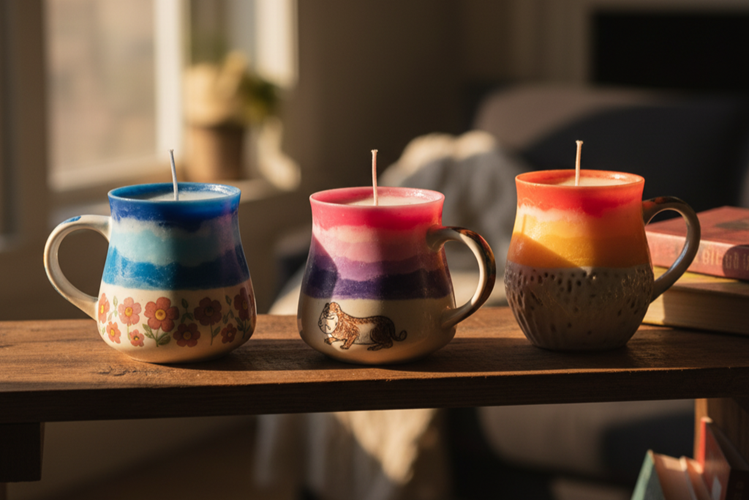
This project is a triple win: it’s creative, teaches sustainability, and produces beautiful homemade gifts for Christmas. Kids love watching crayons transform into candles.
Materials Needed:
- Broken crayons (sort by color family)
- Old candles or candle wax
- Wicks (buy a pack online)
- Unique mugs from thrift stores ($0.50-1 each)
- Double boiler or heat-safe bowl
- Hot glue gun
- Decorative labels or tags
Step-by-Step:
- Kids sort broken crayons by color (reds/pinks, blues/purples, greens, etc.)
- Hot glue a wick to the bottom center of each mug
- Parents melt candle wax in double boiler, kids add crayons for color
- Pour carefully into mugs, holding wick centered
- Let cool completely (several hours or overnight)
- Kids design labels with “Made by [name]” and care instructions
Money Lesson: This project teaches multiple financial concepts at once. First, you’re reusing broken crayons that would otherwise be thrown away—zero waste means zero cost for color. Second, thrifted mugs cost $1 versus $5-8 new. Third, handmade candles sell for $15-25, but yours cost $2-4 to make. That’s the power of DIY!
Time: 1 hour (plus cooling time)
Cost per gift: $2-4
Parent Tip: Visit thrift stores with your kids and let them choose unique mugs. One child might pick funny sayings, another might choose elegant designs. This personalization makes the gift even more special.
6. Photo and Art Bookmarks

These bookmarks are perfect easy homemade Christmas gifts to make for teachers, grandparents, or any book lovers in your life. Kids can personalize each one.
Materials Needed:
- Cardstock or thick paper
- Family photos or kids’ artwork
- Laminating sheets (self-seal or machine)
- Hole punch
- Tassels or ribbon
- Markers for decoration
Step-by-Step:
- Cut cardstock to bookmark size (2 x 6 inches)
- Kids glue small photos or pieces of their artwork to the cardstock
- Decorate around the edges with markers, stickers, or drawings
- Laminate using self-seal sheets or a laminating machine
- Punch a hole at the top
- Thread tassel or ribbon through the hole
Money Lesson: Store-bought personalized bookmarks cost $5-8 each. Your version costs about 50 cents to $1. This shows kids that “personalized” doesn’t have to mean “expensive”—they can create custom items for a fraction of retail prices.
Time: 30 minutes
Cost per gift: $0.50-1
Quick Win: These are perfect for assembly-line production. Make 10-15 at once for teachers, classmates, or relatives.
7. DIY Bath Bombs or Sugar Scrubs
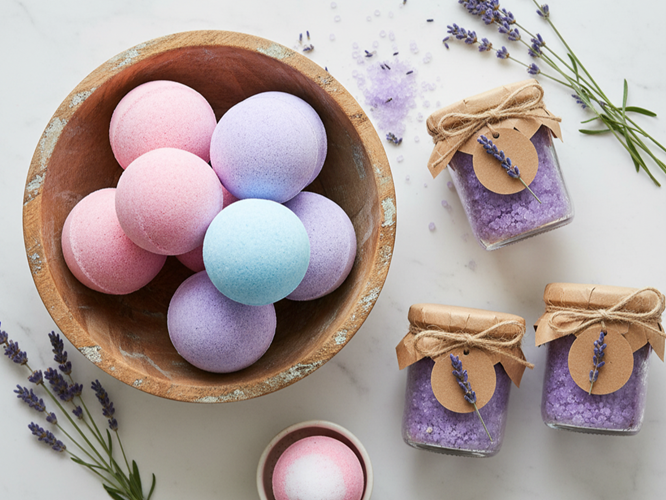
Kids this age love science experiments, and making bath products feels exactly like that. These homemade Christmas gifts smell amazing and look professional.
Bath Bomb Recipe:
- 1 cup baking soda
- ½ cup citric acid
- ½ cup cornstarch
- ½ cup Epsom salt
- 2 tbsp coconut oil
- Essential oils (lavender, peppermint, or eucalyptus)
- Food coloring
- Silicone molds
Sugar Scrub Recipe:
- 1 cup white sugar
- ½ cup coconut oil
- 10-15 drops essential oil
- Food coloring (optional)
- Small mason jars
Money Lesson: This is where you really drive home markup concepts. Show your kids that a bath bomb at a store costs $7-10. Your homemade version costs about $1-2 to make. That’s an 80% markup! Explain that the store has to pay for rent, employees, and advertising—so they charge more. When you make gifts at home, you save all that money.
Time: 45 minutes
Cost per gift: $3-5
Parent Tip: Essential oils are the investment here, but one bottle makes dozens of gifts. Buy a starter set of 2-3 scents that you can mix, and you’re set for years.
8. Hand-Decorated Tote Bags

Plain canvas tote bags become unique homemade gifts for Christmas with a little fabric paint. These are practical gifts that adults actually use.
Materials Needed:
- Plain canvas tote bags (buy in bulk packs)
- Fabric markers or paint
- Stencils (optional)
- Cardboard to put inside bag while decorating
- Iron for heat-setting
Step-by-Step:
- Place cardboard inside bag so paint doesn’t bleed through
- Kids draw designs, write names, or use stencils
- Let dry completely (24 hours)
- Heat-set with iron according to paint instructions
Money Lesson: Plain tote bags cost $2-3. Customized or branded totes cost $10-20. Your kids are essentially doing what companies do—adding a design to increase value. Discuss how brands like Nike or The North Face charge more for products with their logo. Your child’s artwork is just as valuable!
Time: 45 minutes
Cost per gift: $4-6
For Ages 10-13: Sophisticated DIY Christmas Gift Ideas
Tweens can handle more complex projects and understand deeper financial concepts. These homemade Christmas gifts look professionally made.
9. Snow Globe Jars with Family Photo

These charming snow globes are surprisingly easy homemade Christmas gifts to make and incredibly meaningful. They become family heirlooms.
Materials Needed:
- Small mason jars with lids
- Laminated family photo (wallet size)
- Glycerin (available at craft stores)
- Glitter or artificial snow
- Waterproof tape or super glue
- Distilled water (use the leftover for ironing)
Step-by-Step:
- Laminate a photo and trim to fit inside the jar
- Glue photo to the inside of the jar lid
- Fill jar almost full with distilled water
- Add 2-3 tablespoons of glycerin (makes glitter fall slowly)
- Add a teaspoon of glitter
- Carefully screw lid on tight and seal with waterproof tape
- Shake gently to test
Money Lesson: Store-bought snow globes with photos cost $15-30 or more. Your homemade version costs $4-6. But here’s the deeper lesson: sentimental value can’t be measured in dollars. A snow globe with a family photo is priceless to the recipient, even though it cost very little to make. This teaches that emotional value often exceeds monetary value.
Time: 45 minutes
Cost per gift: $4-6
Parent Tip: Make sure the lid seal is absolutely watertight. Test it by turning it upside down over a sink before wrapping.
10. Hot Cocoa Cone Gifts
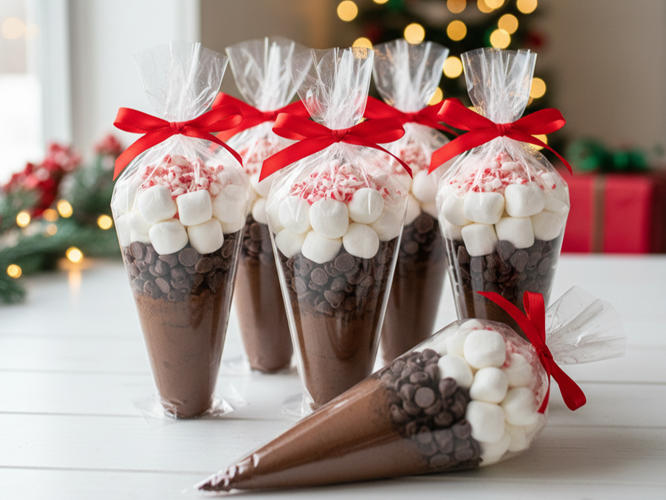
These Instagram-worthy homemade Christmas gifts look expensive but cost very little. The presentation is everything here.
Materials Needed:
- Clear cellophane bags (8×12 inches)
- Hot cocoa mix (buy in bulk)
- Mini marshmallows
- Crushed candy canes or peppermints
- Chocolate chips
- Ribbon
- Printable tags
- Measuring cups
Step-by-Step:
- Form cellophane into a cone shape and tape the side seam
- Layer ingredients: 3 tbsp cocoa mix, small handful of chocolate chips, marshmallows on top
- Add crushed candy canes as the final layer
- Tie tightly with ribbon at the top
- Attach a tag with instructions: “Empty into mug, add 8 oz hot water, stir and enjoy!”
Money Lesson: This project teaches bulk buying and packaging. Show your kids that a similar gourmet hot chocolate gift set of 6 costs $20-25 at fancy stores. When you buy cocoa mix, marshmallows, and candy in bulk, each cone costs $3-5 to make. The difference? Packaging and presentation. This teaches that how you present something affects its perceived value—a powerful business lesson.
Time: 20 minutes per cone
Cost per gift: $3-5
Quick Win: These are perfect for neighbors, teachers, or coworkers. Make a dozen in one sitting using an assembly line.
11. Bath Tea Sachets

These spa-quality homemade gifts for Christmas smell amazing and look professionally made. Recipients will think you spent much more than you did.
Materials Needed:
- Muslin drawstring bags (buy a pack of 20-30)
- Rolled oats
- Epsom salt
- Dried lavender buds
- Optional: dried rose petals, chamomile
- Measuring spoons
- Decorative tags
Step-by-Step:
- Mix 2 tbsp oats, 2 tbsp Epsom salt, 1 tbsp dried lavender per sachet
- Fill muslin bags and tie shut
- Attach a tag explaining use: “Drop in warm bath and let steep like tea. Lavender relaxes, oats soothe skin, Epsom salt relieves muscle aches.”
- Bundle 3-4 sachets together with ribbon for a complete gift
Money Lesson: Store-bought bath soaks cost $10-15 for a few uses. Your homemade sachets cost about $2-3 for a set of 4. That’s an 80% savings! More importantly, kids learn that “spa quality” doesn’t require spa prices. They’re learning to decode marketing language and understand that expensive doesn’t always mean better.
Time: 30 minutes
Cost per gift: $2-3
Money Lesson Moment: Visit a bath products store like Lush or Bath & Body Works with your kids. Look at similar products and their prices. Calculate how many homemade sachets you could make for the same price.
12. Seed Paper Holiday Cards
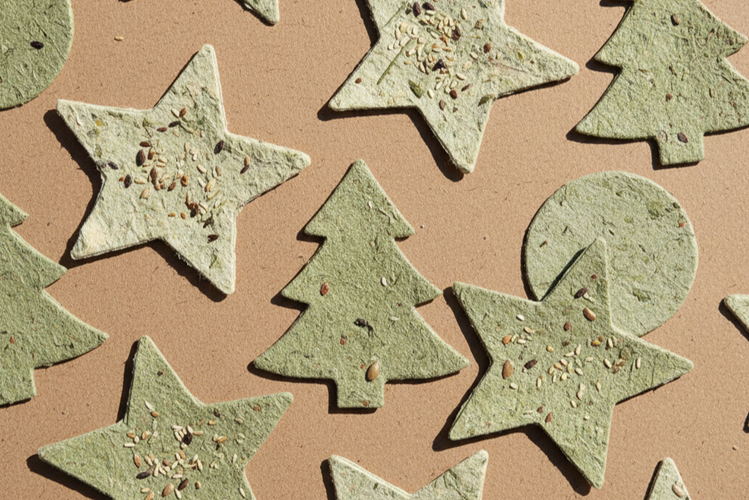
These eco-friendly DIY Christmas gift ideas are magical—recipients can plant them in spring and grow wildflowers. They’re conversation starters and demonstrate sustainability.
Materials Needed:
- Scrap paper (newspaper, used printer paper, junk mail)
- Blender
- Wildflower seeds
- Water
- Fine mesh screen
- Sponges
- Cookie cutters
- Decorative paint or markers
Step-by-Step:
- Tear paper into small pieces and soak in water for several hours
- Blend soaked paper with water until it forms a pulp
- Mix in wildflower seeds
- Spread pulp thinly on screen, press with sponge to remove water
- Use cookie cutters to shape cards
- Let dry completely (24-48 hours)
- Write messages with markers or stamps
Money Lesson: This project teaches multiple concepts: upcycling (free paper becomes a gift), sustainability (waste reduction saves money long-term), and value perception (these cards could sell for $5-8 each at boutiques). Most importantly, it teaches that innovative thinking can turn trash into treasure. This is the foundation of entrepreneurial thinking.
Time: 1.5 hours active time (plus drying)
Cost per gift: $1-2
Parent Tip: This is messy! Do it outside or cover your work surface well. The kids will love the hands-on process.
13. DIY Candles
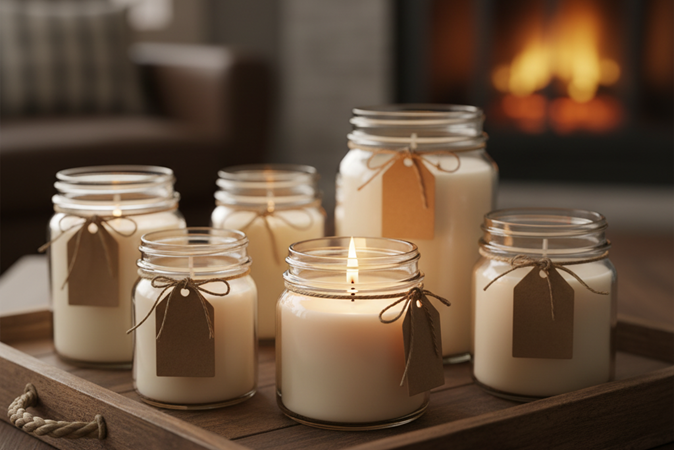
Candle-making feels very grown-up, and the results look professional. These homemade Christmas gifts make impressive gifts for adults.
Materials Needed:
- Soy wax flakes or old candles
- Candle wicks with metal tabs
- Mason jars or thrifted containers
- Essential oils or candle fragrance
- Double boiler
- Hot glue gun
- Clothespins (to hold wicks centered)
Step-by-Step:
- Hot glue wick tab to center of container bottom
- Clip clothespin to wick top to keep it centered
- Melt wax in double boiler
- Add fragrance (follow package instructions—usually 1 oz per pound of wax)
- Carefully pour into containers and hold with two clothespins
- Let cool completely before moving (several hours)
- Trim wick to ¼ inch
Money Lesson: Candles have one of the highest markups in retail—often 200-300%! A candle that costs $4-6 to make sells for $18-25. Explain to your tween that this is how businesses make profit. They’re paying for ingredients (wholesale), then selling the finished product (retail). Understanding this markup helps kids become smarter consumers and teaches basic business economics.
Time: 1.5 hours (plus cooling)
Cost per gift: $4-6
Parent Tip: Supervise melting wax carefully. It needs high heat, and safety is paramount. This is a great opportunity to teach kitchen safety alongside financial literacy.
For Teens (14+): Advanced Homemade Christmas Gifts
Teenagers can handle sophisticated projects and appreciate deeper financial discussions. These homemade gifts for Christmas demonstrate real skill.
14. No-Sew Fleece Pocket Scarves
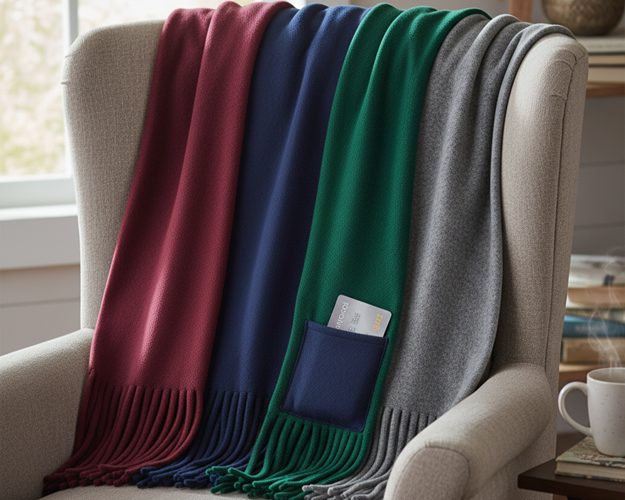
These trendy scarves have a hidden pocket—perfect for hiding a gift card inside! They look store-bought but require no sewing skills, making them great DIY Christmas gift ideas for teens.
Materials Needed:
- 1 yard fleece per scarf (buy on sale for $4-7)
- Fabric scissors
- Ruler
- Small piece of contrasting fleece for pocket
Step-by-Step:
- Cut fleece to 8-10 inches wide and full yard long
- Cut fringe on both short ends (about 4-5 inches deep, ½ inch apart)
- Cut a small pocket (4×4 inches) from contrasting fleece
- Tie pocket onto scarf using fringe technique
- Knot each fringe pair to create decorative ends
- Tuck a gift card in the hidden pocket before wrapping
Money Lesson: This project teaches the brilliant concept of combining homemade and store-bought elements. The scarf itself is thoughtful and handmade, but the gift card inside adds practical value. This teaches budget diversification—you don’t have to choose between meaningful and practical. You can do both! Also discuss that adding $10-15 to a $6 handmade scarf creates a $25-30 perceived value.
Time: 45 minutes
Cost per gift: $6-8 (plus gift card)
Teen Tip: Choose fleece colors that match the recipient’s style. This shows thoughtfulness, which teenagers are learning to value.
15. Homemade Skincare Products
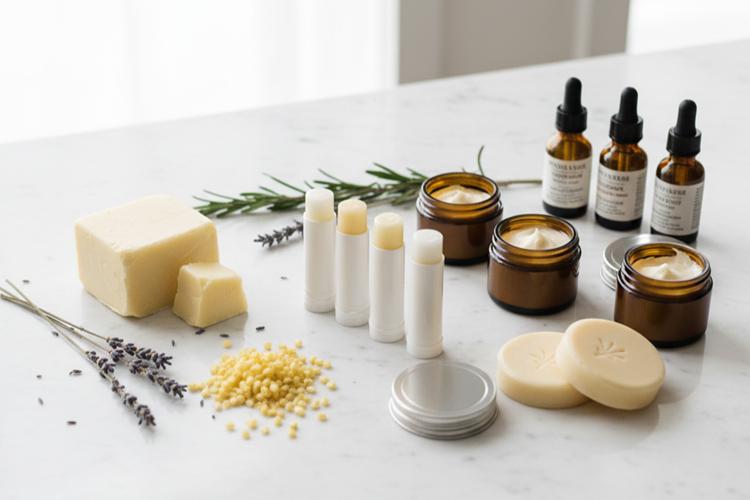
Teens often love skincare, and making lip balms or body butter is like a chemistry experiment. These homemade Christmas gifts rival store-bought quality.
Lip Balm Recipe (makes 12-15 tubes):
- 2 tbsp beeswax pellets
- 2 tbsp coconut oil
- 2 tbsp shea butter
- Essential oil for scent (optional)
- Empty lip balm tubes
Body Butter Recipe (makes 4-5 jars):
- 1 cup shea butter
- ½ cup coconut oil
- ½ cup almond oil
- Essential oils
- Hand mixer
- Small mason jars
Money Lesson: The beauty industry has some of the highest markups of any industry—often 300-500%! A small tube of lip balm costs $3-5 at stores, but costs about 40 cents to make. Body butter sold at Sephora or boutiques costs $15-30, but yours costs $3-5. Walk your teen through the math: if they wanted to start a small business selling these, what would they charge? How much would they profit per item? This is practical business education.
Time: 1-2 hours
Cost per gift: $6-10
Money Lesson Moment: Have your teen research “beauty industry markup” online. They’ll be shocked to learn how much profit companies make on simple products. This teaches them to question pricing and understand value versus cost.
16. Upcycled or Refurbished Items

This is where creativity really shines in making unique homemade gifts for Christmas. Teens hunt for thrift store treasures and transform them into unique gifts.
Project Ideas:
- Paint and distress old picture frames
- Restore vintage jewelry boxes
- Refinish wooden cutting boards
- Transform old books into hidden storage boxes
- Repaint old vases or planters
Materials Needed:
- Thrift store items ($1-5 each)
- Sandpaper
- Paint or stain
- Mod Podge or sealer
- Decorative elements (knobs, fabric, paper)
Money Lesson: This project teaches value creation and sustainability. Your teen learns that they can take something worth $2 and, with effort and creativity, transform it into something worth $20-30. This is the foundation of entrepreneurship—adding value through improvement. Additionally, buying used and refurbishing is environmentally responsible AND financially smart. These concepts together teach sustainable wealth building.
Time: 2-4 hours per item
Cost per gift: $8-15
Teen Tip: Visit thrift stores together and teach your teen to spot quality items that just need cosmetic updates. This is a valuable life skill!
17. Digital Gifts

Not all homemade Christmas gifts need physical materials. Teens are digital natives and can create meaningful virtual gifts.
Ideas:
- Custom Spotify or Apple Music playlists (workout, relaxation, memories)
- Digital photo books using free services like Shutterfly (first book often free)
- Custom video compilations of family memories
- Digital recipe collections in a shareable format
- Personalized podcast episode recommendations with notes
Money Lesson: This is perhaps the most important financial lesson of all: some of the most valuable gifts cost nothing monetarily. The time your teen spends curating the perfect playlist or collecting family recipes is valuable—they’re investing time rather than money. This teaches that wealth isn’t just financial; time, attention, and thoughtfulness are forms of wealth too. In a world that constantly pushes us to spend money, choosing free but meaningful gifts is powerful.
Time: 2-3 hours
Cost per gift: $0-5
Teen Tip: Pair digital gifts with a handwritten note explaining why you chose each song, photo, or recipe. The combination of digital and analog is especially meaningful.
DIY Christmas Gifts for Mom (and Other Family Members)
Kids often want to make special homemade Christmas gifts for their parents, grandparents, and close family members. Here are DIY Christmas gifts for mom and other adults that work beautifully.
18. Painted Terracotta Pot Bird Feeder
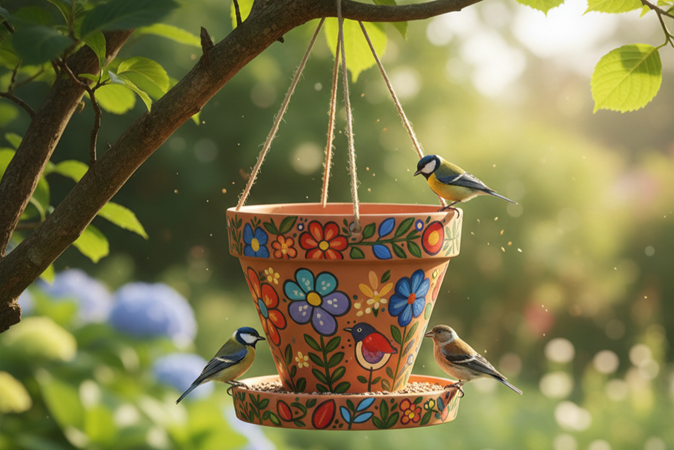
This gift is perfect for nature-loving grandparents or parents. It’s functional, beautiful, and brings wildlife to their yard—making it one of the best DIY Christmas gifts for mom who loves gardening.
Materials Needed:
- Terracotta pot and saucer (6-8 inch)
- Acrylic paint and brushes
- Clear acrylic sealer
- Strong outdoor glue
- Birdseed
- Decorative tag with bird facts
Step-by-Step:
- Paint pot and saucer with outdoor designs (flowers, birds, patterns)
- Let dry completely
- Spray with multiple coats of clear sealer
- Glue saucer to top of inverted pot to create a feeding platform
- Fill with birdseed
- Add a tag: “Keep filled with seed and watch your feathered friends visit!”
Money Lesson: Thoughtful gifts match the recipient’s interests, not just your budget. A bird feeder from a garden store costs $20-35. Your version costs $5-7 and is personalized. This teaches that understanding what someone loves makes a gift valuable, regardless of price. It’s about paying attention to people—a skill that serves you in every relationship, personal and professional.
Time: 1 hour (plus drying time)
Cost per gift: $5-7
19. Coupon Book for Chores and Favors
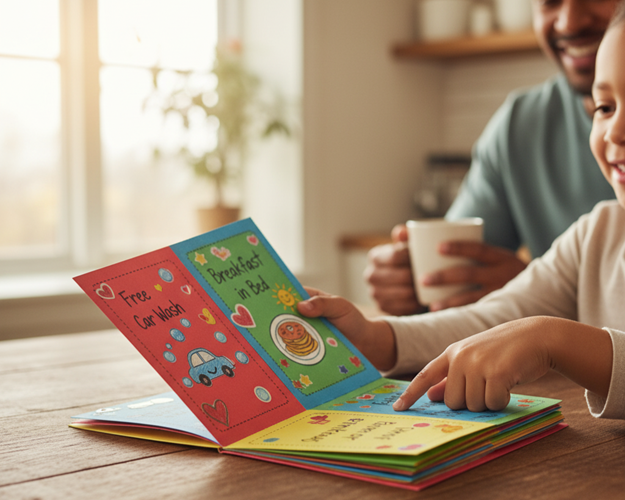
This classic DIY Christmas gift for mom never goes out of style because parents actually want help more than they want stuff.
Ideas for Coupons:
- “Good for one free car wash”
- “This coupon is good for cleaning the garage”
- “Redeem for breakfast in bed”
- “Good for one hour of tech support”
- “This coupon equals one home-cooked dinner”
- “Redeem for organizing one closet”
Money Lesson: Services have monetary value, even when you’re not charging for them. Ask your teen: “How much would it cost to pay someone to wash the car? Detail the garage? Cook a meal?” They’ll realize their labor is worth $15-30 per coupon. This teaches them that their time and skills have real economic value—crucial for future salary negotiations and understanding their worth in the job market.
Time: 45 minutes
Cost per gift: Free
Parent Tip: Make sure your kids actually honor these coupons! Set expiration dates (6 months to 1 year) and hold them accountable. Following through on commitments is another valuable financial lesson—your word is your bond.
20. Recipe Book of Family Favorites
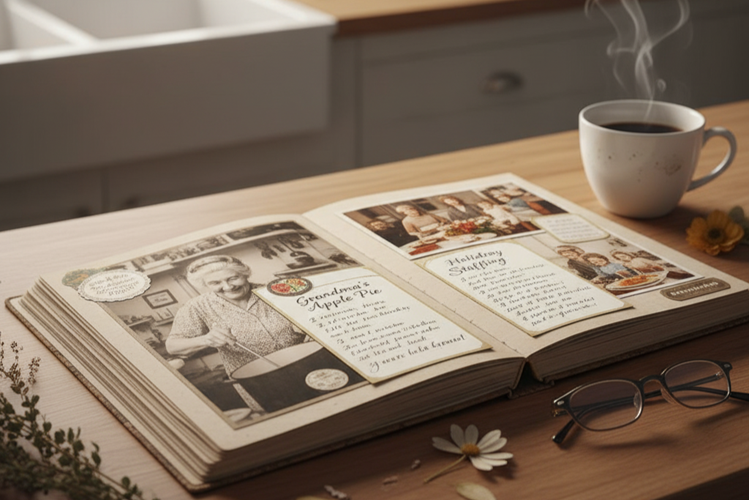
This sentimental homemade Christmas gift preserves family history while creating something practical. It’s especially meaningful DIY Christmas gift for mom, grandparents, or adult children moving out.
Materials Needed:
- Blank journal or scrapbook
- Printed or handwritten recipes
- Family photos (of people making the dishes)
- Decorative elements (stickers, washi tape)
- Clear page protectors (optional, for messy cooking)
Step-by-Step:
- Gather family recipes from various relatives
- Write or print each recipe clearly
- Add a photo of the family member who makes it best
- Include a short story about the dish (“Grandma made this every Sunday”)
- Organize by category (appetizers, mains, desserts)
- Decorate pages with related memories or photos
Money Lesson: This project teaches that some valuable things can’t be bought at any price. Family recipes and the memories attached to them are priceless. But there’s also a practical lesson: passing down recipes means you don’t need to buy cookbooks. You’re preserving knowledge that saves money over generations. Many adults spend $20-30 on specialty cookbooks when their family’s best recipes were free all along.
Time: 3-4 hours
Cost per gift: $5-8
Money Lesson Moment: Discuss with your kids how family knowledge (recipes, skills, traditions) is a form of wealth that gets passed down. This is “generational wealth” in its most basic form.
21. Memory Jar or Gratitude Journal

This DIY Christmas gift for mom becomes more valuable over time. Recipients open one note per day and remember why they’re loved.
Materials Needed:
- Large mason jar or decorative container
- Colored paper cut into strips
- Markers or pens
- Ribbon to decorate the jar
- Printed label or tag
Step-by-Step:
- Cut paper into strips (about 1×4 inches)
- Write one memory, reason you’re grateful, or compliment per strip
- Aim for 52-365 notes (one per week or one per day)
- Fold each note and place in the jar
- Decorate the jar with ribbon
- Add instructions: “Open one note whenever you need a smile”
Money Lesson: This is the ultimate lesson in emotional value transcending monetary value. Your child will spend hours writing these notes, but the actual cost is under $5. Yet the recipient will treasure it forever. This teaches that the most meaningful gifts often cost the least money. In a consumer culture that equates love with spending, this is a revolutionary concept.
Time: 2-3 hours
Cost per gift: $3-5
Parent Tip: Help younger kids by asking questions: “What’s your favorite memory with Grandma?” “What makes Dad special?” Write down their answers and let them copy or decorate the notes.
Homemade Food Gifts for Christmas: Budget-Friendly Edible Presents
Food gifts are universally appreciated, and they’re often the most dramatic example of homemade versus store-bought savings when making homemade food gifts for Christmas. Let’s explore why these homemade Christmas gifts are perfect for teaching money skills.
Why Homemade Food Gifts for Christmas Are Perfect for Teaching Money Skills
Food has transparent pricing. Your kids can easily compare the cost of ingredients to the retail price of finished products. A jar of gourmet granola at Whole Foods costs $12-15. When you make it at home, the ingredients cost about $5. That’s a markup of 140-200%!
This visibility makes homemade food gifts for Christmas ideal for teaching markup, retail pricing, and how businesses calculate profit. Plus, food gifts teach bulk buying—one bag of oats makes multiple gifts, showing economy of scale.
Top 5 Homemade Food Gifts for Christmas
1. Flavored Oils or Vinegars
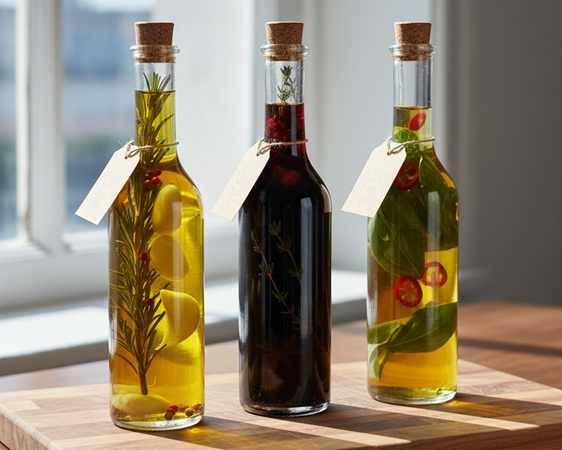
These gourmet homemade food gifts for Christmas look expensive and taste amazing. They’re surprisingly simple to make.
Popular Combinations:
- Olive oil with rosemary and garlic
- Balsamic vinegar with cranberries and orange peel
- Olive oil with dried chilies and lime zest
- White vinegar with fresh herbs
Instructions:
- Sterilize decorative bottles
- Add herbs and spices, or dried fruit to bottles
- Fill with olive oil or vinegar
- Seal tightly and let infuse for 1-2 weeks
- Add a label with ingredients and suggested uses
Cost Breakdown: A store-bought artisan flavored oil costs $15-20. Your homemade version costs $3-5. That’s a 75% savings!
Money Lesson: “Artisan” and “gourmet olive oils” are marketing terms that often just mean “homemade.” By making these gifts, your kids learn that they can create “luxury” products at regular prices. This demystifies fancy food marketing.
Time: 30 minutes
Cost per gift: $3-5
2. Spice Blend Jars
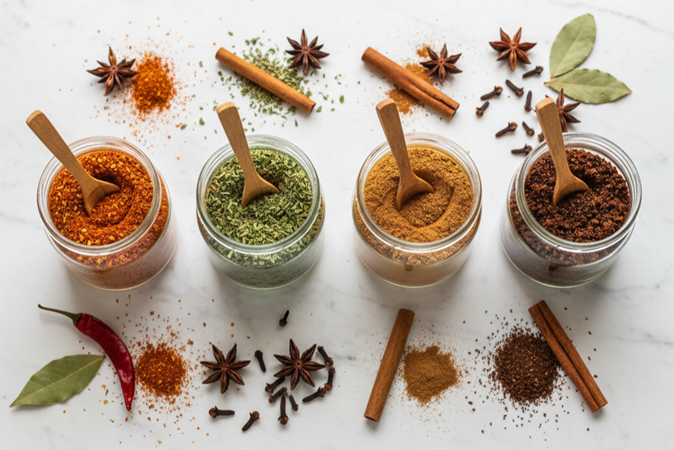
Custom spice blends make cooking easier and more flavorful. They’re practical homemade food gifts for Christmas that people actually use.
Popular Blends:
- Taco seasoning (2 tablespoons chili powder, 1 tablespoon cumin, 2 teaspoons paprika, 1 teaspoon garlic powder, 1 teaspoon onion powder, ½ teaspoon salt, ½ teaspoon black pepper)
- Italian herb blend (1 tablespoon dried basil, 1 tablespoon dried oregano, 1 tablespoon dried thyme, 2 teaspoons dried rosemary (crushed), 1 teaspoon garlic powder, ½ teaspoon black pepper)
- Pumpkin pie spice (3 tablespoons cinnamon, 2 teaspoons ginger, 1 teaspoon nutmeg, ½ teaspoon allspice, ½ teaspoon cloves)
- BBQ rub (¼ cup brown sugar, 2 tablespoons paprika, 1 tablespoon black pepper, 1 tablespoon salt, 1 tablespoon garlic powder, 1 teaspoon onion powder, 1 optional teaspoon cayenne pepper)
Cost Comparison:
- Store-bought specialty spice blend: $8-12
- Homemade version: $2
- Savings: 75-85%
Money Lesson: Buying spices in bulk and mixing your own blends saves tremendous money. Take your kids to the grocery store spice aisle. Calculate the per-ounce cost of pre-mixed seasonings versus buying individual spices in bulk. They’ll see that the convenience of pre-mixing costs 60% more! This teaches that doing things yourself saves money—a life skill that applies far beyond spice blends.
Time: 20 minutes
Cost per gift: $2
Tip for gifting: These recipes can easily be doubled or tripled. For gift jars, you might want to make larger batches so each jar has at least ¼ cup of blend. Include a small recipe card suggesting how much to use (typically 1-2 tablespoons per recipe).
3. Homemade Granola or Trail Mix
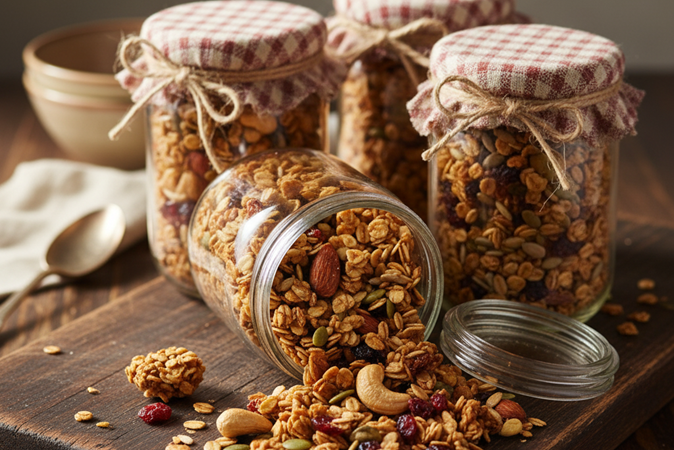
These healthy snacks are crowd-pleasers and teach bulk buying better than almost any other homemade food gifts for Christmas.
Basic Granola Recipe (makes 4-5 gift jars):
- 4 cups rolled oats
- 1 cup nuts (almonds, pecans)
- 1 cup seeds (pumpkin, sunflower)
- ½ cup honey or maple syrup
- ⅓ cup coconut oil
- 1 tsp vanilla
- 1 cup dried fruit (cranberries, raisins)
Instructions:
- Mix oats, nuts, and seeds
- Heat honey and coconut oil, add vanilla
- Pour over oat mixture and stir
- Spread on baking sheet
- Bake at 300°F for 30 minutes, stirring occasionally
- Let cool, add dried fruit
- Package in mason jars with fabric toppers
Cost Breakdown:
- Store-bought artisan granola: $12-15 for 12 oz
- Homemade granola: $4-6 for 12 oz
- Savings: 60-70%
Money Lesson: This is the perfect project to teach bulk buying. Show your kids the difference between buying a small bag of oats ($4 for 18 oz) versus buying in bulk ($6 for 5 pounds). Calculate the per-ounce cost together. They’ll see that buying bigger quantities dramatically reduces unit price. This applies to so many purchases throughout life!
Time: 1 hour
Cost per gift: $4-6
Money Lesson Moment: Visit a grocery store and compare the per-ounce price of premium granola brands to your homemade cost. Show your kids that they’re getting the same quality for a fraction of the price.
4. Decorated Cookie Platters

Everyone loves receiving homemade cookies as part of their homemade food gifts for Christmas. The key is making the presentation special.
Budget Baking Tips:
- Generic ingredients work just as well as name brands for baking
- Make one or two types of cookies instead of five different kinds
- Use assembly-line production (make all dough, then bake all cookies, then decorate)
- Buy holiday sprinkles and decorations after Christmas at 75% off for next year
Presentation Ideas:
- Find platters at thrift stores for $1-2
- Wrap in clear cellophane with a big bow
- Include the recipe on a decorative card
- Stack different types of cookies for visual appeal
Cost Breakdown:
- Store-bought gourmet cookie platter: $25-35
- Your homemade version: $8-10
- Savings: 60-70%
Money Lesson: Presentation matters in perceived value. The same cookies on a paper plate versus a nice platter with a bow create completely different impressions. This teaches that how you present something affects what people think it’s worth—a crucial business and life lesson.
Time: 2-3 hours for baking and decorating
Cost per gift: $8-10 (for about 3 dozen cookies)
5. Infused Honey or Homemade Jam
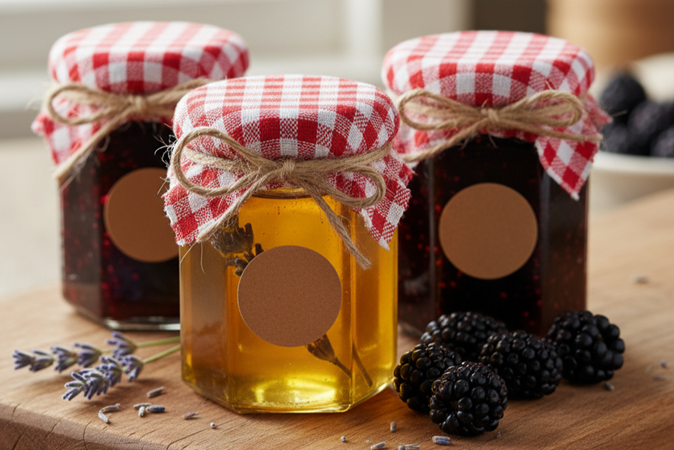
These sweet homemade food gifts for Christmas have incredible shelf life and always feel special.
Lavender Honey Recipe:
- 2 cups honey
- 2 tbsp dried culinary lavender
- Heat gently, steep for 30 minutes, strain, bottle
Simple Berry Jam:
- 4 cups fresh or frozen berries
- 2 cups sugar
- ¼ cup lemon juice
- Cook until thick (about 20 minutes), pour into sterilized jars
Cost Comparison Table:
| Product | Store-Bought (Artisan) | Homemade | Savings |
| Lavender Honey (8 oz) | $12-18 | $4 | $8-14 |
| Berry Jam (8 oz) | $8-12 | $3 | $5-9 |
Money Lesson: The word “artisan” adds $8-15 to the price of food products. But “artisan” literally just means “made by hand in small batches”—exactly what your kids are doing! This teaches them to question marketing language. When they see “artisan,” “gourmet,” or “craft” on products, they’ll think: “Could I make this myself?”
Time: 1 hour
Cost per gift: $3-4
Food Safety and Presentation Tips for Homemade Food Gifts for Christmas
When giving homemade food gifts for Christmas, safety and presentation are crucial.
Safety Guidelines:
- Label all gifts with ingredients (for allergy awareness)
- Include “made on [date]” labels
- Provide storage instructions (“refrigerate after opening”)
- Use sterilized jars for anything that could spoil
- Keep perishable items refrigerated until gifting
Professional Presentation on a Budget:
- Use mason jars (buy in bulk)
- Print custom labels on regular paper and attach with glue or tape
- Fabric toppers: cut 6-inch circles, secure with twine or ribbon
- Add a small recipe card showing how to use the gift
- Stack multiple small jars together for a gift set
Parent Tip: Teach your kids that professional presentation doesn’t mean expensive packaging. It means attention to detail, cleanliness, and thoughtfulness.
Money Lessons to Discuss While Making Homemade Christmas Gifts
The real magic happens during the conversations you have while crafting these easy homemade Christmas gifts to make. Here’s how to turn craft time into financial literacy lessons.
Age-Appropriate Financial Conversations
For Young Kids (3-7):
Keep it simple and concrete. Young children understand basic concepts like “save money” and “this costs less.”
What to Say:
- “We’re making homemade Christmas gifts instead of buying them. That saves money we can use for other things.”
- “Let’s count how much this costs. The flower pot is $2, and the paint is $1. That’s $3 total!”
- “Grandma will love this because you made it with your own hands.”
Activities:
- Let them handle play money to “pay” for supplies
- Count items together (“We need 5 jars. Let’s count them!”)
- Talk about wants versus needs (“We need the paint, but the glitter is a fun extra”)
For Elementary Age (8-11):

Kids this age can grasp comparison and basic percentages. They’re ready for more complex concepts about homemade Christmas gifts.
What to Say:
- “This candle costs us $4 to make. At the store, it would cost $18. How much are we saving by making homemade Christmas gifts?”
- “If we sold these bath bombs, what would be a fair price? What if we wanted to make $5 profit on each one?”
- “The store has to pay for rent, employees, and advertising. That’s why they charge more than what it costs to make.”
Activities:
- Create a simple cost spreadsheet together
- Visit stores and compare prices of homemade Christmas gifts versus retail prices
- Discuss profit margins in age-appropriate terms
Money Lesson Moment: While making gifts, casually ask: “Why do you think people buy expensive gifts when they could make homemade Christmas gifts for less?” Listen to their answers. It opens discussions about time value, convenience, skills, and priorities.
For Teens (12+):
Teenagers can understand sophisticated financial concepts like markup, wholesale versus retail, and business models related to homemade Christmas gifts.
What to Say:
- “The beauty industry marks up products 300-500%. That means a product that costs $5 to make sells for $20-25. Why do people still buy them instead of making homemade gifts?”
- “If you wanted to start a small business selling these homemade Christmas gifts, what would you charge? How many would you need to sell to make $500?”
- “Some people say time is money. It takes you 2 hours to make this gift that would cost $25 to buy. Is that a good trade?”
Activities:
- Research small businesses on Etsy and analyze their pricing for similar homemade gifts
- Calculate how much they could earn as kids from a side hustle making and selling these items
- Discuss branding, marketing, and why some brands charge more
Turning Gift-Making Into a Financial Literacy Workshop
Want to take the money lessons even deeper? Turn your homemade Christmas gift sessions into a mini business simulation. Use our free kids’ business plan printable, including its business tracker.
Activity: The Gift-Making “Business Plan”
- Choose Your Product: Pick one gift type you’ll make multiple times
- Calculate Costs:
- Materials per unit
- Time per unit
- Overhead (tools, electricity)
- Set Your Price:
- What would stores charge?
- What’s fair for your time?
- What would people pay?
- Track Everything:
- How long each gift actually takes
- Actual costs (sometimes you need more materials than planned)
- Any mistakes or do-overs
- Evaluate Success:
- Did recipients love the gifts?
- Would you make them again?
- What would you improve?
This exercise teaches budgeting, pricing, quality control, and self-evaluation—skills that apply whether your teen becomes an entrepreneur, an employee, or even pursues becoming a CEO at a young age.
Common Mistakes to Avoid When Making Homemade Christmas Gifts
These are the mistakes we’ve seen families make (and some we’ve made myself) when creating homemade Christmas gifts so you can skip them.
Overspending on Supplies
It’s ironic but true: you can spend more on supplies for homemade Christmas gifts than you’d spend buying gifts. Here’s how to avoid this trap.
The Pinterest Trap: You see gorgeous photos online and try to recreate them exactly. Suddenly you’re buying specialty paper, expensive ribbons, unique containers, and premium ingredients. Before you know it, each “budget” homemade gift costs $15-20.
How to Avoid It:
- Set a firm per-gift budget before shopping for homemade Christmas gift supplies
- Shop your house first—what do you already have?
- Remember: thoughtfulness matters more than perfection
- Use what’s on sale rather than specific “Pinterest-perfect” supplies
Smart Strategy for Beginners: Your first year, pick just one or two types of homemade Christmas gifts and make them in bulk for most of your gift list. Since supplies are sold in bulk quantities, making 12 bath sachets uses your materials efficiently, while making 12 different projects leaves you with expensive leftover supplies. This approach lets you test whether homemade gift-giving works for your family before investing heavily.
Starting Too Late
We’ve been there—it’s December 15th and you still have 12 homemade Christmas gifts to make. The stress defeats the purpose.
Why This Happens:
- You underestimate how long projects take
- Life gets busy (it always does)
- Kids lose interest or enthusiasm fades
The Solution:
- Start making homemade Christmas gifts in early November (or even late October)
- Make 2-3 gifts per weekend rather than a marathon session
- Accept that you won’t make every single gift homemade
- Keep a running list of which homemade Christmas gifts need to be finished
- If you’re starting late, pick fast to make homemade Christmas gifts. Most of our homemade food gifts for Christmas are quick and easy to make.
Timeline Reality Check:
- Simple gifts (bookmarks, spice blends): 20-30 minutes each
- Medium complexity (candles, painted items): 1-2 hours each (including drying)
- Complex gifts (multiple steps, long drying): 3-4 hours spread over days
Making It Too Complicated
Your 5-year-old doesn’t need to hand-dip candles or your 10-year-old doesn’t need to sew a quilt. Age-appropriate homemade Christmas gifts matter.
Signs Your Project Is Too Complex:
- Your child is frustrated rather than having fun
- You’re doing most of the work while they “help”
- Multiple failures or do-overs
- The project takes three times longer than expected
The Fix:
- Choose DIY Christmas gift ideas where kids can do 80% of the work themselves
- It’s okay if the gift looks “homemade” (that’s part of the charm!)
- Simple gifts made with joy beat complex gifts made with stress
- Remember: the goal is teaching and bonding, not perfection
Forgetting the “Why”
Sometimes we get so focused on the crafting that we forget to talk about the money lessons while making homemade Christmas gifts.
Don’t Forget To:
- Discuss costs while shopping for supplies
- Compare homemade Christmas gifts versus store prices
- Talk about why you’re choosing to make gifts
- Ask kids what they’re learning
- Celebrate the saving skills they’re building
The gift-making itself is fun, but the conversations happening during the process are where the real financial literacy education takes place.
Your Homemade Christmas Gift Action Plan

Ready to get started? Here’s your practical, step-by-step timeline for stress-free homemade Christmas gift-making.
Step-by-Step Timeline for Making Homemade Christmas Gifts
October (6-8 Weeks Before Christmas)
Week 1-2: Planning Phase
- Sit down with kids and list gift recipients
- Decide who gets homemade Christmas gifts (start with 5-10 people)
- Choose age-appropriate DIY Christmas gift ideas
- Set your overall budget
- Inventory supplies you already have
Week 3-4: Shopping Phase
- Make a detailed shopping list
- Check craft stores for sales (Michael’s, Hobby Lobby, Joann)
- Shop once for all supplies to avoid multiple trips
- Set up a dedicated craft space or box
November (3-6 Weeks Before Christmas)
Week 1-2: Start Complex Projects
- Begin items with longest drying times (candles, painted items)
- Work with older kids first (they can work more independently)
- Take photos for memories
- Keep a checklist of completed homemade Christmas gifts
Week 3-4: Production Mode
- Dedicate one weekend day to assembly-line production
- Make all similar gifts at once (all candles, then all painted pots, etc.)
- Start packaging items as you finish
- Address any supply shortages now
Early December (1-3 Weeks Before Christmas)
Week 1-2: Quick Projects & Kids’ Involvement
- Complete fast projects (bookmarks, spice blends, homemade food gifts for Christmas)
- Let younger kids participate in final easier tasks
- Begin quality checking all homemade gifts
- Start addressing or labeling packages
Week 3: Finishing Touches
- Add final decorative elements
- Write cards or tags with kids
- Have kids practice explaining what they made
- Wrap or package everything
- Deliver or prepare for mailing
Making Homemade Christmas Gifts an Annual Tradition
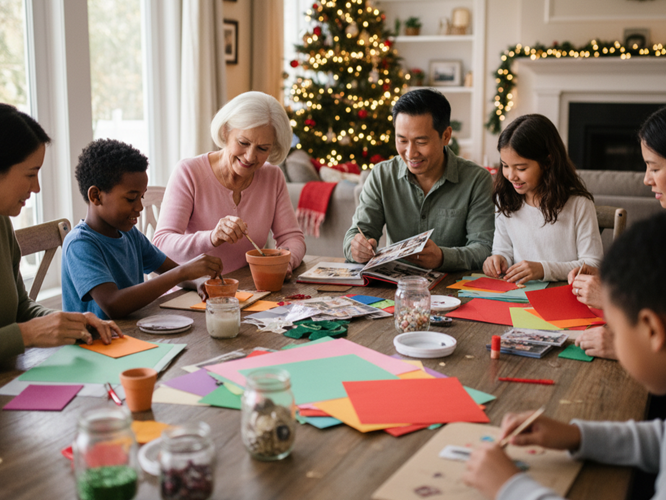
The real power of homemade Christmas gifts comes when it becomes a family tradition and part of setting family goals. Here’s how to make that happen:
Year 1: Start small with 5-10 homemade gifts. Focus on learning and having fun. Expect imperfection.
Year 2: Build on what worked. Your kids’ skills have improved. Maybe add 5 more DIY Christmas gifts or try slightly more complex projects.
Year 3+: Making homemade Christmas gifts becomes “what we do.” Kids look forward to it. They suggest projects. It’s part of your family’s identity.
Why Traditions Matter Financially:
- Kids internalize the value of homemade over purchased
- They become comfortable making rather than buying
- These skills transfer to other areas (home repairs, cooking, crafts)
- It shapes their relationship with money for life
The Lasting Impact of Homemade Christmas Gifts
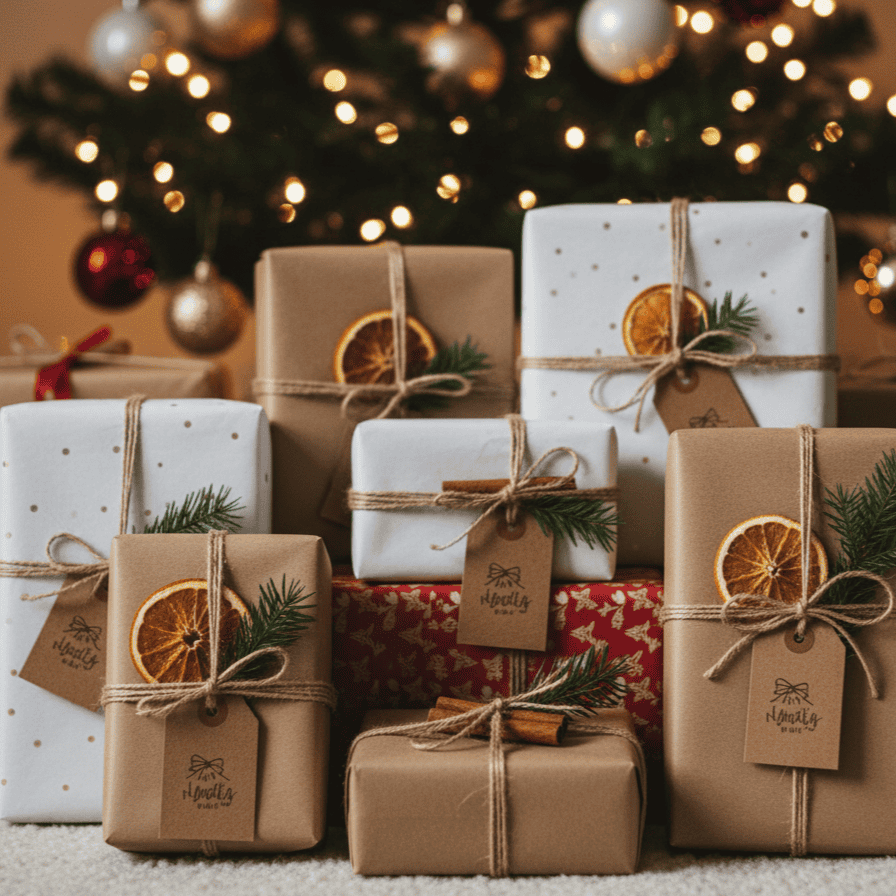
Homemade Christmas gifts are so much more than a way to save money—though you’ll absolutely do that, potentially saving $300-500 or more each holiday season. These easy homemade Christmas gifts to make are a vehicle for teaching your children financial literacy concepts that will serve them for life.
These aren’t just DIY Christmas gift ideas. They’re lessons in budgeting, cost comparison, value creation, entrepreneurship, and intentional spending. You’re raising kids who will question “retail therapy,” who will comparison shop, who will understand that expensive doesn’t always mean better, and who will know that they can create value with their own hands and minds.
Start with just 2-3 homemade Christmas gifts this year as part of your budget-friendly Christmas strategy. Choose projects that match your kids’ ages and abilities. Focus on having fun and having conversations about money while you craft together. Don’t worry about Pinterest-perfect results—worry about creating memories and teaching lessons that last.
The best gift you can give your kids isn’t another toy or gadget. It’s financial confidence and the knowledge that they can create, save, and spend intentionally. Homemade Christmas gifts teach all of that, wrapped up with a bow. Want to make this a family tradition? Add ‘make homemade gifts’ to your family’s New Year’s resolutions.
What DIY Christmas gift ideas will you make first? Share in the comments below—we’d love to hear what homemade gifts for Christmas resonate with your family!
Follow Money Parents on Pinterest for daily financial literacy tips and gift-making inspiration.
DISCLOSURE: We often review or link to products and services we believe you might find helpful. This article contains affiliate links, which means if you click a link and make a purchase, we may receive a small commission at no extra cost to you. This helps us keep MoneyParents.com running and continue providing free financial education content for families.